




























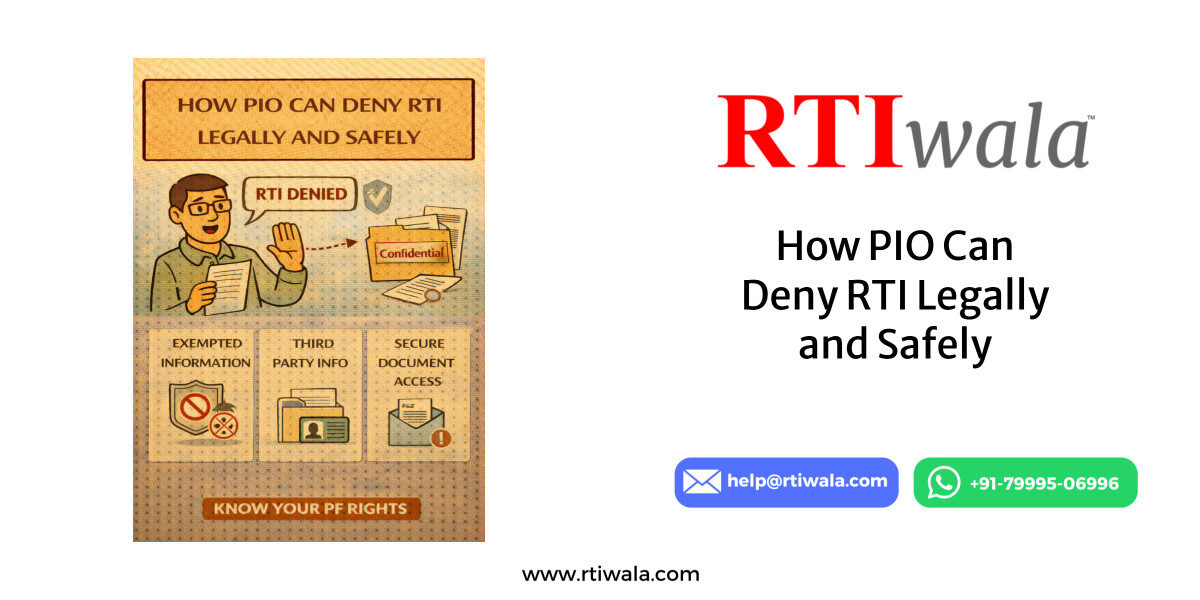
When Can a PIO Legally Deny an RTI Application?
Many RTI applicants panic the moment they receive a denial, assuming the Public Information Officer (PIO) has unlimited power. In reality, a PIO cannot deny information arbitrarily. A denial is legal only when it strictly fits conditions laid down in the RTI Act, and even then, the burden of justification lies on the PIO—not the applicant.
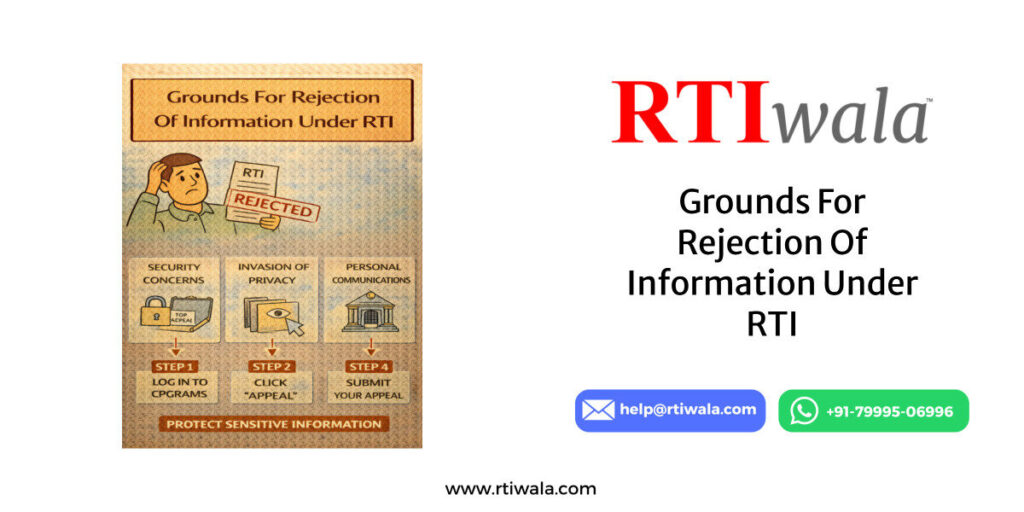
A PIO can legally deny an RTI only if the information requested falls under specific exemptions or violates procedural requirements. The denial must be reasoned, section-based, and written, not vague or defensive. Any reply without legal backing is automatically questionable and appealable.
A legal RTI denial must satisfy all of the following:
- The information clearly falls under an exempted category
- The exact RTI Act section is cited
- Reasoning is provided on how disclosure would cause harm
- The denial is issued within the statutory time limit
If even one of these elements is missing, the denial is weak and unsafe.
Common valid situations where a PIO may legally deny RTI include:
- Disclosure would harm national security or strategic interests
- Information is personal and has no public interest
- Records do not exist or are officially not held by the authority
- Information is barred by court or tribunal orders
However, many PIOs misuse these grounds loosely. A legal denial is narrow and specific, not generic or blanket. If a reply says “information cannot be provided as per rules” without explanation, it is not a lawful denial.
Applicants should remember:
RTI is a disclosure law, not a secrecy law.
Denial is the exception, not the rule.
Facing delay, no action, or ignored replies? RTIwala uses RTI to force official accountability and written proof.
📞 Call: +91-7999-50-6996
💬 WhatsApp: https://cc.rti.link/wadp
🌐 www.rtiwala.com
RTI Sections Commonly Used by PIOs to Reject Information
PIOs rely on a small set of RTI Act sections to deny most applications. Understanding these sections helps applicants instantly identify whether the rejection is valid or misused. A correct section citation does not automatically mean a legal denial—the application of the section matters more than its mention.
Below are the most commonly used RTI sections for rejection, along with how they are often misapplied.
Section 8(1)(j) – Personal Information
This is the most misused exemption. It applies only when:
- Information relates to a private individual
- Disclosure has no public interest
- Privacy outweighs transparency
PIOs frequently misuse this section to deny:
- Service records
- Promotion lists
- Marks, merit lists, or public appointment data
If public money, public post, or public duty is involved, Section 8(1)(j) cannot be applied blindly.
Section 8(1)(d) – Commercial Confidence
Used when disclosure may:
- Harm competitive position
- Reveal trade secrets or intellectual property
Illegal use occurs when PIOs apply this section to:
- Tender files after finalization
- Vendor selection reasons
- Completed contract documents
Once a public contract is awarded, transparency overrides secrecy.
Section 8(1)(h) – Ongoing Investigation
This section is valid only if disclosure will actually impede investigation.
PIOs often misuse it by:
- Claiming “matter is under inquiry” without proof
- Blocking FIR status, departmental inquiry progress, or vigilance files
Courts have clarified that mere pendency is not a ground for denial.
Section 7(9) – Disproportionate Diversion of Resources
This is not a rejection section, but PIOs misuse it heavily.
Legal position:
- Information cannot be denied under this section
- Only the form of supply can be changed
If a PIO rejects RTI outright citing Section 7(9), the denial is unsafe.
Section 8(1)(a) – National Security / Sovereignty
This is rarely applicable but often used as a scare tactic.
Valid only when:
- Real, demonstrable security risk exists
- Not applicable to routine administrative data
Using this section for local governance, civic issues, or fund usage is illegal.
Facing delay, no action, or ignored replies? RTIwala uses RTI to force official accountability and written proof.
📞 Call: +91-7999-50-6996
💬 WhatsApp: https://cc.rti.link/wadp
🌐 www.rtiwala.com
What Applicants Must Check Immediately in a Rejection Reply
Before accepting any denial, verify:
- Is the exact RTI section mentioned?
- Is reasoning provided or just copied text?
- Is public interest considered or ignored?
- Is the denial specific or blanket?
If a reply fails these checks, it is procedurally weak and legally challengeable.
Difference Between Legal RTI Rejection and Illegal Denial Tactics
For most RTI applicants, the biggest confusion is not why information was denied, but whether the denial was lawful or manipulative. A legal RTI rejection follows the Act precisely, while an illegal denial is designed to discourage, confuse, or delay the applicant without accountability.
A legal RTI rejection is transparent, structured, and defensible in appeal. An illegal denial is vague, evasive, or strategically incomplete. Understanding this difference immediately changes how an applicant should respond.
Characteristics of a Legal RTI Rejection
A rejection is legally valid only when it:
- Clearly cites the exact RTI Act section
- Explains how disclosure would cause harm
- Applies exemption only to specific information, not the entire RTI
- Is issued within 30 days (or 48 hours for life/liberty cases)
Such rejections are usually brief but precise. They acknowledge the RTI request and explain why disclosure is restricted—not just that it is restricted.
Common Illegal Denial Tactics Used by PIOs
Illegal denials are far more common and follow predictable patterns. These replies often look official but collapse during appeal.
Most frequent illegal tactics include:
- Blanket rejection of all queries citing one section
- Copy-paste legal language without factual reasoning
- Stating “information not available” without record verification
- Asking the applicant to “visit office” instead of providing records
- Citing internal circulars instead of RTI Act provisions
Another red flag is when a PIO mixes multiple sections randomly without explaining relevance. This usually indicates defensive drafting, not legal application.
Facing delay, no action, or ignored replies? RTIwala uses RTI to force official accountability and written proof.
📞 Call: +91-7999-50-6996
💬 WhatsApp: https://cc.rti.link/wadp
🌐 www.rtiwala.com
Silence Is Also an Illegal Denial
If no reply is given within the statutory period, it is deemed refusal under law. Many applicants wait indefinitely, assuming delay is normal. Legally, silence equals denial, and appeal rights trigger automatically.
How Applicants Should Respond
The moment an illegal tactic is identified:
- Do not rewrite or refile RTI
- Do not argue emotionally with the department
- Proceed directly to First Appeal with section-wise challenge
Illegal denials survive only when applicants don’t escalate.
Situations Where PIO Must Give Information but Still Denies It
There are well-settled situations where disclosure is mandatory, yet PIOs routinely deny information. These cases form the strongest ground for appeals and penalties.
Understanding these scenarios helps applicants file strong, evidence-based appeals instead of generic complaints.
When Information Involves Public Money
Any record related to:
- Government expenditure
- Tenders, contracts, bills, or utilization certificates
- Grants, subsidies, or welfare schemes
Must be disclosed, even if it involves private vendors. Commercial confidence ends where public money begins.
Illegal denials here often cite Section 8(1)(d), which does not apply after contract finalization.
When Information Relates to Public Posts or Duties
PIOs must disclose:
- Appointment criteria
- Marks, merit lists, cut-offs
- Promotion rules and DPC outcomes
- Service records linked to public duty
Denying such data under “personal information” is illegal when public accountability outweighs privacy.
When Records Are Statutorily Required to Exist
PIOs often reply “information not available” to avoid disclosure. This is illegal when:
- Law or rules mandate record maintenance
- The department is legally required to hold the data
In such cases, the PIO must either:
- Provide the record, or
- Admit record mismanagement on affidavit
When Only Part of Information Is Exempt
RTI law allows severability, meaning:
- Exempt portions can be masked
- Remaining information must be disclosed
Rejecting the entire RTI because one part is exempt is illegal. Many PIOs ignore this obligation intentionally.
When Information Is Already in Public Domain
If data is:
- Published on websites
- Tabled in Parliament
- Part of audit reports or annual reports
PIOs cannot deny it. At most, they can provide the source reference—not reject the request.
When Delay Is Used as a Weapon
Repeated extensions, transfers, or vague replies are used to exhaust applicants. Legally:
- Delay without justification is denial
- Transfer does not reset timelines
- Applicant is not required to chase departments
What This Means for RTI Applicants
If your RTI falls into any of the above situations and is still denied:
- The denial is unsafe
- First Appeal is almost guaranteed to succeed
- Penalty exposure exists for the PIO
Most applicants lose cases not due to weak law, but due to lack of identification of illegal denial patterns.
Facing delay, no action, or ignored replies? RTIwala uses RTI to force official accountability and written proof.
📞 Call: +91-7999-50-6996
💬 WhatsApp: https://cc.rti.link/wadp
🌐 www.rtiwala.com
How to Check If a PIO’s RTI Denial Is Valid or Misuse of Law
Once an RTI reply is received, the most critical mistake applicants make is accepting the denial at face value. A PIO’s reply is not a judgment; it is merely an administrative response that must pass legal scrutiny. The applicant’s job is to verify whether the denial actually satisfies RTI Act requirements.
A denial is valid only if it survives a structured verification test. Anything failing this test is misuse of law.
Step 1: Verify Whether a Specific RTI Section Is Mentioned
A legally safe denial must cite an exact section of the RTI Act. Replies that use vague phrases like:
- “As per rules”
- “Confidential in nature”
- “Cannot be shared”
are not valid denials. Without a section reference, the reply has no legal standing.
If a section is mentioned, move to the next check.
Step 2: Examine Whether Reasoning Is Provided
Merely citing a section is not enough. The PIO must explain:
- How disclosure would cause harm
- Why public interest does not override the exemption
If the reply contains copied legal text without application to your query, it indicates mechanical rejection, not legal reasoning.
Step 3: Check for Blanket Rejection
A lawful rejection must be query-specific. If one exemption is applied to:
- All questions
- Entire RTI application
- Multiple unrelated records
then the denial is unsafe. The RTI Act does not permit bulk denial unless every item independently qualifies for exemption.
Step 4: Look for Severability Compliance
If any part of the information can be disclosed, the PIO is legally bound to provide it after masking exempt portions.
If the PIO rejects everything without offering partial disclosure:
- The denial violates the Act
- The rejection becomes appeal-proof
Step 5: Verify Timeline Compliance
Check the reply date carefully:
- Beyond 30 days (or 48 hours for life/liberty) = deemed denial
- Late reply = procedural violation regardless of content
Even a legally correct section becomes weak if timelines are breached.
Step 6: Confirm Custody of Information
PIOs often say “information not available” without checking records. This reply is valid only if:
- Records genuinely do not exist, and
- The authority is not legally required to maintain them
If law mandates record-keeping, denial becomes admission of failure—not a valid rejection.
Final Validity Test for Applicants
If the reply fails any one of these checks:
- The denial is legally weak
- Appeal success probability is high
- PIO exposure increases
Applicants should never argue emotionally. Verification is purely structural and factual.
What an RTI Applicant Should Do After Receiving a Denial
Once misuse or weakness is identified, the applicant must act procedurally correct, not reactively. Most RTI cases are lost not because of law, but because applicants respond incorrectly.
Step 1: Do Not Refile or Modify the RTI
Re-filing weakens the applicant’s position and resets timelines. The law provides appeal, not repetition. Refiling signals confusion and gives the department escape.
Step 2: Prepare a Section-Wise First Appeal
A strong First Appeal:
- Challenges each cited section separately
- Points out lack of reasoning or blanket application
- Highlights public interest and disclosure obligation
The appeal should focus on procedural violations, not emotional grievances.
Step 3: Attach Proof and Timeline Evidence
Always attach:
- Copy of RTI application
- PIO reply (or proof of no reply)
- Timeline calculation
Appeals fail when facts are missing, not because arguments are weak.
Step 4: Demand Speaking Order
Applicants should explicitly seek:
- A reasoned order
- Section-wise justification
- Disclosure or partial disclosure directions
A speaking order forces accountability and limits arbitrary discretion.
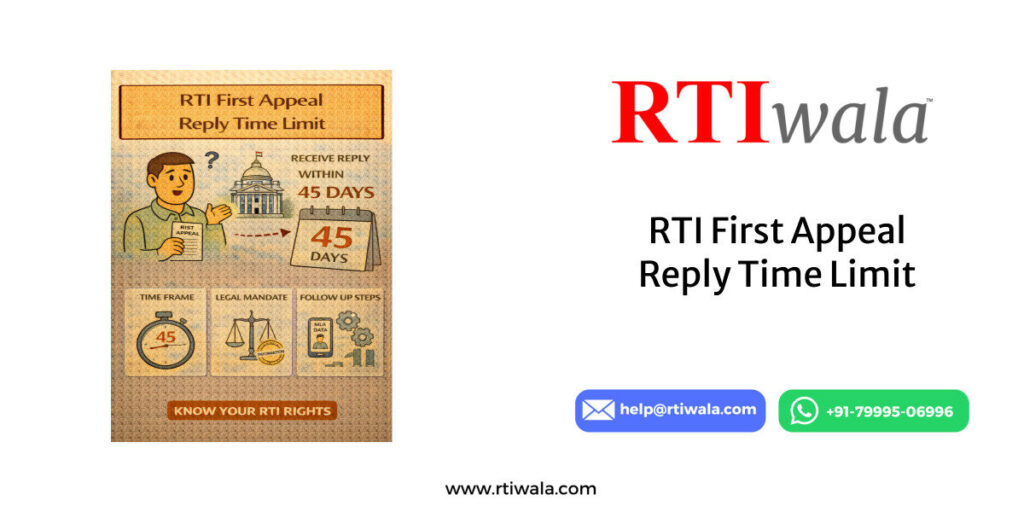
Step 5: Monitor Appeal Timeline Strictly
If the First Appellate Authority:
- Does not reply within time
- Passes a mechanical order
The case becomes stronger for escalation. Silence or vague orders benefit the applicant legally.
Step 6: Escalate Without Delay if Needed
If denial persists:
- Second Appeal or Complaint becomes appropriate
- Penalty exposure for PIO increases
Delay by applicant weakens urgency. Law favors timely escalation.
What Applicants Must Understand
RTI denial is not the end—it is often the beginning of accountability. Most illegal denials collapse because:
- PIOs rely on applicant ignorance
- Applicants stop after rejection
RTI law is designed to be appeal-driven, not reply-driven.
Facing delay, no action, or ignored replies? RTIwala uses RTI to force official accountability and written proof.
📞 Call: +91-7999-50-6996
💬 WhatsApp: https://cc.rti.link/wadp
🌐 www.rtiwala.com
Frequently Asked Questions (FAQs)
1. Can a PIO deny an RTI application without mentioning any RTI section?
No. Any RTI denial without citing a specific section of the RTI Act is legally invalid and can be challenged through a First Appeal.
2. Is “information not available” a valid reason for RTI rejection?
Only if the records genuinely do not exist and the public authority is not legally required to maintain them; otherwise, it is misuse of law.
3. Which RTI section is most commonly misused by PIOs to deny information?
Section 8(1)(j) (personal information) is the most frequently misused, especially in cases involving public posts, public money, or official duties.
4. Can a PIO reject the entire RTI application using one exemption section?
No. Each RTI query must be examined individually, and blanket rejection of all questions using a single section is illegal.
5. What should an applicant do if the PIO replies after the 30-day limit?
A delayed reply is treated as deemed denial, and the applicant can file a First Appeal regardless of the content of the reply.
6. Is ongoing investigation a valid ground to deny RTI information?
Only if the PIO proves that disclosure would actually impede the investigation; mere pendency is not a valid reason for denial.
7. Can partial information be given if some part of the RTI is exempt?
Yes. The RTI Act mandates severability, meaning non-exempt information must be disclosed after masking exempt portions.
8. Is it better to refile an RTI or file a First Appeal after rejection?
Filing a First Appeal is legally correct; refiling the RTI weakens the applicant’s position and resets timelines.