




































Table Of Content
How to Find the Official Name of Your Gram Panchayat (Village-Wise Method)
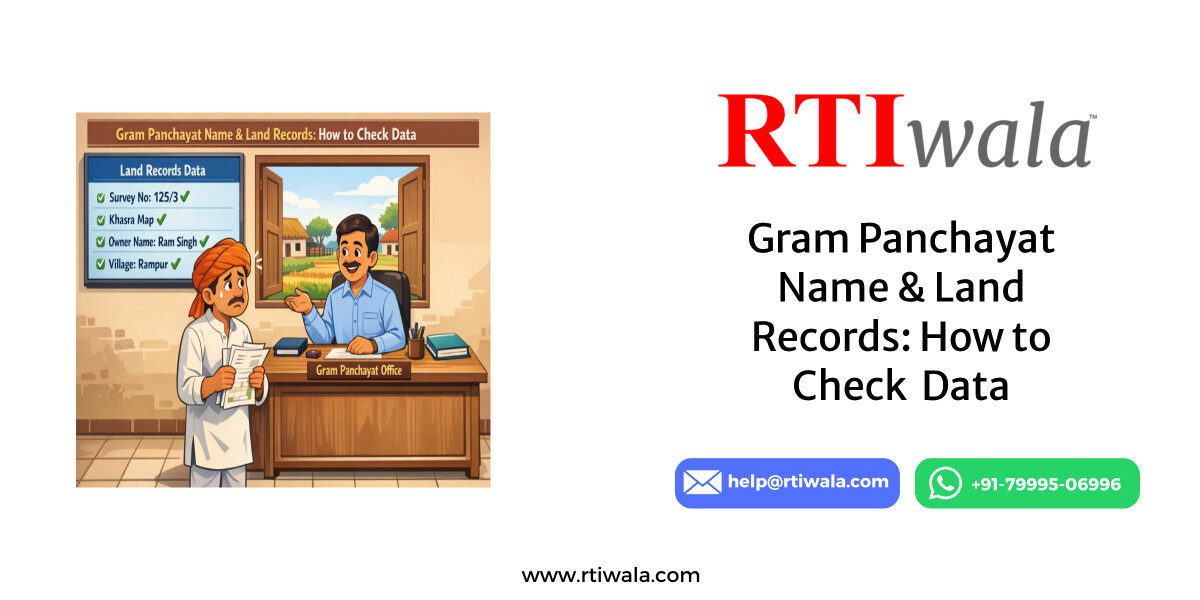
Many citizens face problems because they do not know the exact official name of their Gram Panchayat, which is mandatory for land records, complaints, RTI filing, and government scheme verification. Villages often have local or colloquial names, but government records recognize only the official Panchayat name.
The most reliable way to find the official Gram Panchayat name is through village-wise administrative mapping, not guesswork. Every village in India is legally mapped to a specific Gram Panchayat under state Panchayati Raj laws. This name remains fixed in revenue, land, and audit records.
You can find the correct Gram Panchayat name using offline government records, which are considered legally valid. These records clearly mention the Panchayat name linked to the village and are accepted by all departments.
Practical ways to identify the official Gram Panchayat name include:
- Checking Khata, Jamabandi, Patta, or 7/12 land records, where Panchayat details are printed
- Visiting the Gram Panchayat Bhavan and checking the notice board or official seal
- Asking at the Talathi / Patwari / Village Revenue Officer office
- Verifying voter list or ration card entries where Panchayat jurisdiction is mentioned
Many online portals show village names but do not clearly display Panchayat names, leading to confusion. Offline verification is still the safest first step before relying on any digital source.
Finding the correct Panchayat name is crucial because:
- RTI applications filed with the wrong Panchayat get rejected
- Complaints sent to the wrong authority are ignored
- Land disputes become difficult to prove without correct jurisdiction
- Government audits and inquiries rely strictly on official Panchayat mapping
Once the official Gram Panchayat name is confirmed, all further land, fund, and property verification becomes legally traceable and actionable.
What Type of Land a Gram Panchayat Owns and Controls
A common misunderstanding among villagers is assuming that all open or unused village land belongs to the government or private owners. In reality, a large portion of village land is legally owned, managed, or controlled by the Gram Panchayat.
Gram Panchayat land is commonly referred to as common village land, and its ownership or control is recorded in revenue documents under specific land-use categories. This land is meant for public use and cannot be sold or occupied without lawful permission.
Types of land typically owned or controlled by Gram Panchayats include:
- Grazing land (Charagah / Gochar) for village livestock
- Village ponds, lakes, and water bodies
- Public pathways, roads, and village streets
- Community land reserved for schools, anganwadis, or health centers
- Unused or waste land recorded under Panchayat name
In many states, the Gram Panchayat does not “own” the land like a private person but acts as a custodian or trustee on behalf of the village community. However, this custodial control is still legally enforceable and recorded in government registers.
Problems arise when:
- Panchayat land is encroached illegally
- Land is allotted without proper resolution or approval
- Records are manipulated at the village or block level
- Citizens are unaware that the land is Panchayat-owned
Understanding the type of land under Gram Panchayat control helps citizens:
- Identify illegal construction or encroachment
- Question misuse of public land
- Demand records related to land allotment or leasing
- Take legal or RTI-based action with correct authority
Every category of Panchayat land is supposed to be recorded in revenue records and Panchayat asset registers. If land is missing from records or wrongly classified, it indicates administrative lapses or possible misuse.
Knowing what kind of land the Gram Panchayat owns or controls is the foundation for checking land area, records, and accountability—topics that will be covered in the next parts of this series.
Facing confusion, denial, or delay in Gram Panchayat land records? RTIwala gets you certified proof fast—contact now. 📞 Call: +91-7999-50-6996 💬 WhatsApp: https://help.rti.link/ 🌐 www.rtiwala.com
How Much Land Is Registered in the Name of the Gram Panchayat
One of the most common and serious questions villagers ask is: “How much land actually belongs to our Gram Panchayat?” This doubt usually arises when land disappears from records, is encroached upon, or is suddenly allotted for construction without public knowledge.
The exact amount of land registered in the name of a Gram Panchayat is not estimated verbally. It is officially documented in revenue and Panchayat records, measured in standard units such as hectares, acres, or square meters depending on the state.
Gram Panchayat land is recorded village-wise and plot-wise, and every parcel of land has:
- A survey number / khasra number
- A land-use classification
- A recorded area
- An ownership or custodianship entry showing Gram Panchayat control
To determine how much land is registered, you must rely on documented records, not assumptions. These records collectively show the total land area under Panchayat control in that village.
The total Panchayat land usually includes:
- Individual plots recorded under Panchayat name
- Common lands clubbed under village-use categories
- Water bodies and pathways counted separately
- Land reserved for public infrastructure
Problems commonly found during verification include:
- Land area shown in records but missing on the ground
- Encroached land still recorded as Panchayat property
- Reduction of Panchayat land without documented approval
- Mismatch between revenue records and Panchayat asset registers
Knowing the exact land area is important because:
- It helps identify illegal occupation or misuse
- It allows villagers to question unauthorized allotments
- It provides documentary proof for complaints or RTI
- It ensures public land is not converted quietly
Without knowing how much land is officially registered, citizens cannot effectively challenge land-related irregularities. Accurate land measurement is the foundation of accountability.
Where Gram Panchayat Land Records Are Maintained by the Government
Many people believe Gram Panchayat land records are kept only in the Panchayat office. This is incorrect and risky. Panchayat offices often maintain working copies, but legally valid records are held at multiple government levels.
Gram Panchayat land records are maintained under a multi-department custody system, which ensures checks, audits, and accountability. Each department holds a different part of the record trail.
Key government offices where Panchayat land records are officially maintained include:
- Revenue Department (Tehsil/Taluk Office) – survey numbers, land area, ownership entries
- Block Development Office (BDO) – Panchayat asset registers and approvals
- District Panchayat / Zila Parishad Office – consolidated Panchayat land data
- District Collectorate – final authority for land classification and disputes
Revenue offices maintain the core land records, which are considered the primary source of truth. Panchayat records must match revenue data; if they don’t, the revenue record prevails legally.
Panchayat-level registers usually include:
- Asset register showing Panchayat properties
- Resolutions related to land usage or leasing
- Maintenance and utilization records
However, Panchayat offices cannot alter land ownership records on their own. Any legal change must be approved and reflected in revenue department registers.
Problems occur when:
- Panchayat relies only on internal registers
- Revenue records are not updated after allotments
- Copies are withheld from citizens
- Records are deliberately kept incomplete
Knowing where records are maintained helps citizens:
- Ask the right authority for information
- Avoid being misled by incomplete data
- Cross-check records between departments
- Build strong documentary proof for legal action
If one office refuses to share records, another office holding the same data can still be approached. This distributed record system is designed to prevent manipulation—but only if citizens know where to look.
Understanding record custody is crucial before moving to online verification and RTI-based access, which will be covered in the next part.
How to Check Gram Panchayat Land Details Online Using Government Portals
Many citizens try to check Gram Panchayat land details online because visiting multiple offices is time-consuming. Online land portals are useful, but only when used correctly and with realistic expectations. Not all Panchayat land data is fully digitized, and availability varies by state.
Government land portals primarily show revenue records, not Panchayat internal registers. This means you can see survey numbers, land classification, and ownership entries, but not every Panchayat decision or resolution.
What you can realistically verify online includes:
- Survey / Khasra numbers linked to village land
- Land classification (government land, common land, pasture, etc.)
- Recorded area of land parcels
- Ownership or custodianship entries mentioning Panchayat
While checking online, users often face confusion because:
- Panchayat land may appear under government land categories
- Local names differ from official village names
- Some common lands are grouped under collective entries
- Old records may not be updated digitally
Online portals are helpful for initial verification, not final proof. They help you identify:
- Whether land is officially recorded
- Approximate land area shown in records
- Whether Panchayat name appears in ownership column
- Possible discrepancies worth questioning
Common mistakes users make:
- Assuming online data is complete and final
- Ignoring mismatch between ground reality and digital records
- Not noting survey numbers for further verification
- Treating screenshots as legal proof
Online records should always be treated as a reference point, not a replacement for certified documents. Once discrepancies are noticed online, the next logical step is to demand official, certified records from the government.
This is where RTI becomes crucial, because online portals do not provide authenticated copies acceptable for complaints, court matters, or administrative action.
Facing confusion, denial, or delay in Gram Panchayat land records? RTIwala gets you certified proof fast—contact now. 📞 Call: +91-7999-50-6996 💬 WhatsApp: https://help.rti.link/ 🌐 www.rtiwala.com
How to Get Certified Gram Panchayat Land Records Using RTI
When online records are incomplete, unclear, or suspicious, the only legally enforceable method to obtain Gram Panchayat land details is through a Right to Information (RTI) application. RTI allows citizens to demand certified copies of records held by public authorities.
RTI is especially useful because:
- It provides signed and stamped copies
- Information must be given in writing
- Officials are legally accountable for false replies
- Silence or delay itself becomes evidence
Through RTI, you can obtain certified records such as:
- Land registers showing Panchayat-owned land
- Survey-wise land area details
- Asset registers maintained by Panchayat
- Records of land transfer, lease, or allotment
- Correspondence between Panchayat and revenue offices
RTI applications should be filed with the correct authority, depending on the record required:
- Revenue Department for land ownership and survey data
- Block Development Office for Panchayat asset registers
- District Panchayat office for consolidated records
A common fear is retaliation or pressure at the village level. In such cases, filing RTI without revealing personal identity locally becomes important. This is where Anonymous RTI is highly effective, as it protects the applicant while still obtaining official information.
RTI is particularly powerful when:
- Panchayat land is encroached
- Records are denied verbally
- Online data contradicts ground reality
- Officials refuse to share copies informally
Once certified records are received, they can be used for:
- Filing formal complaints
- Approaching higher authorities
- Submitting evidence to courts or inquiries
- Stopping illegal construction or land misuse
Without certified documents, citizens are often dismissed. RTI converts doubt into documented proof, which forces accountability.
If your RTI is drafted poorly or sent to the wrong office, it may be delayed or rejected. That is why professional drafting and correct authority mapping is critical.
Frequently Asked Questions (FAQs)
1. How can I find the official name of my Gram Panchayat for my village?
You can find the official Gram Panchayat name through land records (Khata, Jamabandi, 7/12), voter lists, or by verifying records at the Tehsil or Panchayat office.
2. Does a Gram Panchayat legally own land or only manage it?
A Gram Panchayat may either own land or act as a legal custodian of common village land, both of which are officially recorded and enforceable under law.
3. How can I check how much land is registered in the name of a Gram Panchayat?
The exact land area is available in revenue records using survey or khasra numbers, Panchayat asset registers, and consolidated district land records.
4. Where are Gram Panchayat land records officially maintained?
Gram Panchayat land records are maintained at multiple levels, including the Revenue Department (Tehsil), Block Development Office (BDO), District Panchayat Office, and Collectorate.
5. Can I check Gram Panchayat land details online?
Yes, government land record portals allow you to view survey numbers, land classification, and ownership entries, but online data should be used only for reference.
6. Are online Gram Panchayat land records legally valid as proof?
No, online records are not considered certified proof; only signed and stamped copies obtained from government offices or through RTI are legally valid.
7. How can I get certified Gram Panchayat land records using RTI?
You can file an RTI with the Revenue Department, BDO, or District Panchayat office requesting certified copies of Panchayat land registers and survey records.
8. What should I do if Panchayat land records are denied or hidden?
If records are denied, delayed, or manipulated, filing a properly drafted RTI—preferably Anonymous RTI—forces disclosure and creates official written evidence.
Facing confusion, denial, or delay in Gram Panchayat land records? RTIwala gets you certified proof fast—contact now. 📞 Call: +91-7999-50-6996 💬 WhatsApp: https://help.rti.link/ 🌐 www.rtiwala.com