






































Table Of Content
What Happens After Filing a Second Appeal in RTI
Once you file a Second Appeal under the RTI Act, your matter formally reaches the Information Commission. This stage is meant for cases where both the Public Information Officer (PIO) and the First Appellate Authority failed to give proper information. Many applicants wrongly assume action starts immediately, but there is a defined internal process. Understanding this process helps reduce confusion and unrealistic expectations.
After filing, the appeal first goes through registration and scrutiny by the Commission’s registry. Here, officials check whether:
- The appeal is filed within limitation or has valid delay grounds
- Mandatory documents are attached
- The matter actually qualifies for a Second Appeal
Only after this scrutiny does the appeal get officially “admitted” for further action.
Once admitted, the Commission issues notices to the concerned public authority and PIO. These notices ask them to submit:
- Written explanations
- Copies of records relied upon
- Reasons for denial or delay of information
This step is crucial because it creates an official paper trail and fixes responsibility.
In most cases, the Commission then decides whether the matter requires a hearing or can be decided based on records. The applicant is informed through post or email. Importantly, filing a Second Appeal does not automatically guarantee information; it triggers an adjudication process based on law and facts.
Key outcomes at this stage include:
- Appeal registered and numbered
- Notices issued to public authority
- Case queued for hearing or final order
How Long Does the Information Commission Take to Decide a Second Appeal
One of the most searched and frustrating questions for RTI applicants is about timelines. Legally, the RTI Act does not prescribe a strict deadline for disposal of Second Appeals. This leads to wide variations across states and commissions. Delays are common, and understanding realistic timelines helps applicants plan better.
In practical terms, the disposal time depends on:
- Pendency backlog of the Commission
- Nature and urgency of the matter
- Whether the appeal involves third-party information
- Availability of Commissioners
In many State Information Commissions, cases may take 1 to 3 years to come up for hearing.
Central Information Commission cases also face delays, though comparatively better managed. Some urgent matters—like life and liberty cases—are listed faster, but regular information disputes move slowly. Applicants often mistake silence as rejection, but usually it is just backlog.
Applicants should track their case status regularly and preserve all acknowledgements. If there is no movement for a long period, it becomes important to document the delay for future legal remedies.
What typically happens during the waiting period:
- Appeal remains pending in cause list queue
- No communication until hearing date is fixed
- Status updates appear sporadically on Commission portals
Knowing this prevents unnecessary anxiety and repeated filings.
Stuck after RTI Second Appeal with no action or delay? RTIwala ensures accountability, enforcement, and next legal steps—contact us now.
📞 Call: +91-7999-50-6996
💬 WhatsApp: https://help.rti.link/
🌐 www.rtiwala.com
What Powers Does the Information Commission Have in Second Appeal
The Information Commission has quasi-judicial powers, which means it can examine facts, interpret law, and pass binding directions. This stage is not advisory; it is the highest authority under the RTI Act before constitutional courts. Many applicants underestimate the strength of this forum.
During a Second Appeal, the Commission can:
- Direct the PIO to provide information
- Order disclosure of records wrongly denied
- Set aside illegal exemptions claimed by authorities
These powers ensure accountability when lower authorities misuse the RTI Act.
The Commission can also examine malafide intent, unreasonable delay, or repeated non-compliance by officials. If it finds violations, it can initiate further action under the Act. This makes Second Appeal a powerful corrective mechanism rather than a routine formality.
However, the Commission cannot:
- Award criminal punishment
- Decide service disputes unrelated to RTI
- Rewrite policy decisions of the government
Its role is limited strictly to information access and compliance under RTI law.
Effective use of Commission powers depends on:
- Quality of appeal drafting
- Proper documentation of violations
- Clear demonstration of denial or delay
This is why many applicants succeed at this stage when facts are properly presented.
What Happens After Filing a Second Appeal in RTI
Once you file a Second Appeal under the RTI Act, your matter formally reaches the Information Commission. This stage is meant for cases where both the Public Information Officer (PIO) and the First Appellate Authority failed to give proper information. Many applicants wrongly assume action starts immediately, but there is a defined internal process. Understanding this process helps reduce confusion and unrealistic expectations.
After filing, the appeal first goes through registration and scrutiny by the Commission’s registry. Here, officials check whether:
- The appeal is filed within limitation or has valid delay grounds
- Mandatory documents are attached
- The matter actually qualifies for a Second Appeal
Only after this scrutiny does the appeal get officially “admitted” for further action.
Once admitted, the Commission issues notices to the concerned public authority and PIO. These notices ask them to submit:
- Written explanations
- Copies of records relied upon
- Reasons for denial or delay of information
This step is crucial because it creates an official paper trail and fixes responsibility.
In most cases, the Commission then decides whether the matter requires a hearing or can be decided based on records. The applicant is informed through post or email. Importantly, filing a Second Appeal does not automatically guarantee information; it triggers an adjudication process based on law and facts.
Key outcomes at this stage include:
- Appeal registered and numbered
- Notices issued to public authority
- Case queued for hearing or final order
How Long Does the Information Commission Take to Decide a Second Appeal
One of the most searched and frustrating questions for RTI applicants is about timelines. Legally, the RTI Act does not prescribe a strict deadline for disposal of Second Appeals. This leads to wide variations across states and commissions. Delays are common, and understanding realistic timelines helps applicants plan better.
In practical terms, the disposal time depends on:
- Pendency backlog of the Commission
- Nature and urgency of the matter
- Whether the appeal involves third-party information
- Availability of Commissioners
In many State Information Commissions, cases may take 1 to 3 years to come up for hearing.
Central Information Commission cases also face delays, though comparatively better managed. Some urgent matters—like life and liberty cases—are listed faster, but regular information disputes move slowly. Applicants often mistake silence as rejection, but usually it is just backlog.
Applicants should track their case status regularly and preserve all acknowledgements. If there is no movement for a long period, it becomes important to document the delay for future legal remedies.
What typically happens during the waiting period:
- Appeal remains pending in cause list queue
- No communication until hearing date is fixed
- Status updates appear sporadically on Commission portals
Knowing this prevents unnecessary anxiety and repeated filings.
Stuck after RTI Second Appeal with no action or delay? RTIwala ensures accountability, enforcement, and next legal steps—contact us now.
📞 Call: +91-7999-50-6996
💬 WhatsApp: https://help.rti.link/
🌐 www.rtiwala.com
What Powers Does the Information Commission Have in Second Appeal
The Information Commission has quasi-judicial powers, which means it can examine facts, interpret law, and pass binding directions. This stage is not advisory; it is the highest authority under the RTI Act before constitutional courts. Many applicants underestimate the strength of this forum.
During a Second Appeal, the Commission can:
- Direct the PIO to provide information
- Order disclosure of records wrongly denied
- Set aside illegal exemptions claimed by authorities
These powers ensure accountability when lower authorities misuse the RTI Act.
The Commission can also examine malafide intent, unreasonable delay, or repeated non-compliance by officials. If it finds violations, it can initiate further action under the Act. This makes Second Appeal a powerful corrective mechanism rather than a routine formality.
However, the Commission cannot:
- Award criminal punishment
- Decide service disputes unrelated to RTI
- Rewrite policy decisions of the government
Its role is limited strictly to information access and compliance under RTI law.
Effective use of Commission powers depends on:
- Quality of appeal drafting
- Proper documentation of violations
- Clear demonstration of denial or delay
This is why many applicants succeed at this stage when facts are properly presented.
Can the Information Commission Order Penalty or Compensation
A major reason RTI applicants file a Second Appeal is to seek accountability, not just information. Under the RTI Act, the Information Commission has clear statutory powers to impose penalties and grant compensation. These powers are triggered when denial or delay is found to be unjustified or malafide. Understanding when and how this happens is critical for applicants.
The Commission can impose a monetary penalty on the PIO if it finds that:
- Information was denied without reasonable cause
- False or misleading information was provided
- Timelines under the RTI Act were deliberately ignored
- Records were destroyed or obstructed
The penalty can go up to ₹25,000, calculated at ₹250 per day of delay.
However, penalties are not automatic. The Commission must give the PIO an opportunity to explain their conduct. If the explanation is weak, evasive, or unsupported by records, the Commission records reasons and proceeds with penalty. This process reinforces procedural fairness while fixing responsibility.
Apart from penalties, the Commission also has the power to award compensation to the RTI applicant. This applies when the applicant has suffered:
- Financial loss
- Mental harassment
- Repeated inconvenience due to illegal denial
Compensation is paid by the public authority, not the PIO personally.
Applicants should clearly mention loss or hardship in their Second Appeal. Many applicants miss compensation simply because they fail to explain the impact of denial. When properly argued, compensation orders are legally sustainable and enforceable.
Key points applicants must remember:
- Penalty punishes wrongdoing by officials
- Compensation remedies harm caused to applicants
- Both depend on evidence and clear pleadings
What If No Hearing or Order Comes Even After Second Appeal
One of the most common and distressing situations for RTI applicants is prolonged silence after filing a Second Appeal. Months or even years may pass without a hearing notice or final order. This does not mean the appeal has failed, but it does signal systemic delay that needs to be addressed carefully.
The most common reasons for no action include:
- Heavy backlog of appeals
- Vacant posts of Information Commissioners
- Administrative delays in listing cases
- Appeals stuck at registry scrutiny stage
Understanding the cause helps decide the next step instead of filing repeated appeals.
Applicants should first verify the status of the appeal through official portals or by written communication. Many cases remain pending simply because:
- Notices were returned undelivered
- Contact details were incorrect
- Documents were found incomplete
Rectifying such issues early can revive stalled appeals.
If there is unreasonable delay with no justification, applicants can formally bring this delay on record. This is important because prolonged inaction itself defeats the purpose of the RTI Act. Courts have repeatedly observed that delayed justice amounts to denial of information.
Practical steps applicants can take include:
- Sending a written reminder to the Commission
- Seeking status through registered communication
- Preserving proof of prolonged pendency
These steps create a documented timeline of inaction.
In extreme cases, where delay becomes arbitrary and excessive, the applicant’s right to information is considered violated. Such documented delay later becomes a strong ground for approaching constitutional courts. Therefore, silence should never be ignored; it must be recorded and challenged procedurally.
What applicants should not do:
- File multiple Second Appeals on the same issue
- Withdraw the appeal due to frustration
- Assume rejection without written order
Strategic patience combined with documentation is the correct approach at this stage.
What Remedies Are Available After Second Appeal Is Decided
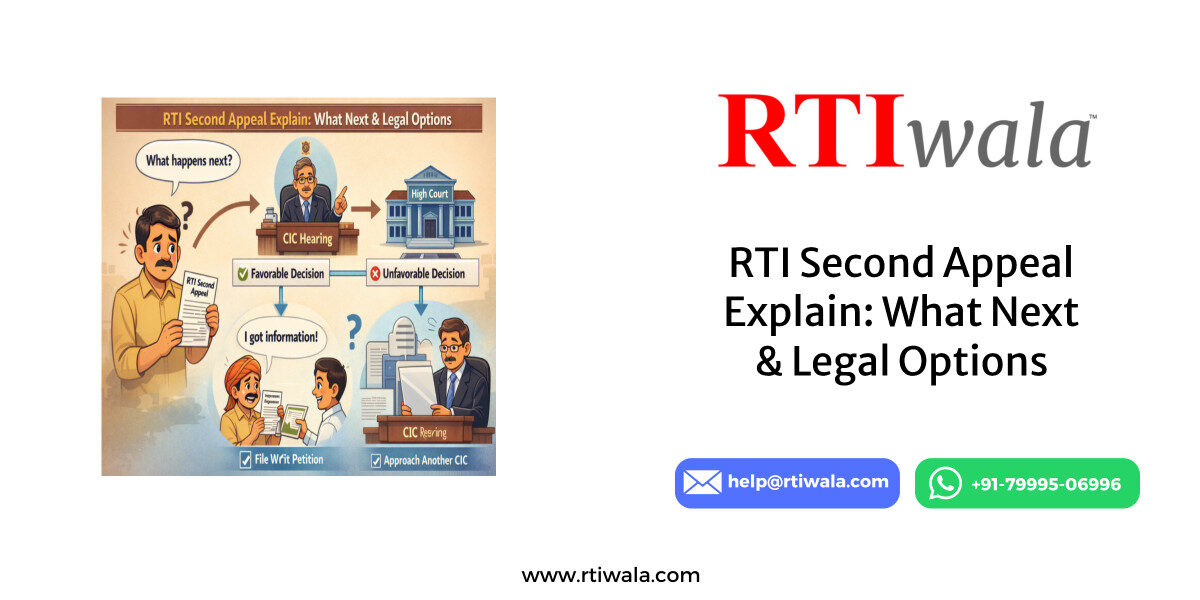
Once the Information Commission passes an order on a Second Appeal, many RTI applicants assume the process is over. In reality, this stage opens multiple legal and procedural remedies depending on whether the order is favorable or adverse. Understanding post-order options is crucial to ensure enforcement and accountability.
If the order is in favor of the applicant, the public authority is legally bound to comply. Remedies available to the applicant include:
- Seeking implementation of information disclosure
- Ensuring compliance within the timeline mentioned in the order
- Preserving the order as legal proof for future proceedings
Non-compliance with Commission orders is itself a serious violation.
If the public authority fails to comply, the applicant can bring this non-compliance to the notice of the Commission. Many applicants do not realize that failure to follow Commission directions strengthens their legal position. Repeated disobedience reflects administrative misconduct, not applicant fault.
When the order is partly favorable or unfavorable, applicants still have remedies. The Commission’s decision can be challenged if:
- Legal provisions are misinterpreted
- Relevant facts or documents were ignored
- Natural justice principles were violated
Such errors form valid grounds for judicial review.
Applicants should also understand what the Commission cannot remedy after its final order:
- It cannot review its own decision like a civil court
- It cannot reopen facts unless ordered by a court
- It cannot grant relief beyond RTI Act scope
This clarity helps applicants avoid procedural dead ends.
Practical post-order actions for applicants include:
- Keeping certified copies of the order
- Monitoring compliance deadlines
- Documenting every instance of non-compliance
These steps prepare the applicant for the next legal stage if required.
Stuck after RTI Second Appeal with no action or delay? RTIwala ensures accountability, enforcement, and next legal steps—contact us now.
📞 Call: +91-7999-50-6996
💬 WhatsApp: https://help.rti.link/
🌐 www.rtiwala.com
When and How RTI Applicants Can Approach High Court After Second Appeal
Approaching the High Court is the final constitutional remedy available to an RTI applicant after a Second Appeal decision. This option is not meant for routine dissatisfaction but for serious legal violations. Courts intervene when statutory authorities fail to act lawfully or reasonably.
RTI applicants can approach the High Courts under Article 226 of the Constitution of India. This remedy is available when:
- The Information Commission’s order is illegal or perverse
- There is excessive and unexplained delay
- Fundamental right to information is effectively denied
High Courts do not re-hear RTI cases but examine legality.
The High Court typically reviews:
- Whether due process was followed
- Whether reasons were recorded properly
- Whether statutory powers were exceeded or misused
This makes judicial review a powerful corrective mechanism.
Applicants must approach the High Court within a reasonable time. Although there is no fixed limitation period, unexplained delay weakens the case. Courts expect diligence and prompt action, especially when statutory remedies are already exhausted.
Before filing a writ petition, applicants should ensure:
- All RTI stages (PIO, First Appeal, Second Appeal) are completed
- Commission order or delay is properly documented
- Relief sought is legally maintainable
Poorly prepared petitions are often dismissed at the threshold.
Reliefs that High Courts may grant include:
- Quashing illegal Commission orders
- Directing fresh hearing or time-bound disposal
- Ordering disclosure of information in rare cases
However, courts avoid micromanaging administrative processes.
Applicants should also be aware that High Court litigation involves:
- Legal drafting and procedural costs
- Longer timelines compared to RTI stages
- Need for precise legal grounds
Therefore, this remedy should be used strategically, not emotionally.
In summary, approaching the High Court is justified when:
- RTI rights are systematically frustrated
- Statutory authorities fail their duty
- Administrative silence becomes arbitrary
Used correctly, this remedy restores balance between citizens and the state.
FAQs Frequently Asked Questions
1. What happens after a Second Appeal is filed under RTI?
After filing a Second Appeal, the Information Commission registers the case, issues notices to the public authority, and later decides the matter through records review or a hearing before passing a final order.
2. How long does the Information Commission take to decide a Second Appeal?
There is no fixed timeline under the RTI Act; in practice, Second Appeals may take several months to a few years depending on backlog, urgency, and availability of Information Commissioners.
3. Can the Information Commission impose a penalty on the PIO in Second Appeal?
Yes, the Information Commission can impose a penalty of up to ₹25,000 on the PIO for unjustified delay, denial, false information, or obstruction, after giving the PIO a chance to explain.
4. Can an RTI applicant get compensation after Second Appeal?
Yes, if the applicant proves financial loss, harassment, or inconvenience due to illegal denial or delay, the Information Commission can order compensation to be paid by the public authority.
5. What should be done if there is no hearing or order even after years of Second Appeal?
Applicants should document the delay, track case status, and preserve proof of pendency, as prolonged inaction can later be challenged before the High Court as violation of RTI rights.
6. What remedies are available if the Second Appeal order is ignored by the public authority?
If the authority does not comply with the order, the applicant can report non-compliance to the Information Commission and use the order as legal proof for further judicial remedies.
7. Can an RTI applicant approach the High Court after Second Appeal?
Yes, an RTI applicant can approach the High Court under Article 226 if the Commission’s order is illegal, perverse, delayed excessively, or violates the applicant’s right to information.
8. Is the High Court the final option after Second Appeal in RTI?
Yes, once the Second Appeal stage is over, the High Court becomes the final legal remedy, but it reviews legality and procedure, not the merits of information like the Commission.