








































Table Of Content
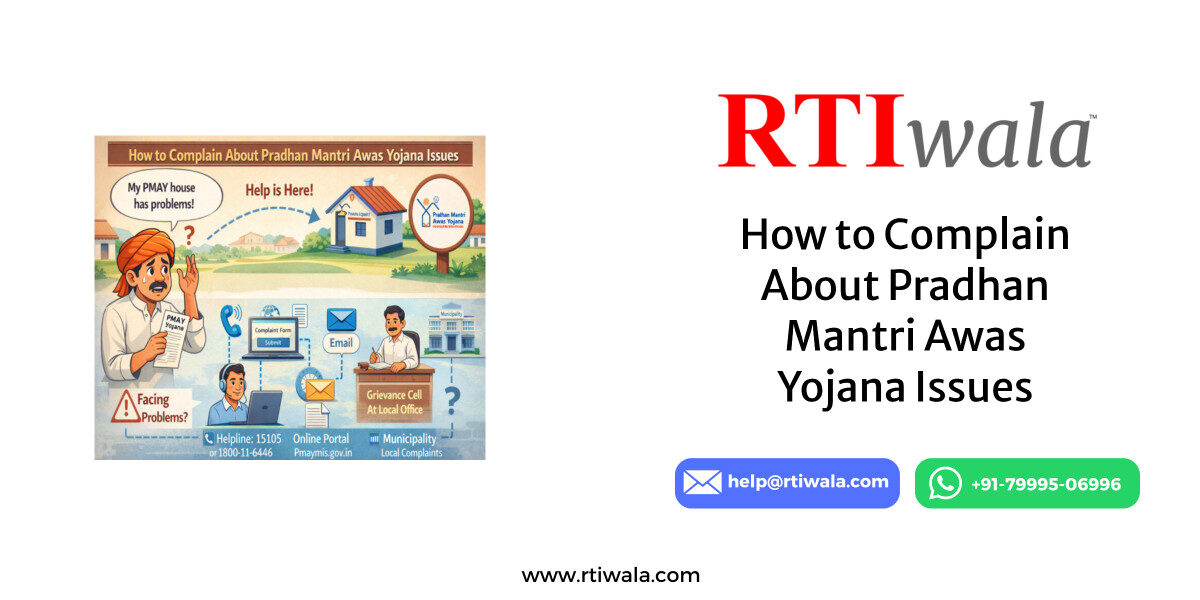
Where to File an Online Complaint for Pradhan Mantri Awas Yojana (PMAY)
Many beneficiaries face confusion when PMAY benefits are delayed, names are missing from the list, or payments are not credited. The government has provided an official online grievance system specifically to address such issues. Filing a complaint online is the fastest and most traceable way to raise a PMAY issue.
The official PMAY grievance portal allows beneficiaries to submit complaints using basic details such as Aadhaar number or application reference number. This ensures that complaints are linked directly to the beneficiary’s record, reducing chances of denial or misrouting.
Before filing the complaint online, keep the following ready:
- PMAY application number or Aadhaar number
- Registered mobile number used during application
- Clear description of the problem (delay, rejection, non-payment, name missing)
Common issues that can be reported online include:
- PMAY application status not updated
- Subsidy or installment not received
- Incorrect beneficiary details
- Name missing despite approval
Once submitted, the complaint is forwarded to the concerned department digitally. A grievance ID is generated, which becomes crucial for follow-ups and escalation if no action is taken.
Online complaints are effective only when the issue is properly documented. Vague or incomplete complaints often get closed without resolution, which is why clarity and precision matter at this stage.
How to Register a PMAY Complaint Through Toll-Free Helpline Numbers
For beneficiaries who are not comfortable with online systems or do not have internet access, PMAY toll-free helpline numbers are a practical option. These helplines are meant to provide direct assistance and register complaints verbally.
Calling the helpline connects beneficiaries with trained support staff who log the grievance into the system. However, many users are unaware that verbal complaints are also recorded officially when registered correctly.
While calling the helpline, keep these details ready:
- Aadhaar number or PMAY application ID
- District, state, and scheme type (Urban or Gramin)
- Exact issue faced and since when
Typical complaints accepted via helpline include:
- Delay in approval or verification
- Payment not received despite approval
- Incorrect information shown in records
- Confusion regarding eligibility or scheme status
Always ask for a complaint or reference number during the call. Without this number, tracking the complaint later becomes extremely difficult. Many beneficiaries assume the issue will be resolved automatically, which often leads to months of inaction.
Helpline complaints are useful for initial escalation, but if the issue involves prolonged delay or suspected mismanagement, written follow-up becomes essential to ensure accountability.
PMAY complaint ignored or delayed? RTIwala forces official written action through RTI—contact now. 📞 Call: +91-7999-50-6996 💬 WhatsApp: https://help.rti.link/ 🌐 www.rtiwala.com
Where to Complain if PMAY Application Is Rejected, Delayed, or Stuck
Rejection or prolonged delay of PMAY applications is one of the most common problems faced by applicants. In many cases, applications are rejected without proper reasons, or they remain “under process” indefinitely.
When an application is rejected or stuck, beneficiaries should not rely on assumptions or verbal explanations. The first step is to file a formal complaint seeking written clarification on the exact reason for rejection or delay.
Appropriate complaint options in such cases include:
- Online PMAY grievance portal
- Toll-free helpline with documented reference
- District-level housing or rural development office
Common reasons applicants report include:
- Incorrect or incomplete document verification
- Technical errors during application submission
- Local authority not forwarding or updating records
- Eligibility marked incorrectly without explanation
If the application remains stuck for months, it often indicates administrative inaction rather than applicant fault. In such cases, repeated informal visits rarely help unless a formal complaint trail exists.
Filing a complaint creates a recorded obligation on the department to respond. This written trail becomes crucial if the matter needs escalation later, especially when officials deny responsibility or shift blame.
How to File a Complaint at Local Authorities for PMAY Issues
When online complaints or helpline calls do not resolve PMAY issues, approaching local authorities becomes necessary. Local bodies play a direct role in verification, approval, and fund release, which is why many PMAY problems originate at this level.
Depending on the scheme type, complaints can be filed at:
- Municipal Corporation or Urban Local Body (PMAY-Urban)
- Gram Panchayat or Block Development Office (PMAY-Gramin)
- District Housing or Rural Development Office
While visiting local offices, beneficiaries should submit a written complaint instead of relying on verbal assurances. A written complaint ensures the issue is officially recorded and cannot be easily ignored later.
The complaint should clearly mention:
- PMAY application or beneficiary details
- Nature of the problem (delay, rejection, non-payment)
- Duration for which the issue is pending
Many applicants face repeated visits and verbal excuses without results. Filing a documented complaint forces officials to acknowledge the issue formally and creates a paper trail that becomes important for escalation.
How to Check PMAY Complaint Status and Track Action Taken
After filing a PMAY complaint, tracking its status is critical. Many beneficiaries assume their complaint is under review, but in reality, no action may have been taken unless it is actively monitored.
Complaint status can usually be checked using:
- Grievance or complaint reference number
- Aadhaar number or application ID
- Registered mobile number
Tracking helps beneficiaries understand whether:
- The complaint is forwarded to the concerned department
- Any response or remark has been added
- The issue has been closed without resolution
Common problems observed while tracking include:
- Status showing “resolved” without actual resolution
- No updates for weeks or months
- Complaint redirected repeatedly between departments
Regular tracking helps identify inaction early. If the status does not change for a long period, it indicates administrative delay, which requires escalation through written follow-ups.
What to Do if No Action Is Taken on Your PMAY Complaint
When no action is taken despite filing complaints online, via helpline, or at local offices, beneficiaries often feel helpless. However, this stage is where structured escalation becomes important.
If a complaint remains unresolved:
- Do not rely on repeated verbal follow-ups
- Avoid submitting duplicate vague complaints
- Focus on seeking written accountability
At this point, beneficiaries should demand:
- Written reasons for delay or rejection
- Proof of action taken on the complaint
- Names or designations of responsible officials
Many PMAY issues remain unresolved because there is no pressure for accountability. Without written records, departments can deny responsibility or claim the issue is still “under process.”
This stage requires moving beyond informal complaint methods and using mechanisms that legally compel officials to respond in writing, ensuring transparency and responsibility.
PMAY complaint ignored or delayed? RTIwala forces official written action through RTI—contact now. 📞 Call: +91-7999-50-6996 💬 WhatsApp: https://help.rti.link/ 🌐 www.rtiwala.com
How RTI Helps in Getting Written Proof and Accountability in PMAY Complaints
When PMAY complaints remain unresolved despite online grievances, helpline calls, and local office visits, the core problem is usually the absence of written accountability. Verbal assurances, internal notes, or “under process” responses do not legally bind officials to act. This is where the Right to Information becomes critical.
RTI allows beneficiaries to formally ask why their PMAY application is delayed, rejected, or pending, and to demand answers in writing. Unlike complaints, RTI replies are legally mandated and time-bound, which significantly increases the chances of real action.
RTI is especially effective because:
- Officials must reply within a fixed timeframe
- False or vague replies can be challenged
- Written responses create legal evidence
This makes RTI a powerful escalation tool when the system becomes silent or evasive.
RTI can be used to seek specific, factual information related to a PMAY case. Instead of asking for help or mercy, RTI asks for records, documents, and reasons that already exist within the department.
Common information beneficiaries seek through RTI includes:
- Exact reason for PMAY application rejection
- Date-wise action taken on the application
- Name and designation of officials handling the case
- Status of fund release or installment processing
When such information is demanded in writing, departments can no longer hide behind generic responses. Either they provide the data or admit lapses, both of which help the beneficiary move forward.
One major advantage of RTI is that it exposes administrative delay. Many PMAY applications are stuck not due to applicant errors, but because files are not moved, verified, or approved on time.
RTI helps identify:
- Whether documents were verified or ignored
- Whether inspection was conducted or skipped
- Whether funds were sanctioned but not released
Once delays are documented officially, departments become cautious. Written exposure often results in faster corrective action, because unanswered RTIs or misleading replies can lead to penalties.
RTI is also useful when complaints are falsely marked as “resolved.” Many beneficiaries notice that grievance portals show closure even though nothing changed on the ground.
Through RTI, beneficiaries can ask:
- On what basis was the complaint marked resolved
- What action was taken before closure
- Copies of internal notes or decision records
This prevents misuse of grievance systems and forces departments to justify their actions with documents, not assumptions.
Another critical benefit of RTI is clarity on eligibility and selection criteria. Many PMAY rejections occur without explaining which rule or guideline was violated.
RTI can be used to obtain:
- Eligibility criteria applied to the application
- Comparison with approved beneficiaries
- Policy or guideline used for rejection
This transparency helps beneficiaries understand whether the rejection was valid or arbitrary. If rules were misapplied, RTI replies become the foundation for correction or appeal.
RTI responses carry long-term value. Unlike phone calls or complaint numbers, RTI replies can be used:
- For appeals and escalations
- For legal notices or representations
- To challenge wrongful rejection or delay
Once written proof is obtained, the power balance shifts. The beneficiary is no longer asking for updates but holding the authority accountable using its own records.
However, RTI must be drafted carefully. Poorly framed questions often receive incomplete or evasive replies. Effective RTI focuses on records, dates, and responsibility—not opinions or explanations.
A strong RTI:
- Asks for documents, not just reasons
- Seeks accountability, not sympathy
- Leaves no scope for vague answers
This precision is what turns RTI into a results-driven tool rather than a formality.
Why RTI Becomes the Turning Point in PMAY Cases
Most PMAY issues remain unresolved because there is no written pressure on officials. RTI introduces legal obligation, traceability, and consequences for non-compliance.
When complaints fail, RTI:
- Forces departments to respond officially
- Creates proof of delay or negligence
- Opens the door for further escalation
This is why RTI is often the final and most effective step in PMAY complaint resolution.
Frequently Asked Questions (FAQs) – PMAY Complaints
1. Where can I file a complaint if my Pradhan Mantri Awas Yojana application is delayed?
You can file a complaint through the official PMAY online grievance portal, toll-free helpline, or submit a written complaint to local authorities like the municipal office or gram panchayat.
2. How can I complain if my PMAY application is rejected without giving any reason?
If your PMAY application is rejected without explanation, you should file a formal grievance and then use RTI to ask for the exact written reason and documents used for rejection.
3. What should I do if PMAY installment or subsidy is approved but not received?
You should first file a grievance mentioning the approval details and payment delay. If no action is taken, an RTI can be filed to check fund release status and responsible officials.
4. How long does it take to get a response after filing a PMAY complaint?
Response timelines vary, but most complaints should be addressed within a few weeks. If there is no update or the complaint is closed without action, escalation is required.
5. How can I check the status of my PMAY complaint?
You can track your PMAY complaint status using the grievance reference number, Aadhaar number, or registered mobile number on the official portal.
6. What if my PMAY complaint shows “resolved” but my problem is not solved?
In such cases, you should seek written clarification. Filing an RTI helps uncover why the complaint was closed and what action was actually taken.
7. Can RTI really help in resolving PMAY complaints?
Yes. RTI forces officials to provide written answers, records, and reasons for delays or rejection. It creates accountability and often speeds up resolution.
8. Who can help me file an effective RTI for PMAY issues?
RTIwala helps beneficiaries draft precise RTI, identify the correct authority, and follow up until a written reply is received.
PMAY complaint ignored or delayed? RTIwala forces official written action through RTI—contact now. 📞 Call: +91-7999-50-6996 💬 WhatsApp: https://help.rti.link/ 🌐 www.rtiwala.com