








































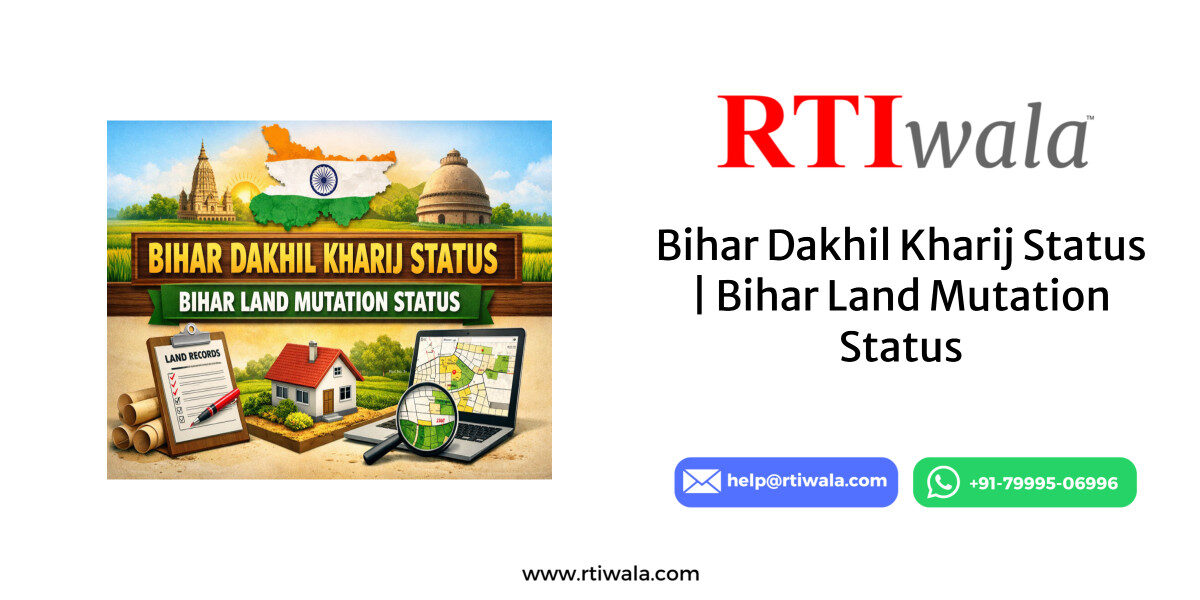
What Is Dakhil Kharij (Land Mutation) in Bihar and Why It Is Required
Dakhil Kharij, commonly known as land mutation, is the official process of updating land ownership records in Bihar government records after a property transfer. This transfer may happen due to sale, inheritance, gift deed, partition, or court order. Without Dakhil Kharij, the government still considers the previous owner as the legal holder in revenue records.
In Bihar, land records are directly linked to tax demand, Jamabandi, and future transactions. If mutation is not completed, the new owner may face serious issues in selling the land, taking loans, or proving ownership before authorities. Many people assume that registry alone is enough, but legally, registry does not update revenue records automatically.
Dakhil Kharij is required because:
- It establishes the new owner’s name in government land records
- It enables generation of Jamabandi and Lagaan receipts
- It protects the buyer from future ownership disputes
- It is mandatory for resale, mutation-based corrections, and government benefits
In Bihar, mutation is handled at the Circle Office (Anchal) level. Any delay or negligence at this level can block your property rights for years if not followed up properly.
How to Check Bihar Dakhil Kharij Status Online Using Jamabandi Portal
Bihar has made the Dakhil Kharij tracking process digital through the Jamabandi land records system. Applicants can check mutation status online without visiting the Circle Office repeatedly. However, many applications remain pending despite showing “submitted” online.
To check Bihar Dakhil Kharij status online, follow this process carefully:
- Visit the official Jamabandi / land records portal of Bihar
- Select Dakhil Kharij Status or Mutation Status option
- Enter District, Anchal (Circle), and Mauza details
- Provide Application Number or Khata / Plot details
- Submit to view current mutation status
The online status generally shows stages like:
- Submitted
- Under Process
- Pending at CO / RO level
- Approved
- Rejected
If your status is stuck at “Under Process” for months, it usually indicates file movement delay, missing documents, or internal objections. Online portals only reflect data entry, not actual decision-making inside the office.
Important practical insight:
- Online status does not mean approval
- No SMS or email is sent in most cases
- Officers are not bound to act unless tracked properly
This is why many landowners remain unaware that their application is silently pending or ignored.
Dakhil Kharij delayed or ignored? RTIwala uses RTI to force written accountability and official action—
📞 Call: +91-7999-50-6996
💬 WhatsApp: https://cc.rti.link/wadp
🌐 www.rtiwala.com
Documents Required for Bihar Land Mutation (Sale Deed, Inheritance, Gift)
Incorrect or incomplete documents are the most common reason for delay or rejection of Dakhil Kharij applications in Bihar. Even a minor mismatch between registry details and land records can freeze the file indefinitely.
The standard documents required for Bihar land mutation include:
- Registered Sale Deed / Gift Deed / Partition Deed
- Previous Jamabandi copy
- Applicant’s Aadhaar and identity proof
- Self-attested application form
- Affidavit (if required by Circle Office)
For inheritance-based mutation, additional documents are needed:
- Death Certificate of the owner
- Legal heir certificate or succession proof
- No-objection from other legal heirs (if applicable)
For gift deed mutation:
- Registered Gift Deed
- Relationship proof between donor and donee
- Acceptance proof if demanded by authority
Critical points most applicants miss:
- Names must exactly match across documents
- Plot and Khata numbers must align with Jamabandi
- Old land records errors are not auto-corrected
- Circle Office may demand additional clarifications without notice
If documents are incomplete or unclear, the application is often kept pending without formal rejection, leaving applicants confused for months.
How Many Days Dakhil Kharij Takes in Bihar and Current Processing Time
Officially, the Bihar Revenue Department states that Dakhil Kharij should be completed within 30 days from the date of application. This timeline applies when all documents are correct and no objections are raised. However, on the ground, the actual processing time is often much longer due to administrative delays.
In real situations across districts, applicants commonly experience:
- 60 to 90 days delay even in simple sale deed cases
- 6 months or more delay in inheritance or partition matters
- Applications remaining “Under Process” without any movement
The delay usually happens after online submission, when the file reaches:
- Revenue Karamchari for field verification
- Circle Inspector for report submission
- Circle Officer (CO) for final approval
If any one level does not act, the entire process stops. There is no automatic escalation system if officers delay verification or approval. This is why many applicants wait indefinitely despite having valid documents.
Important reality check:
- Online portal timelines are not enforced legally
- Officers face no penalty for delay unless questioned formally
- Applicants are rarely informed about internal objections
This gap between official timelines and actual practice is the core reason behind widespread mutation delays in Bihar.
Common Reasons for Dakhil Kharij Rejection or Pending Status
Most Dakhil Kharij applications in Bihar are not outright rejected; instead, they are kept pending without explanation. Understanding the common reasons helps applicants identify whether the delay is technical or intentional.
Frequent reasons for rejection or pending status include:
- Name mismatch between Sale Deed and Jamabandi
- Incorrect or outdated Khata / Plot number
- Missing legal heir consent in inheritance cases
- Old land record disputes not resolved earlier
- Objection raised by Revenue Karamchari during field visit
In many cases, applicants are never informed about these issues. The portal continues to show “Under Process,” while the file remains inactive at the Circle Office.
Other hidden reasons often include:
- Officer workload and backlog
- Expectation of repeated physical visits
- Lack of follow-up from applicant side
- Intentional delay due to local pressure or influence
A critical issue is that no speaking order is passed in most pending cases. Without a written rejection or objection note, applicants have no clarity on what is wrong or how to fix it.
This silent pendency is legally questionable, but most landowners are unaware that such delays can be challenged officially.
Dakhil Kharij delayed or ignored? RTIwala uses RTI to force written accountability and official action—
📞 Call: +91-7999-50-6996
💬 WhatsApp: https://cc.rti.link/wadp
🌐 www.rtiwala.com
What to Do If Bihar Land Mutation Status Is Stuck or Not Updated
When your Bihar Dakhil Kharij status remains unchanged for weeks or months, doing nothing only worsens the situation. Practical, step-by-step action is required instead of repeated verbal requests.
First, verify these points carefully:
- All uploaded documents are complete and readable
- Registry details match Jamabandi records exactly
- Application number and land details are correct
If everything is in order and the status is still stuck, take these actions:
- Visit the Circle Office and ask where the file is pending
- Request the reason for delay in writing
- Note down the name and designation of the officer handling your file
If no clear response is given, avoid endless visits. Instead:
- Submit a written reminder or representation
- Ask whether any objection or verification report is pending
- Request a copy of the internal noting, if available
What not to do:
- Do not rely only on verbal assurances
- Do not assume “system issue” explanations without proof
- Do not wait indefinitely without documenting the delay
Most applicants lose time because they hesitate to ask formal questions. But legally, mutation processing is an administrative duty, not a favor.
How RTI Can Help When Dakhil Kharij Is Delayed or Ignored by Officials
When Dakhil Kharij remains pending for months without any written reason, Right to Information (RTI) becomes the most effective and lawful tool to force accountability. RTI does not ask officers to “speed up” work verbally—it demands official records and explanations in writing, which officials are legally bound to provide.
In Bihar, most land mutation delays happen due to:
- Files lying unattended at Circle Office
- Verification reports not submitted deliberately
- No written objection issued despite pendency
RTI works because it converts silence into documented accountability. Once an RTI is filed, the department must reply within 30 days, failing which the officer becomes answerable under law.
RTI is especially powerful because:
- It creates a written trail
- It exposes internal delay points
- It prevents false verbal excuses
- It brings senior officers’ attention to the file
This is why many long-pending Dakhil Kharij cases move only after RTI intervention.
What Exactly You Can Ask Under RTI for Dakhil Kharij Delay
RTI is effective only when the right questions are asked. Vague RTIs get vague replies, but precise, record-based questions compel officers to act carefully.
Under RTI, you can legally ask:
- Current status of your Dakhil Kharij application
- Date-wise movement of your file within the office
- Name and designation of officers handling the file
- Whether any objection has been raised officially
- If yes, copy of objection or noting
You can also ask:
- Prescribed time limit for mutation as per rules
- Reason for exceeding the prescribed timeline
- Whether any verification report is pending
- Date on which field verification was conducted
These questions force the department to:
- Either complete the work
- Or officially admit the reason for delay
Once such information is provided in writing, officials usually act quickly to avoid further scrutiny.
Dakhil Kharij delayed or ignored? RTIwala uses RTI to force written accountability and official action—
📞 Call: +91-7999-50-6996
💬 WhatsApp: https://cc.rti.link/wadp
🌐 www.rtiwala.com
Why RTI Is More Effective Than Complaints or Repeated Visits
Many applicants keep visiting the Circle Office or submit complaints to higher authorities, but these actions often fail because they leave no legal record. RTI, on the other hand, is governed by a central law and carries consequences.
RTI works better because:
- Replies are monitored by the RTI Act
- False information attracts penalties
- Delayed replies invite First Appeal
- Senior officers are copied automatically
Unlike complaints, RTI:
- Cannot be ignored silently
- Requires document-based responses
- Creates pressure without confrontation
In practice, once an RTI is filed:
- Files are traced
- Pending reports are pushed
- Officers prioritize disposal
This is why RTI is widely used by experienced landowners and legal professionals to resolve revenue delays.
What Happens After Filing RTI in Bihar Land Mutation Cases
After RTI filing, one of the following usually happens within weeks:
- Dakhil Kharij is approved quietly
- Objection is issued officially for correction
- Written reason for delay is provided
In most cases, mutation gets completed because:
- Officers do not want written explanations questioned further
- Delay becomes visible in records
- Accountability shifts from applicant to authority
If the RTI reply is incomplete or misleading, the applicant can:
- File a First Appeal
- Escalate to senior revenue authorities
However, in the majority of cases, First RTI itself is sufficient to unblock the file.
Common Mistakes People Make While Using RTI for Dakhil Kharij
RTI is powerful, but incorrect drafting can weaken its impact. Avoid these mistakes:
- Asking opinions instead of records
- Using emotional or accusatory language
- Asking too many unrelated questions
- Not mentioning application reference clearly
RTI must always:
- Be fact-based
- Refer to specific application numbers
- Seek existing records only
Professionally drafted RTIs get faster, clearer replies and reduce the risk of evasive responses.
When You Should Definitely Use RTI for Bihar Land Mutation
RTI should be used immediately if:
- Mutation is pending beyond 30–45 days
- No written objection is given
- Officers keep giving verbal excuses
- Online status is unchanged for months
Delaying RTI only strengthens administrative neglect. Early intervention ensures your land rights are protected before complications arise.
Dakhil Kharij delayed or ignored? RTIwala uses RTI to force written accountability and official action—
📞 Call: +91-7999-50-6996
💬 WhatsApp: https://cc.rti.link/wadp
🌐 www.rtiwala.com
FAQs: Bihar Dakhil Kharij (Land Mutation) Status & Delay
1. How long does Dakhil Kharij actually take in Bihar in 2026?
Officially, Dakhil Kharij should be completed within 30 days, but in reality it often takes 60–180 days due to verification delays at Circle Office level.
2. Is land registry enough, or is Dakhil Kharij mandatory in Bihar?
Registry only transfers ownership on paper. Dakhil Kharij is mandatory to update government revenue records; without it, the seller’s name continues in Jamabandi.
3. Why does Bihar Dakhil Kharij status show “Under Process” for months?
This usually means the file is stuck at Revenue Karamchari, Circle Inspector, or CO level without written objection or field verification report.
4. Can Bihar land mutation be rejected without informing the applicant?
Yes. In many cases, applications are kept pending without written rejection, which is why applicants receive no clarity unless they ask formally.
5. What is the most common reason for Dakhil Kharij delay in Bihar?
The most common reasons are name mismatch, old Jamabandi errors, pending verification reports, or administrative inaction at the Circle Office.
6. What should I do if my Dakhil Kharij is pending despite correct documents?
If mutation is pending beyond 30–45 days, you should seek written reasons and consider filing an RTI to know where and why the file is stuck.
7. Can RTI really help in speeding up Bihar land mutation cases?
Yes. RTI forces officials to provide file movement details, reasons for delay, and officer responsibility, which often results in faster approval.
8. When is the right time to file RTI for Dakhil Kharij delay?
You should file RTI if there is no update after 30 days, no written objection, or repeated verbal excuses from officials.