






























Table of Contents
When and Why You Should File RTI in the Income Tax Department
You should file an RTI in the Income Tax Department when official channels stop responding or provide vague replies. RTI is not for opinions — it is for documented facts already available with the department.
Most users file RTI due to:
- Income tax refund stuck for months
- Scrutiny / notice without clear reason
- Rectification request pending
- Demand raised but breakup not shared
- Old assessment records not traceable
RTI works because it creates accountability under the RTI Act, with a fixed legal timeline and penalty provisions for delay.
File RTI when:
- Grievances on e-filing portal remain unresolved
- CPGRAMS response is generic or auto-closed
- Helpline gives verbal answers without records
- You need written proof for appeal or court
RTI is especially powerful before filing appeal or writ, as it helps you collect official evidence first.
What Information You Can Ask Through RTI from Income Tax
RTI allows you to ask only existing records, documents, files, and data — not explanations or interpretations. Asking the right information decides success.
You can legally ask for:
- Status and movement of your refund file
- Reasons recorded for delay or withholding
- Date of processing and officer handling the case
- Copies of internal notes, remarks, or approvals
- Demand calculation sheets and adjustment details
You can also seek:
- Scrutiny selection reason (system/manual)
- Copies of notices already issued
- Rectification action taken report
- CPC communication logs related to your PAN
RTI is valid if it asks:
- “Provide copy of…”
- “Provide status as on date…”
- “Provide noting / remarks available on record…”
RTI is rejected if you ask:
- Why a decision was taken (opinion)
- Future action or prediction
- Legal advice or justification
Correct drafting ensures no Section 8 rejection and faster, complete replies.
Facing delays, notices, refunds stuck, or no clarity from the Income Tax Department?
File an RTI through RTIwala to get official status, records, and accountability in writing.
📞 Call: +91-7999-50-6996 | 💬 WhatsApp: https://help.rti.link/ | 🌐 www.rtiwala.com
How to File RTI Online in Income Tax Department (Step-by-Step)
RTI in the Income Tax Department is filed only through the Central RTI Online Portal. There is no separate income-tax RTI website. Filing through the correct portal avoids rejection.
Official portal to use:
Before starting, keep these ready:
- PAN (mandatory for identification)
- Assessment Year (if case-specific)
- Relevant acknowledgment / reference number
- Clear, point-specific RTI questions
Step-by-Step Online Filing Process
Step 1: Open RTI Online Portal
- Visit rtionline.gov.in
- Click on “Submit Request”
- Accept the declaration to proceed
Step 2: Select Public Authority
- Choose “Ministry of Finance”
- Then select “Department of Revenue”
- Do NOT select CBDT randomly unless required
Wrong authority selection is the most common reason for RTI transfer and delay.
Step 3: Fill Applicant Details
- Name, mobile number, email ID
- Address as per ID proof
- Indian citizen option must be selected
Ensure details match PAN records to avoid identity objections.
Step 4: Draft RTI Application Carefully
- Ask only record-based questions
- Keep each point short and specific
- Avoid “why”, “explain”, or “justify”
Best practice:
- 5–8 clear points
- Each point ≤ 25–30 words
- Mention PAN / AY wherever required
Step 5: Upload Supporting Document (Optional)
- Upload acknowledgment or notice copy if relevant
- Not mandatory but helpful in faster identification
Step 6: Pay RTI Fee
- ₹10 online fee
- Payment via UPI / Net Banking / Card
- Save acknowledgment number after submission
This acknowledgment number is your legal proof of RTI filing.
Facing delays, notices, refunds stuck, or no clarity from the Income Tax Department?
File an RTI through RTIwala to get official status, records, and accountability in writing.
📞 Call: +91-7999-50-6996 | 💬 WhatsApp: https://help.rti.link/ | 🌐 www.rtiwala.com
Which Income Tax Office or PIO to Select for Your RTI
Selecting the correct PIO is more important than drafting. Wrong selection causes 30–60 days delay due to transfers.
How to Select the Correct PIO
Use this simple rule:
For refund / CPC issues
- Select: CPC Bengaluru
- Under: Department of Revenue
For scrutiny / assessment / notice
- Select: Jurisdictional Assessing Officer (AO)
- Based on PAN jurisdiction
For policy / circular / instruction
- Select: CBDT (HQ)
For grievance / processing delay
- Start with the authority holding the file, not grievance cell
How to Identify Your Jurisdictional AO
- Login to income-tax e-filing portal
- Go to Profile → Jurisdiction Details
- Note AO code, city, and ward
Mentioning jurisdiction details in RTI:
- Reduces transfer
- Improves response accuracy
- Fixes accountability on one officer
What Happens If You Select Wrong PIO
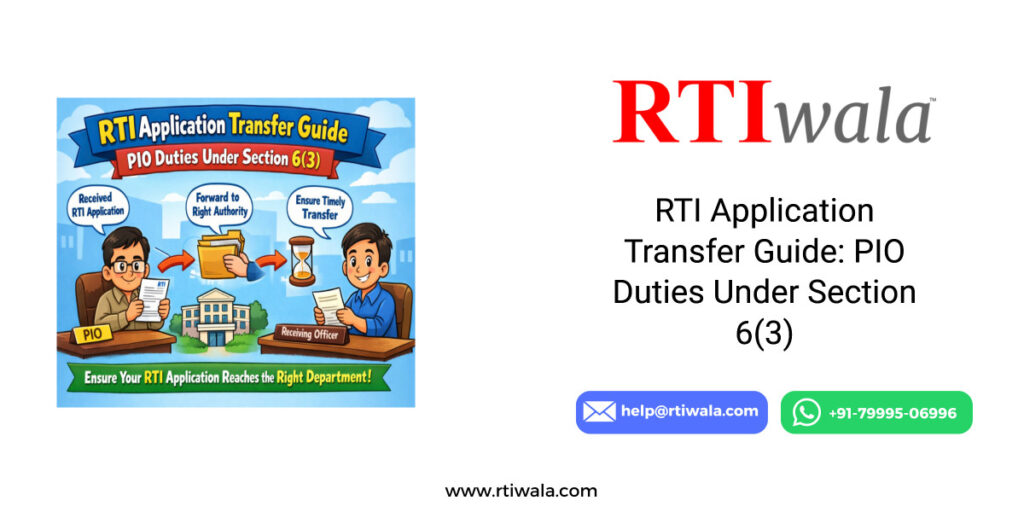
- RTI gets transferred under Section 6(3)
- Clock resets informally
- Reply becomes vague or partial
Correct PIO selection = faster + document-based reply.
How Much Time Income Tax Department Takes to Reply to RTI
Under the RTI Act, the Income Tax Department is legally bound to reply within a fixed time. This timeline is enforceable and delay can attract penalty.
Statutory timeline:
- 30 days from the date of RTI filing
- 48 hours if information relates to life or liberty (rare in tax cases)
The countdown starts from:
- Date of online submission (acknowledgment date)
- Not from the date officer opens the file
If RTI is transferred:
- New PIO gets fresh 30 days
- Applicant is usually not informed properly
What a Valid RTI Reply Must Contain
A complete RTI reply should include:
- Point-wise response to each query
- Copies of records, notes, or documents asked
- Name, designation, and signature of PIO
- Appeal details mentioned at the end
A reply is considered invalid or defective if:
- Points are skipped
- Generic statements are given
- Information is denied without section reference
Such replies are appealable.
Facing delays, notices, refunds stuck, or no clarity from the Income Tax Department?
File an RTI through RTIwala to get official status, records, and accountability in writing.
📞 Call: +91-7999-50-6996 | 💬 WhatsApp: https://help.rti.link/ | 🌐 www.rtiwala.com
What to Do If Income Tax RTI Reply Is Delayed, Incomplete, or Rejected
RTI failure does not mean your case is closed. The RTI Act provides a structured remedy path.
Case 1: No Reply Within 30 Days
If no reply is received:
- You gain automatic right to First Appeal
- No waiting, no reminder required
Delay itself becomes a ground of appeal.
Case 2: Incomplete or Vague Reply
File appeal if:
- Only partial points are answered
- “Information not available” is stated without proof
- Data is denied without citing RTI sections
Case 3: Information Denied or Rejected
Rejection is valid only if:
- Section 8 or 9 is clearly quoted
- Reason is explained point-wise
Rejection is invalid if:
- “Not covered under RTI” is written casually
- Information is labeled “confidential” without section
Invalid denial strengthens your appeal.
Facing delays, notices, refunds stuck, or no clarity from the Income Tax Department?
File an RTI through RTIwala to get official status, records, and accountability in writing.
📞 Call: +91-7999-50-6996 | 💬 WhatsApp: https://help.rti.link/ | 🌐 www.rtiwala.com
How to File First Appeal Against Income Tax RTI Response
First Appeal is your most powerful step. Over 60% RTI cases get resolved at this stage itself.
Step-by-Step First Appeal Process (Online)
Step 1: Visit RTI Portal
- Go to https://rtionline.gov.in
- Click “Submit First Appeal”
Step 2: Enter RTI Details
- RTI Registration Number
- Date of RTI filing
- Select concerned public authority
Step 3: Draft Appeal Grounds Clearly
- Mention delay / incomplete reply / illegal denial
- Refer to RTI sections violated
- Keep it factual and document-based
Do NOT argue emotionally. Stick to:
- Timelines
- Missing records
- Wrong application of exemptions
Step 4: Submit Appeal
- No fee required
- Save appeal acknowledgment
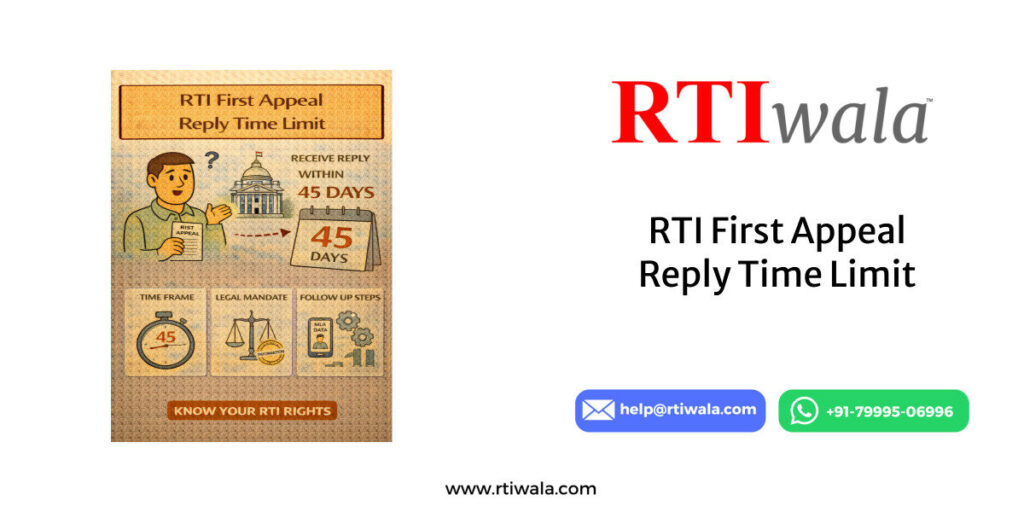
The First Appellate Authority (FAA) must respond within:
- 30–45 days
FAA reply is binding on PIO.
How RTI Helps You Actually Resolve Income Tax Issues
RTI is not just about information — it is a pressure mechanism.
RTI helps you:
- Force file movement
- Fix responsibility on officers
- Collect evidence for appeal / court
- Unlock stuck refunds, demands, and assessments
Most importantly, RTI creates a paper trail that departments cannot ignore.
Need Professional RTI Support?
If RTI drafting, authority selection, or appeal handling feels confusing, RTIwala provides structured and safe support.
RTIwala helps with:
- Correct RTI drafting (no rejection risk)
- Identifying the right Income Tax PIO
- Filing First Appeal professionally
- Follow-ups and escalation strategy
📞 Call now: +91-7999-50-6996
🔗 Visit: www.rtiwala.com
1. Can I file RTI in the Income Tax Department online?
Yes. RTI in the Income Tax Department can be filed online through the Central RTI Online Portal under the Ministry of Finance → Department of Revenue → Income Tax Department. The filing fee is ₹10, and the reply is legally time-bound within 30 days.
2. What type of Income Tax issues can be resolved using RTI?
RTI is useful for status-based and record-based issues, such as refund delays, pending rectification, unclear notices, processing status of ITR, or knowing which officer is handling your case. RTI cannot be used for explanations, legal advice, or opinions.
3. How long does the Income Tax Department take to reply to an RTI?
As per the RTI Act, the Income Tax Department must reply within 30 days from the date of filing. If the information concerns life or liberty, it must be provided within 48 hours. Delays without valid reasons can be challenged through a First Appeal.
4. Why do Income Tax RTI applications get rejected or incomplete replies?
Income Tax RTIs are commonly rejected due to:
- Asking “why” or opinion-based questions
- Requesting information not available on record
- Mixing multiple unrelated issues in one RTI
- Seeking third-party personal data
Proper drafting focused on existing records significantly reduces rejection risk.
5. What should I do if my Income Tax RTI reply is delayed or unclear?
If the reply is delayed, incomplete, or evasive, you can file a First Appeal within 30 days to the designated Appellate Authority of the Income Tax Department. The appeal challenges non-compliance, not the content itself, and often results in clearer disclosure.