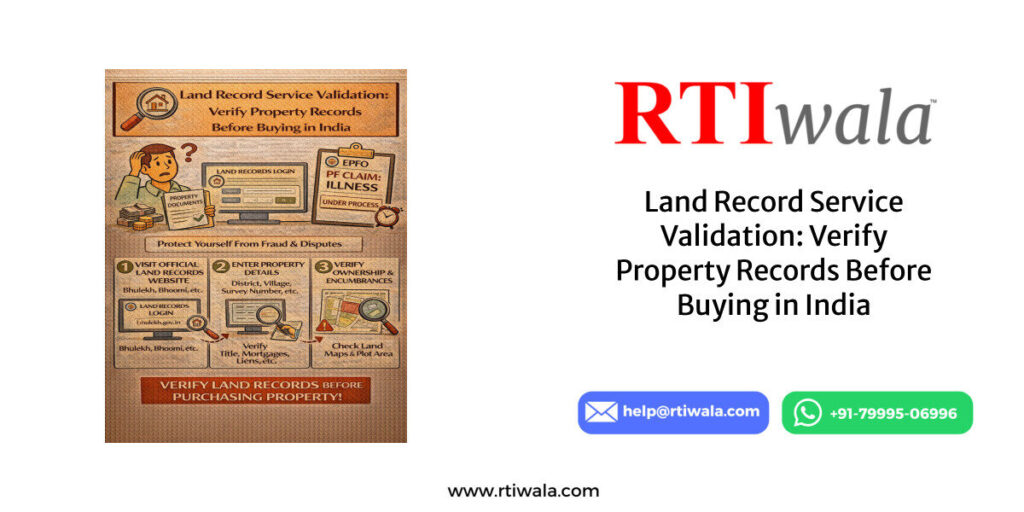





























How to Check Land Ownership Records Before Buying Property in India
Before paying even a token amount for any property, the first and most critical step is verifying land ownership records. In India, a large number of property disputes arise because buyers rely on verbal claims, outdated papers, or incomplete records. Ownership verification protects you from fraud, double sales, and future court cases.
Land ownership records are maintained by government revenue departments and are considered primary evidence of who legally owns the land. If these records don’t match what the seller claims, the risk is extremely high.
Start With the Latest Government Ownership Record
Always ask for the most recent ownership record, not photocopies or old documents. Ownership can change due to sale, inheritance, partition, or court orders. Old records often hide these changes.
Check whether:
- The seller’s name appears as the current recorded owner
- The ownership entry is updated till the latest year
- There is no mention of pending mutation or transfer
If the seller avoids sharing updated records, treat it as a red flag.
Match Owner Name With Seller Identity
Ownership verification is not just about documents—it’s about identity matching. The name in land records must exactly match the seller’s legal identity.
Carefully compare:
- Name spelling (even minor mismatches matter)
- Father’s / husband’s name
- Age or address (if mentioned)
- Joint ownership names, if any
If land is jointly owned, all owners must consent to the sale. One owner selling alone can make the transaction legally invalid.
Verify Ownership History, Not Just Current Owner
A common mistake buyers make is checking only the current owner. Fraud often happens when earlier transfers were illegal or incomplete.
You should verify:
- How the seller acquired the land (sale, inheritance, gift, allotment)
- Whether each transfer was properly recorded
- Whether ownership changed legally at every stage
If ownership history is broken or unclear, future claims from previous owners or heirs are very likely.
Property records unclear or ownership doubtful? RTIwala gets official confirmations through RTI so you avoid fraud—contact us now.
📞 Call: +91-7999-50-6996
💬 WhatsApp: https://help.rti.link/
🌐 www.rtiwala.com
Check Mutation Status Carefully
Mutation reflects the transfer of ownership in government records after sale or inheritance. Many properties are sold without mutation being completed.
Confirm:
- Mutation is completed in the seller’s name
- Mutation date is after the last sale deed
- No mutation objections are pending
Without mutation, the seller may not be recognized as the legal owner in government records—even if they hold a sale deed.
Cross-Check With Physical Land Details
Ownership records must match the actual land on ground. Fraudsters often show correct papers for a different parcel of land.
Verify:
- Survey number / plot number
- Area and boundaries
- Village, tehsil, district details
- Land classification (agricultural, residential, converted)
Any mismatch between documents and physical land is a serious legal risk and should stop the deal immediately.
Don’t Rely on Broker or Verbal Assurances
Property brokers often say things like “records are clean” or “this is standard.” These statements have no legal value.
Always rely on:
- Official government records
- Written documents
- Verifiable ownership entries
If someone discourages you from checking records properly, it usually means something is being hidden.
Why Ownership Verification Is Non-Negotiable
Skipping ownership checks can lead to:
- Property cancellation by courts
- Loss of entire investment
- Long-term litigation
- Inability to resell or construct
Once money is paid, correcting ownership issues becomes expensive and stressful. Prevention is always easier than legal recovery.
When Records Are Confusing or Access Is Denied
In many real cases:
- Records are partially missing
- Seller claims “system error”
- Offices refuse to clarify ownership
- Conflicting entries appear in records
This is exactly where written, government-confirmed information becomes crucial. Verbal explanations are unreliable; only official replies matter.
Property records unclear or ownership doubtful? RTIwala gets official confirmations through RTI so you avoid fraud—contact us now.
📞 Call: +91-7999-50-6996
💬 WhatsApp: https://help.rti.link/
🌐 www.rtiwala.com
Which Land Records Must Be Verified to Avoid Property Fraud
Property fraud in India usually happens not because documents are missing—but because buyers don’t verify the right records. Each land record serves a specific legal purpose, and skipping even one can expose you to ownership disputes, hidden claims, or illegal transfers.
Below are the mandatory land records that must be verified before buying any property.
Record of Rights (RoR / Jamabandi / Patta)
The Record of Rights is the primary ownership document maintained by the revenue department. It reflects who the government recognizes as the legal holder of the land.
Always verify:
- Owner’s name matches the seller
- Survey number and land area are accurate
- Land type is clearly mentioned
- No remarks indicating dispute or restriction
If the RoR does not show the seller’s name, the transaction is legally unsafe—regardless of what other documents say.
Sale Deed (Complete Chain, Not Just the Latest)
A sale deed proves transfer of ownership, but only when it forms a complete chain. Fraud occurs when gaps exist between earlier transfers.
Check carefully:
- Each sale deed from the first owner to the current seller
- Proper registration and stamp duty paid
- Clear description of land and boundaries
- No missing or unregistered transfers
Even one missing deed can allow previous owners or heirs to challenge your ownership later.
Mutation Record
Mutation confirms that ownership changes are reflected in government revenue records after a sale or inheritance.
Ensure that:
- Mutation is completed in the seller’s name
- Mutation date follows the sale deed date
- No objections or appeals are pending
Without mutation, ownership is not officially recognized for tax and administrative purposes.
Encumbrance Record
Encumbrance records show whether the land is burdened with loans, mortgages, leases, or legal claims.
You must confirm:
- No active bank loans
- No registered agreements or charges
- No court attachments
Many buyers rely on seller assurances and later discover outstanding liabilities attached to the property.
Land Use & Conversion Record
Land must be legally usable for the purpose you intend—residential, commercial, or agricultural.
Verify:
- Current land-use classification
- Conversion approval if agricultural land is converted
- Compliance with local development rules
Buying non-converted land for construction can lead to demolition notices and penalties.
How to Verify Property Documents Online Through State Land Record Portals
Most Indian states now provide online access to land records, but many buyers misuse these portals or misunderstand the data shown.
Online verification is helpful—but only when done correctly.
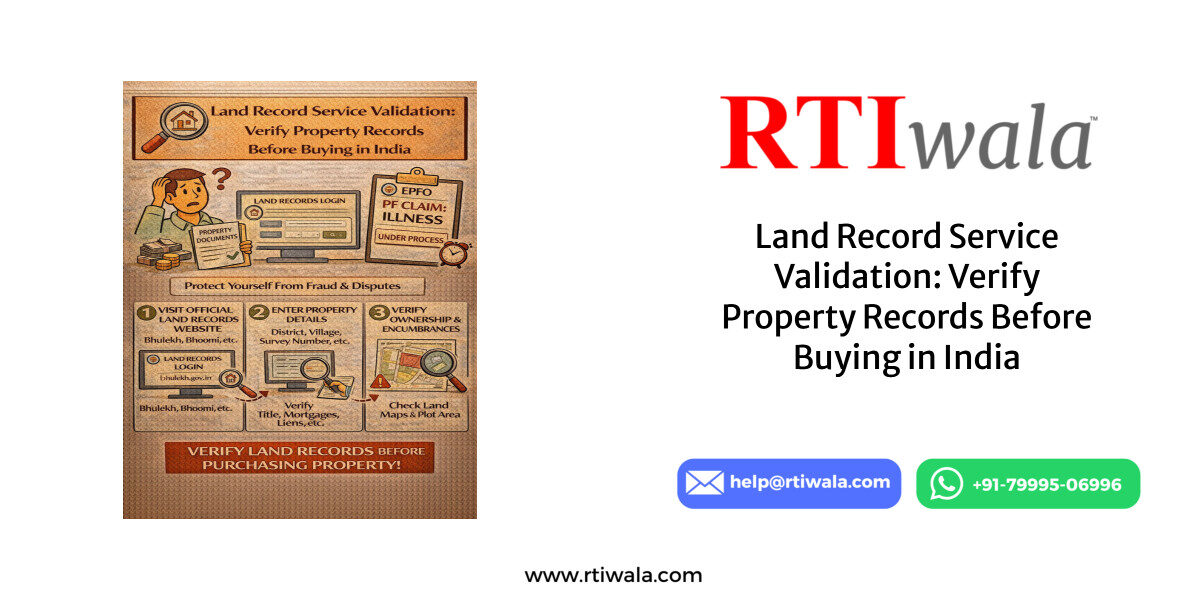
Use Official State Revenue Portals Only
Each state maintains its own land records portal. Avoid third-party websites that aggregate data, as they may show outdated or incomplete information.
When checking online:
- Use the official government portal
- Select the correct district, tehsil, and village
- Enter exact survey or plot number
A small input error can show records of an entirely different property.
Download the Latest Digitally Signed Copy
Viewing records on screen is not enough. Always download the latest digitally signed extract.
Confirm:
- Issue date is recent
- Digital signature or verification code is present
- No warning notes or remarks are hidden in footnotes
Old or unsigned copies should never be relied upon for purchase decisions.
Cross-Verify Across Multiple Records
Online portals often show ownership, mutation, and land type separately. Fraud is detected when these don’t align.
Match:
- Owner name across RoR and mutation
- Area and boundaries across records
- Land classification with local planning rules
If even one detail conflicts, the records need deeper verification before proceeding.
Understand Portal Limitations
Online land records:
- May not reflect recent court cases
- May not show unregistered agreements
- Can be delayed in updating mutations
That’s why online verification is the first step—not the final confirmation.
What Online Records Cannot Replace
Online portals cannot replace:
- Legal scrutiny of sale deed chain
- Verification of hidden disputes
- Confirmation of pending government claims
If a seller says “everything is online, no need to check further,” it’s a warning sign.
Why Buyers Still Get Trapped Despite Online Records
Many buyers assume government portals are error-free. In reality:
- Data entry mistakes exist
- Updates are delayed
- Some records are partially digitized
Relying blindly on online data without cross-checking leads to legal disputes after purchase.
Property records unclear or ownership doubtful? RTIwala gets official confirmations through RTI so you avoid fraud—contact us now.
📞 Call: +91-7999-50-6996
💬 WhatsApp: https://help.rti.link/
🌐 www.rtiwala.com
Common Land Record Mismatches That Lead to Legal Disputes
Most property disputes in India do not start in court—they start at the record-verification stage, where small mismatches are ignored. These mismatches later become legal weapons against buyers.
The most common and dangerous mismatches are listed below.
Name & Identity Mismatch
Even minor spelling differences can invalidate ownership claims.
Watch for:
- Different spellings of the owner’s name
- Missing father’s / spouse’s name
- Initials used in one record and full name in another
- Joint owners missing from sale documents
Courts rely on exact identity matching, not assumptions.
Survey Number & Boundary Discrepancies
Fraudsters often show valid papers for a different parcel of land.
Red flags include:
- Same plot number but different boundaries
- Area mismatch (e.g., paper shows 1,000 sq ft, site is larger)
- Neighbor names not matching ground reality
Boundary mismatches are extremely difficult to fix after purchase.
Sale Deed vs Revenue Record Conflict
In many cases, sale deeds exist but revenue records are not updated.
This leads to:
- Seller holding a deed but not appearing as owner
- Previous owner still shown in records
- Multiple people claiming ownership
Revenue records are treated as strong evidence in disputes, not just sale deeds.
Land Use & Classification Errors
Buyers often assume land use is correct based on broker claims.
Common issues:
- Agricultural land sold as residential
- Conversion approval missing
- Restricted or government-notified land sold illegally
Incorrect land classification can block construction permanently.
How to Confirm If Land Is Free From Loans, Disputes, or Government Claims
Many properties look clean on the surface but carry hidden liabilities. These liabilities legally attach to the land—not the seller.
Check for Loans & Mortgages
Loans taken by previous owners remain attached unless cleared officially.
Verify:
- Encumbrance records
- Bank charge registrations
- Loan closure certificates (if applicable)
Never rely on “loan will be cleared after sale” promises.
Look for Court Cases & Legal Disputes
Property under litigation can be sold—but ownership becomes uncertain.
Confirm:
- No civil suits pending
- No stay orders
- No family or inheritance disputes
Even a small pending case can freeze resale or development.
Government Claims & Acquisition Notices
Land may be affected by:
- Road widening
- Infrastructure projects
- Environmental restrictions
- Ceiling or land reform laws
Such claims can lead to partial or total loss without compensation if discovered late.
Tax & Revenue Dues
Unpaid dues can legally transfer to the buyer.
Check:
- Land revenue payments
- Property tax status
- Local authority charges
Dues must be cleared before registration.
Property records unclear or ownership doubtful? RTIwala gets official confirmations through RTI so you avoid fraud—contact us now.
📞 Call: +91-7999-50-6996
💬 WhatsApp: https://help.rti.link/
🌐 www.rtiwala.com
What to Do If Property Records Are Missing, Wrong, or Manipulated
This is more common than people admit. Missing or manipulated records are a serious legal risk, but they are not always unsolvable.
Do Not Proceed With Payment
If records are:
- Incomplete
- Contradictory
- Unavailable
- Explained verbally without proof
Stop the transaction immediately. Paying even a token weakens your legal position.
Demand Written, Official Clarification
Only written government responses have legal value.
You need confirmation on:
- Correct ownership
- Mutation status
- Dispute history
- Encumbrances
- Government claims
Oral explanations from officials or brokers are not reliable.
Why Verbal Assurances Are Dangerous
Common statements like:
- “System update pending”
- “Old issue, no problem”
- “Everyone buys like this”
These have zero legal standing and collapse instantly in court.
When Records Appear Manipulated
Signs of manipulation include:
- Overwritten entries
- Missing pages
- Sudden ownership changes
- Inconsistent dates
Such cases require document-based verification directly from authorities, not assumptions.
The Cost of Ignoring Record Issues
Buyers who ignore record problems often face:
- Years of litigation
- Frozen property use
- No resale value
- Complete financial loss
Once registered, correcting records becomes exponentially harder.
FAQs: Land Ownership & Property Verification in India
1. How can I check land ownership records before buying property in India?
You should verify the latest government land records such as RoR/Jamabandi/Patta, mutation entries, and the complete sale deed chain through official state land record portals and revenue offices.
2. Which land documents are most important to avoid property fraud?
The most critical documents are Record of Rights (RoR), mutation records, complete sale deed chain, encumbrance records, and land-use or conversion approvals.
3. Are online land records reliable for property verification?
Online land records are reliable for initial verification, but they may not reflect recent disputes, court cases, or unregistered claims. Cross-verification with official records is always necessary.
4. What are common mistakes buyers make while verifying land records?
Common mistakes include checking only the latest sale deed, ignoring mutation status, trusting verbal assurances, and not matching physical land details with records.
5. How can I confirm if a property has loans or legal disputes?
You must check encumbrance records, court case status, bank charge entries, and government acquisition notices to ensure the land is free from financial or legal liabilities.
6. What should I do if land ownership records are missing or incorrect?
Do not proceed with the purchase. Seek written clarification from the concerned government authority and resolve discrepancies before making any payment.
7. Is it safe to buy property if land records show minor mismatches?
No. Even small mismatches in names, survey numbers, or boundaries can lead to serious legal disputes later. All records must be fully consistent before buying.