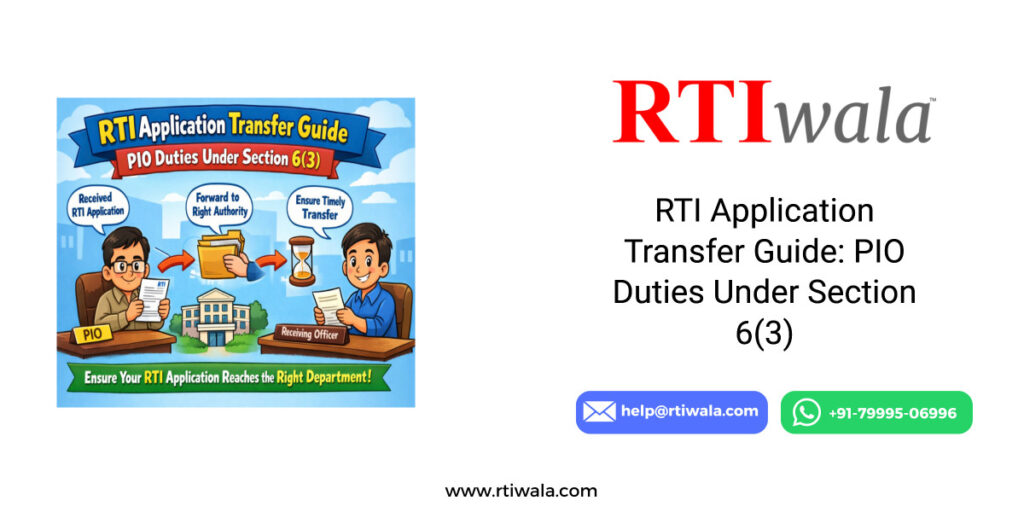





































RTI Received for Another Department What a PIO Should Do Immediately
Public Information Officers frequently receive RTI applications that do not relate to their office or records. In such situations, many PIOs hesitate, return the application, or ask the applicant to refile. This approach is incorrect and often leads to appeals and complaints.
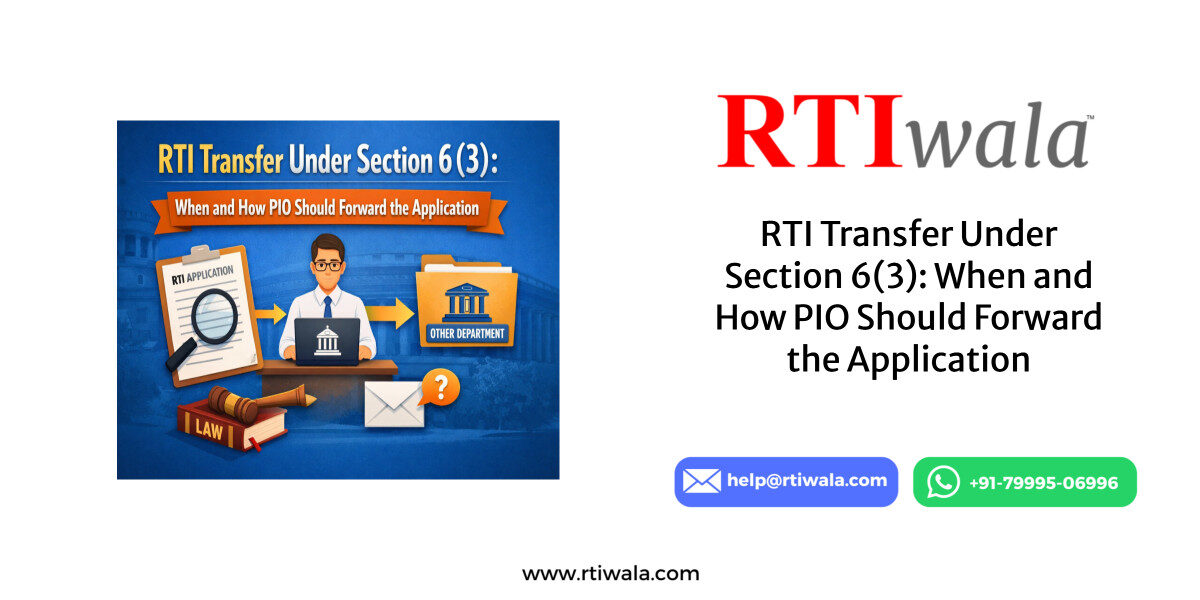
Under Section 6(3) of the RTI Act, the responsibility to transfer the application lies entirely with the PIO, not the applicant. Rejecting or returning the request is a procedural violation and can attract accountability.
As soon as an unrelated RTI is received, the PIO should take immediate internal action rather than delaying the process.
Follow these steps immediately:
- Review the subject matter of the RTI on the same day of receipt
- Identify the correct department or public authority holding the information
- Check whether full or partial information belongs elsewhere
- Initiate transfer without waiting for clarification from the applicant
It is important to understand that the applicant is not expected to know the internal structure of departments. Therefore, directing the citizen to “file again” defeats the purpose of the Act.
If even a portion of the information relates to another authority, that portion must be transferred while the remaining part is processed internally. Holding the entire application unnecessarily causes delay and increases the risk of appeal.
Prompt action on the first day itself ensures compliance and protects the PIO from future disputes.
RTI transfer confusion or compliance risk? RTIwala guides you step-by-step to handle every RTI legally and correctly — contact now.
📞 Call: +91-7999-50-6996
💬 WhatsApp: https://help.rti.link/
🌐 www.rtiwala.com
Step-by-Step Procedure to Transfer an RTI Application Under Section 6(3)
A proper transfer is not merely forwarding an email or verbally informing another office. It must follow a clear and documented procedure to ensure legal validity and traceability.
The transfer must be formal, recorded, and communicated to both the receiving authority and the applicant.
The correct procedure should include the following steps:
- Prepare an official forwarding letter addressed to the concerned PIO
- Attach a copy of the original RTI application
- Clearly mention the subject and reason for transfer
- Specify that the transfer is being made under Section 6(3) of the RTI Act
- Dispatch through official channel (email, dak, or portal system)
- Record the dispatch number and date in the RTI register
Proper documentation is essential. If the matter reaches First Appeal or Information Commission, the PIO must prove that the transfer was completed within time and through official means.
The applicant must also be informed about the transfer. This can be done by:
- sending a written intimation letter
- or updating the online RTI portal
- or emailing the transfer details
The intimation should mention the name and address of the new public authority. This helps the applicant track the case and reduces unnecessary complaints.
Never keep the application pending internally once it is clear that the information is not held by your office. Delayed transfer is treated as non-compliance.
A systematic, documented transfer protects both administrative efficiency and legal responsibility.
Mandatory Timeline and Intimation Rules a PIO Must Follow During Transfer
Timeliness is the most critical element in RTI transfers. Even if the transfer is correct, delay alone can result in appeals or penalty proceedings.
Section 6(3) clearly states that the transfer must be completed within five days from the date of receipt of the application. This is not flexible or optional.
The following timeline rules must be strictly followed:
- Transfer within five calendar days
- Inform the applicant immediately after transfer
- Ensure records show exact date of receipt and dispatch
- Avoid holding the file beyond the permitted period
If the PIO exceeds this five-day limit, the applicant may claim delay, and the responsibility falls on the original PIO. The receiving authority’s timeline begins only after proper transfer.
Failure to transfer on time may lead to:
- First Appeal against the PIO
- show-cause notices
- adverse remarks in orders
- possible penalty proceedings
Therefore, maintaining an internal tracking mechanism is essential. Every office should maintain:
- an RTI inward register
- transfer date column
- acknowledgement proof
- intimation record
These simple administrative practices prevent disputes and demonstrate compliance during audits or hearings.
Clear communication is equally important. The applicant should never remain unaware of where the application has been sent. Lack of intimation often results in unnecessary grievances and complaints.
By respecting the five-day rule and issuing prompt intimation, the PIO ensures lawful processing and avoids future legal exposure.
Legal Duties and Accountability of PIO While Forwarding Applications
When a Public Information Officer handles an RTI transfer, it is not merely an administrative formality. It is a statutory obligation. Once an RTI is received, the PIO becomes legally responsible for ensuring that the application reaches the correct authority within the prescribed time.
The RTI Act treats transfer as a mandatory duty, not discretion. Ignoring, delaying, or casually forwarding the application without records can expose the PIO to personal accountability.
A PIO must clearly understand the following legal responsibilities:
- Transfer the application if information is not held by the office
- Transfer only to the correct and relevant public authority
- Complete the transfer within five days
- Inform the applicant about the transfer
- Maintain documentary proof of the action taken
If these steps are not followed, the Information Commission may treat it as “deemed refusal” or “delay,” even if the information was not originally available with the PIO.
Accountability does not end after forwarding. The PIO must be able to demonstrate:
- date of receipt
- date of transfer
- mode of dispatch
- copy of intimation sent to applicant
In appeal or complaint proceedings, verbal explanations are not accepted. Only written records protect the officer.
The law also empowers the Commission to initiate action where negligence or deliberate delay is found. Therefore, every transfer decision must be documented and reasoned.
By treating transfer as a compliance duty rather than routine paperwork, the PIO reduces legal exposure and ensures smooth RTI administration.
RTI transfer confusion or compliance risk? RTIwala guides you step-by-step to handle every RTI legally and correctly — contact now.
📞 Call: +91-7999-50-6996
💬 WhatsApp: https://help.rti.link/
🌐 www.rtiwala.com
Common Transfer Mistakes That Lead to Appeals, Complaints or Penalty on PIO
Many RTI appeals arise not because information was denied, but because transfer was mishandled. Small procedural errors often turn into formal complaints, which increases workload and scrutiny on the PIO.
Most issues occur due to avoidable administrative habits rather than complex legal problems.
Some common mistakes include:
- Returning the application to the applicant instead of transferring
- Asking the citizen to “file fresh RTI”
- Delaying transfer beyond five days
- Forwarding verbally or informally without written record
- Transferring to the wrong authority
- Not informing the applicant about the transfer
- Keeping the application pending for internal discussions
Returning or rejecting the request is particularly risky. The Act does not allow refusal merely because the office does not hold the information. Such actions almost always lead to First Appeal.
Another frequent error is partial responsibility confusion. If only part of the information belongs elsewhere, some PIOs transfer the entire file. This causes unnecessary delay. Only the relevant portion should be transferred.
Failure to document the transfer is equally problematic. During hearings, if proof is missing, the Commission may assume that no transfer occurred.
These mistakes often result in:
- First Appeal orders against the PIO
- show-cause notices
- departmental scrutiny
- risk of monetary penalty
Most of these consequences are preventable through simple procedural discipline. Correct process is the best protection.
Avoiding these errors ensures fewer appeals, faster disposal of RTIs, and reduced administrative burden.
Practical Checklist to Ensure Every RTI Is Correctly Transferred and Legally Compliant
To maintain consistency and avoid errors, every PIO office should follow a standard checklist for RTI transfers. A structured process removes confusion and ensures that no legal requirement is missed.
Instead of handling each case differently, a fixed workflow improves speed and accountability.
A practical daily-use checklist may include:
- Verify subject matter immediately upon receipt
- Identify whether full or partial transfer is required
- Note receipt date in RTI register
- Prepare written forwarding letter
- Attach RTI copy and supporting papers
- Dispatch within five days
- Send written intimation to applicant
- Record dispatch proof and acknowledgement
- Update status in tracking system
Maintaining a transfer file or digital log for each RTI is highly recommended. This makes it easy to produce records during audits, appeals, or Commission hearings.
Offices handling large volumes of RTIs can also:
- designate a transfer officer
- maintain a pre-drafted transfer letter format
- use email templates for intimation
- review pending cases weekly
These simple administrative practices save time and significantly reduce the risk of complaints.
A compliant transfer system benefits both the department and the citizen. Applications reach the correct authority faster, response time improves, and legal disputes decrease.
When every transfer follows a documented checklist, the PIO remains legally safe and operationally efficient.
Frequently Asked Questions
What should a PIO do if an RTI application is received for information not held by their office?
The PIO must not reject or return the application. The correct legal action is to transfer it to the concerned public authority under Section 6(3) within five days and inform the applicant about the transfer details.
Is transferring an RTI under Section 6(3) mandatory or optional for a PIO?
Transfer is mandatory. If the requested information belongs to another department, the PIO is legally bound to forward the application. Asking the applicant to file again is a violation of the RTI Act.
Within how many days must a PIO transfer the RTI application?
The transfer must be completed within five calendar days from the date of receipt of the RTI. Delay beyond this period may lead to appeals, complaints, or accountability proceedings against the PIO.
Should the applicant be informed after the RTI is transferred?
Yes. The PIO must send written or electronic intimation to the applicant mentioning the name and contact details of the new public authority. Without intimation, the transfer is considered incomplete.
Can a PIO return or reject an RTI because it was filed with the wrong department?
No. Returning or rejecting the application is not permitted under the Act. The PIO must transfer it instead. Rejection on this ground can lead to First Appeal and adverse orders.
Who is responsible if the RTI is not transferred on time?
The original PIO remains responsible for delay until the transfer is properly completed. Failure to act within five days may result in show-cause notices or penalty proceedings by the Information Commission.
What records should a PIO maintain as proof of RTI transfer compliance?
The PIO should maintain the date of receipt, forwarding letter copy, dispatch proof, transfer date, and applicant intimation record. Proper documentation protects the officer during appeals or audits.