





















RTI Filing Guide for District Police Complaints Authority Ajmer
1. What Complaints You Can File RTI For at District Police Complaints Authority Ajmer
Most citizens struggle because their police complaints remain pending, ignored, or closed without explanation. The District Police Complaints Authority (DPCA) Ajmer handles misconduct-related issues, but departments often delay updates. Through RTI, you can legally demand clarity and force transparency. This section explains exactly what types of complaint-related information you can request — fully aligned with what users actually search for.
You can file RTI for the following complaint-related matters in Ajmer:
- Cases where police did not register FIR or refused to take a complaint
- Complaints of police inaction, even after multiple visits
- Misconduct by police officers such as abuse of power, threats, extortion, or negligence
- Complaints wrongly marked as resolved/closed without investigation
- Cases transferred between stations without informing the complainant
- Delay in Action Taken Report (ATR) or no update for months
- Unclear movement of your complaint file inside Ajmer Police system
Through RTI, a citizen gets official, written, time-bound responses, making it harder for authorities to delay or deny information. This empowers users who have been waiting months or years for updates.
2. How to File an RTI to the District Police Complaints Authority Ajmer (Step-by-Step Guide)
Filing an RTI to DPCA Ajmer is extremely effective when your complaint is stuck, unanswered, or mishandled. A correctly drafted application ensures you receive specific documents, explanations, and action status. Below is a simple, practical 4-line explanation + actionable bullet steps so every user can follow easily.
RTI should be addressed to the Public Information Officer (PIO), District Police Complaints Authority, Ajmer. Your goal is to request clear, document-based updates on the status and handling of your police complaint. Make sure your application avoids accusations and focuses on verifiable information, because DPCA responds much faster to precise RTI requests.
Step-by-Step RTI Filing (User-Friendly Guide)
- Write your RTI under Section 6(1) of the Right to Information Act, 2005
- Mention your complaint number, date, police station, and officer (if known)
- Ask for file movement, action taken, delays, responsible officers, and ATR copies
- Pay the ₹10 RTI fee via IPO / Court Fee / Online Payment (if applicable in Rajasthan)
- Attach any reference documents (copy of complaint acknowledgment, screenshots, etc.)
- Submit via Speed Post or in person at DPCA office and keep the receipt safe
- Track delivery using the Speed Post number so you know when the RTI is received
A well-crafted RTI increases the pressure on the authority, as the PIO must respond within 30 days under the RTI Act.
3. How to Check Status of Your Police Complaint Through RTI in Ajmer
Many users search for “How to check police complaint status in Ajmer using RTI?” because local police systems often do not show updates online. RTI becomes the legally binding method to get official, written status updates.
Through RTI, you can request every stage of complaint movement inside the Ajmer Police or DPCA Ajmer. This ensures you know whether the complaint is pending, escalated, under inquiry, closed, or intentionally delayed.
Using RTI to check your complaint status:
- Ask for the current status of your complaint file
- Request names/designations of officers handling your complaint
- Seek the date-wise movement of your complaint within the department
- Request reasons for delay or no action
- Ask for next steps the authority plans to take and expected timelines
RTI forces the authority to provide verified, written status updates — much more reliable than verbal assurances from the police station.
4. How to Use RTI to Get Action Taken Report (ATR) from Ajmer Police Complaints Authority
When a police complaint remains pending for weeks or months, the most powerful document you can demand is the Action Taken Report (ATR). This report explains what steps the police or DPCA Ajmer actually took on your complaint — and RTI gives you the legal right to obtain it. Most users are unaware that ATR is not automatically shared unless specifically requested, which is why filing RTI becomes essential.
Through RTI, you can request a certified copy of the ATR, which includes inquiry notes, officer remarks, internal communications, and progress details. This forces the authority to reveal whether your complaint is being processed or simply lying unattended. Many departments release ATR immediately after an RTI is filed, because they must justify delays in writing.
What to Ask in RTI for ATR:
- Certified copy of the Action Taken Report on your complaint
- Date-wise investigation steps taken by officers
- Details of inquiry officer, including name and designation
- If ATR is not prepared, ask for reasons for non-preparation
- Expected timeline for completing the investigation or inquiry
Once you receive the ATR, you gain a clear understanding of how seriously your complaint is being handled and whether further escalation is needed.
5. Common Reasons for Delay or No Response and How RTI Helps Resolve Them
Police authorities often delay updates due to internal workload, shortage of staff, or simple negligence, leaving citizens confused and frustrated. In Ajmer, many complaints remain in “inquiry pending” status without any real movement. This lack of transparency makes it impossible for complainants to understand what is happening behind the scenes — and this is where RTI becomes your strongest enforcement tool.
RTI compels the department to justify the delay in writing, making officers more accountable. Once an RTI is filed, authorities must respond in 30 days, which forces them to locate your file, check its status, and prepare a response. This alone accelerates pending cases significantly. If they still fail to respond, you can escalate the matter legally, which increases pressure on the department.
Common Reasons for Delay:
- Complaint not assigned to any officer
- Inquiry pending without proper supervision
- File misplaced or not forwarded to the right desk
- Officers on leave or transferred without handing over the file
- Lack of documentation or incomplete inquiry notes
How RTI Resolves These Issues:
- Forces the department to locate and review your file
- Creates written accountability for the inquiry officer
- Speeds up ATR preparation and complaint movement
- Helps expose negligence or inaction
- Provides official proof for escalation to higher authorities
By filing RTI, you move your complaint from “ignored” to “monitored,” ensuring it receives the attention it deserves.
6. Documents You Should Request in RTI for Police Misconduct or Negligence Cases
In cases involving police misconduct, negligence, delay, or improper handling of a complaint, asking for specific documents through RTI gives you strong evidence and clarity. Most citizens only request “status,” but real transparency comes when you demand internal records, movement registers, and inquiry documents. These documents help you understand whether the complaint is genuinely being acted upon or is stuck due to negligence.
Requesting these documents also prevents authorities from giving vague replies like “under inquiry” or “action is being taken.” Once you ask for certified copies, the PIO must either provide them or give a written reason for denial, which protects your rights. These documents are often useful for escalation, appeals, or even legal proceedings.
Documents to Request Through RTI:
- Certified copy of the Action Taken Report (ATR)
- File movement register showing when and where your complaint moved
- Copies of inquiry notes, officer remarks, and investigation progress
- Name, designation, and posting details of the inquiry officer(s)
- Copies of internal communications or memos related to your complaint
- Details of disciplinary action, if taken against any officer
- Certified copy of the closing report, if the complaint was closed
- If no documents exist, ask for written reasons for non-availability
These records create a clear picture of whether your case is receiving genuine attention or is being neglected behind closed doors.
7. Where to Escalate if the District Police Complaints Authority Ajmer Does Not Reply to Your RTI
If DPCA Ajmer fails to reply within 30 days, it is a direct violation of the RTI Act. Many users face this issue because departments often try to delay sensitive information. However, the law provides a strong escalation mechanism that ensures your RTI is taken seriously. Escalating correctly puts additional pressure on officers and significantly increases your chance of receiving complete information.
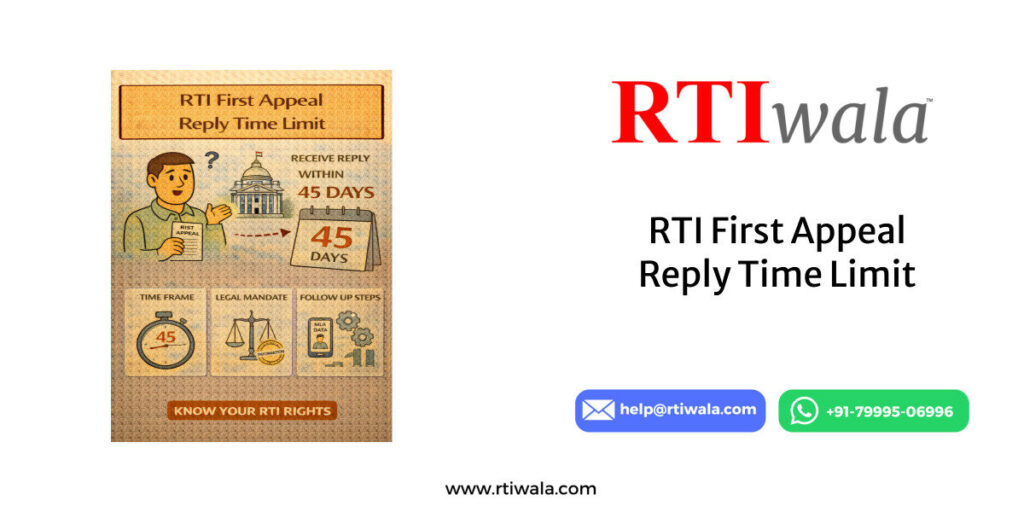
Your first escalation is the First Appellate Authority (FAA), who is legally required to respond within 30–45 days. If the FAA also fails or gives an unsatisfactory reply, you can escalate to the Rajasthan State Information Commission, which can impose penalties up to ₹25,000 on the PIO. This ensures authorities cannot ignore your RTI and must provide timely information.
Escalation Route if No RTI Reply:
- After 30 Days: File a First Appeal to the Appellate Authority, DPCA Ajmer
- Attach: RTI copy, speed post receipt, proof of non-response
- Request: Complete information + written reason for delay
- If FAA also fails: File a Second Appeal to the Rajasthan State Information Commission
- The Commission may impose penalties on the PIO and order immediate disclosure
- Keep all documents organized for future follow-ups or legal action
Escalation ensures that your complaint does not remain stuck indefinitely and that the department is held accountable at every stage.