






























How to Draft a Legally Correct RTI Reply Without Violations or Penalties
Drafting an RTI reply is not just about sending information—it is about protecting the Public Information Officer (PIO) and the department from appeals, penalties, and adverse orders. Most penalties under the RTI Act happen not due to malafide intent, but because of procedural mistakes, incomplete replies, or legally weak drafting. This section focuses only on practical, real-world guidance that PIOs and government offices actually need.
Understanding What a “Legally Correct” RTI Reply Means in Practice
A legally correct RTI reply is one that fully satisfies statutory obligations while staying strictly within the limits of records available. It must be defensible before the First Appellate Authority and Information Commission, even years later.
In practice, a correct RTI reply means:
- Replying within the prescribed time limit
- Providing only what exists on record
- Using clear, unambiguous language
- Properly invoking exemptions where applicable
- Ensuring no misleading, oral, or assumed information is shared
Many PIOs assume that sending “something” is enough. In reality, poorly worded replies create more risk than delayed replies, especially when they contain interpretations or opinions.
Facing delays, no action, or ignored RTI replies? RTIwala ensures RTI-driven accountability, official written proof, and action.
📞 Call: +91-7999-50-6996
💬 WhatsApp: https://cc.rti.link/wadp
🌐 www.rtiwala.com
Step 1: Verify Jurisdiction and Custody of Information Before Drafting
Before drafting any reply, the PIO must first verify whether the information sought actually lies with the public authority or another office. This single step prevents a large number of appeals and show-cause notices.
Actionable checks every PIO must do:
- Confirm whether the department creates, holds, or controls the information
- Check if records are maintained at:
- Head office
- Field office
- Contractor/vendor level
- Identify whether partial information is available
If information does not pertain to the office:
- Transfer the application within 5 days
- Clearly mention the transfer in writing
- Avoid partial replies without clarification
Incorrect assumption of custody is one of the most common reasons for penalty proceedings.
Step 2: Break Down the RTI Application Question-by-Question
Never draft a combined or narrative reply to multiple RTI questions. Each question must be answered individually, even if the answer is the same.
Best practice approach:
- Number replies exactly as per the RTI application
- Address each query separately
- Avoid clubbing multiple points into one paragraph
- Repeat legal reasoning where required
This method:
- Shows compliance
- Makes appellate review easier
- Protects the PIO from allegations of “evasive reply”
A structured reply also demonstrates good faith effort, which is a strong defense if the matter reaches higher authorities.
Step 3: Share Only “Available on Record” Information—Nothing More
One of the biggest legal mistakes is adding explanations, clarifications, or justifications that are not part of official records. RTI law requires disclosure of records, not reasoning.
PIOs must strictly avoid:
- Explaining why a decision was taken (unless recorded)
- Giving personal opinions
- Creating new statements or summaries
- Interpreting rules beyond documented circulars
Correct approach:
- Use phrases like:
- “As per records available…”
- “No such information is available on record”
- “The information sought is not maintained in the requested format”
This protects the PIO from future contradictions and perjury allegations.
Step 4: Use Exemptions Carefully and With Proper Justification
Invoking exemptions is legally permitted, but improper use invites appeals and scrutiny. A vague denial is treated as non-compliance.
When denying information:
- Clearly mention the specific exemption clause
- Briefly explain how the clause applies
- Avoid generic phrases like “confidential” or “not permissible”
Always ensure:
- The exemption is relevant to the information sought
- Partial disclosure is considered where possible
- Public interest override is consciously evaluated
Incorrect denial often leads to direction for re-disclosure and penalty notices.
Step 5: Maintain Neutral, Professional, and Defensive Language
Tone matters more than most PIOs realize. Emotional, defensive, or sarcastic language becomes a liability during appeals.
A legally safe RTI reply must:
- Be factual, neutral, and calm
- Avoid words that show irritation or judgment
- Not question the applicant’s intent
- Not reference previous disputes unnecessarily
Even when the RTI appears repetitive or aggressive, the reply must remain procedurally clean and legally sober.
Facing delays, no action, or ignored RTI replies? RTIwala ensures RTI-driven accountability, official written proof, and action.
📞 Call: +91-7999-50-6996
💬 WhatsApp: https://cc.rti.link/wadp
🌐 www.rtiwala.com
Step 6: Attach Certified Copies Correctly and Record Dispatch Proof
Providing information without proper certification or proof of dispatch weakens the reply’s legal standing.
Mandatory best practices:
- Stamp and sign each page as “True Copy”
- Mention number of pages supplied
- Use registered or speed post where required
- Retain postal receipts and office dispatch records
In appeal cases, dispatch proof is as important as the content itself.
Why Even Experienced PIOs Make Mistakes (And How to Avoid Them)
Many PIOs handle RTI work along with regular duties. Over time, workload pressure leads to shortcuts, which become legal vulnerabilities.
Common risk factors include:
- Bulk RTI applications
- Ambiguous or cleverly framed questions
- Lack of updated legal interpretation
- Absence of standardized reply formats
Common Mistakes in RTI Replies That Lead to First Appeal, CIC Notice, or Penalty
Most RTI penalties do not happen because information was intentionally hidden. They happen because PIOs commit small drafting and procedural mistakes that escalate into First Appeals, Second Appeals, and show-cause notices. This section breaks down the exact errors that Information Commissions repeatedly flag—and how to avoid them in daily RTI handling.
Mistake 1: Giving Incomplete or Selective Replies to Multi-Point RTIs
One of the most frequent grounds for appeal is partial disclosure without justification. Many RTI applications contain multiple questions, but replies address only some of them.
Why this becomes a legal problem:
- Silence on any point is treated as deemed refusal
- Appellate authorities presume deliberate avoidance
- CIC often directs fresh replies with warnings
Corrective action:
- Answer every query separately, even if the answer is “not available”
- Clearly state “No such information is available on record” where applicable
- Never skip uncomfortable questions
Incomplete replies automatically invite appeals—even if the missing point was minor.
Facing delays, no action, or ignored RTI replies? RTIwala ensures RTI-driven accountability, official written proof, and action.
📞 Call: +91-7999-50-6996
💬 WhatsApp: https://cc.rti.link/wadp
🌐 www.rtiwala.com
Mistake 2: Using Vague Language That Creates Ambiguity
PIOs often use unclear phrases thinking they are being safe. In reality, vague replies weaken legal defensibility.
High-risk phrases include:
- “As per rules”
- “Action is under process”
- “Concerned section may be contacted”
- “Necessary action will be taken”
Why this backfires:
- Applicants file appeals seeking clarity
- Appellate authorities demand precise records
- PIOs are accused of evasive replies
Correct approach:
- Mention specific records, dates, file numbers
- If action is pending, state:
- File movement status
- Current stage
- Date of last action
Ambiguity equals vulnerability in RTI law.
Mistake 3: Giving Explanations Instead of Records
RTI law mandates disclosure of records, not explanations. Yet many replies include reasoning that is not officially documented.
Common examples:
- Explaining why a file was delayed
- Justifying a decision verbally
- Interpreting policy instead of citing it
Why this is dangerous:
- Oral explanations have no legal backing
- Contradictions surface during appeal
- CIC treats this as misinformation
Correct method:
- Only reproduce what is written on record
- Quote circulars, office notes, orders
- If no reason is recorded, clearly state so
Creating information under RTI is a serious legal error.
Mistake 4: Incorrect or Casual Use of Exemption Clauses
Wrongly applied exemptions are one of the top triggers for CIC intervention. Many PIOs deny information without proper legal grounding.
Typical mistakes:
- Mentioning exemptions without clause numbers
- Using unrelated sections
- Blanket denial without reasoning
- Ignoring partial disclosure obligations
Why this leads to penalties:
- CIC treats unjustified denial as malafide
- Repeated misuse invites show-cause notices
- PIO must personally defend the decision
Correct practice:
- Always cite exact section and subsection
- Briefly explain how it applies
- Consider severability and partial disclosure
Improper exemption use is worse than disclosure in many cases.
Mistake 5: Not Transferring RTI Applications Correctly
When information belongs to another public authority, PIOs often:
- Simply state “not related to this office”
- Ask the applicant to apply elsewhere
- Delay transfer beyond the legal limit
Why this is non-compliance:
- RTI Act mandates transfer within 5 days
- Applicant should not suffer jurisdiction confusion
- CIC treats non-transfer as refusal
Correct protocol:
- Transfer the RTI formally
- Inform the applicant in writing
- Retain proof of transfer
Failure to transfer is a clear procedural violation.
Mistake 6: Missing Deadlines or Miscalculating Time Limits
Even a well-drafted reply loses value if timelines are breached.
Common timeline errors:
- Ignoring postal delivery date
- Miscounting weekends and holidays
- Delayed replies after third-party consultation
Consequences:
- Automatic presumption of denial
- Increased compensation claims
- Direct penalty proceedings
Best practice:
- Maintain a date-tracking system
- Treat RTI timelines as non-negotiable
- Reply within 30 days or legally justified extensions
Delay alone can trigger penalties—even if information is correct.
Mistake 7: Poor Documentation and Dispatch Record Keeping
PIOs often reply correctly but fail to prove dispatch.
Where problems arise:
- No postal receipt
- No dispatch register entry
- Missing acknowledgment records
Why this is fatal in appeals:
- Applicant claims non-receipt
- Burden of proof lies on PIO
- CIC treats it as non-reply
Mandatory safeguards:
- Use speed/registered post
- Preserve dispatch proof
- Record page counts and enclosures
Documentation protects the PIO more than the reply itself.
Facing delays, no action, or ignored RTI replies? RTIwala ensures RTI-driven accountability, official written proof, and action.
📞 Call: +91-7999-50-6996
💬 WhatsApp: https://cc.rti.link/wadp
🌐 www.rtiwala.com
Mistake 8: Responding Emotionally to Aggressive or Repetitive Applicants
Some applicants file frequent or pointed RTIs. Emotional replies are often used unconsciously.
Risky behaviors:
- Questioning applicant’s intent
- Using dismissive language
- Referring to past disputes
Legal reality:
- RTI law is intent-neutral
- Applicant motive is irrelevant
- Tone is scrutinized in appeals
Correct mindset:
- Treat every RTI as a standalone legal request
- Maintain neutral, professional language
- Focus only on records
Emotional replies weaken credibility instantly.
Why These Mistakes Keep Repeating Across Departments
These errors persist due to:
- High workload
- Lack of standardized reply formats
- Limited legal updates
- No internal RTI quality checks
As RTI scrutiny increases, PIO risk exposure also increases. Departments that do not fix these gaps face repeated appeals and administrative pressure.
How VPIO Services Help Public Authorities Reply Faster, Safer, and Error-Free
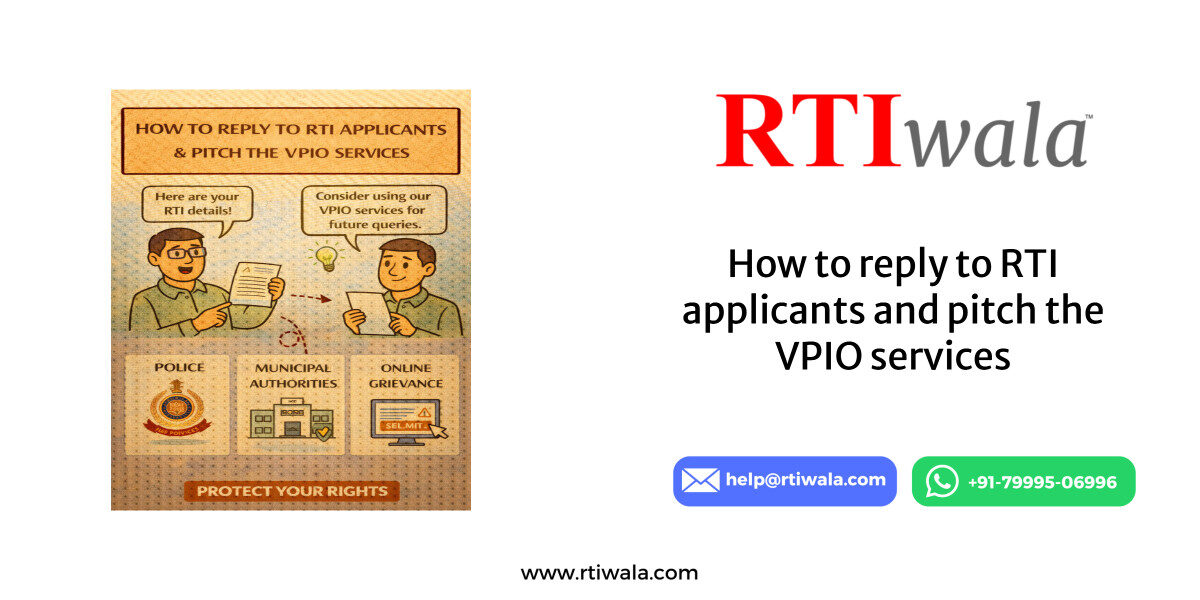
As RTI volumes increase and scrutiny becomes sharper, many public authorities are realizing that traditional in-house RTI handling is no longer sufficient. Virtual Public Information Officer (VPIO) services are emerging not as outsourcing shortcuts, but as risk-management and compliance support systems. This section explains how VPIO services practically solve real RTI problems faced by departments and PIOs.
The Core Problem VPIO Services Are Designed to Solve
PIOs today are expected to:
- Handle RTI work alongside core administrative duties
- Interpret evolving CIC judgments
- Draft legally defensible replies
- Meet strict statutory timelines
In reality, most offices struggle with:
- Overloaded PIOs
- Inconsistent reply quality
- Repeated First Appeals
- Fear of penalties and personal liability
VPIO services exist to reduce this compliance burden while ensuring RTI replies remain lawful, accurate, and defensible.
Facing delays, no action, or ignored RTI replies? RTIwala ensures RTI-driven accountability, official written proof, and action.
📞 Call: +91-7999-50-6996
💬 WhatsApp: https://cc.rti.link/wadp
🌐 www.rtiwala.com
How VPIO Services Actually Work in Day-to-Day RTI Handling
A common misconception is that VPIOs “reply on behalf” of departments. In practice, VPIO services function as expert back-end compliance support, not decision-makers.
Typical VPIO workflow includes:
- Analyzing RTI applications for legal risk
- Structuring question-wise draft replies
- Identifying applicable exemptions correctly
- Flagging missing or non-recorded information
- Ensuring timeline compliance and documentation
The final authority always remains with the designated PIO. The VPIO simply ensures the reply is technically correct and legally safe.
How VPIOs Reduce First Appeals and CIC Escalations
Most appeals arise due to drafting gaps, not denial intent. VPIO services are designed to eliminate those gaps systematically.
Key preventive functions:
- Ensuring every RTI point is answered explicitly
- Avoiding vague or ambiguous language
- Preventing over-disclosure and under-disclosure
- Applying exemptions precisely and defensibly
By standardizing reply quality, VPIO support significantly reduces:
- Allegations of “evasive reply”
- Directions for fresh replies
- Show-cause notices against PIOs
Appeal reduction is one of the strongest indicators of VPIO effectiveness.
How VPIO Services Protect Individual PIOs From Personal Liability
Under the RTI Act, penalties are imposed personally on PIOs, not on departments. This creates legitimate anxiety among officers.
VPIO services address this risk by:
- Aligning replies strictly with records
- Avoiding assumptions or interpretations
- Maintaining defensible legal language
- Creating an audit trail of compliance effort
In penalty proceedings, demonstrating due diligence and expert-supported drafting becomes a strong protective factor for PIOs.
When In-House RTI Handling Stops Being Practical
VPIO services are especially valuable when:
- RTI volume increases suddenly
- Department faces repeated appeals
- PIO role changes frequently due to transfers
- RTI involves complex legal or technical records
- There is no dedicated RTI cell
In such cases, relying solely on in-house handling often leads to:
- Inconsistent replies
- Missed deadlines
- Escalating legal pressure
VPIO support brings continuity and expertise irrespective of personnel changes.
How VPIO Services Improve Speed Without Compromising Accuracy
Speed is critical under RTI law, but rushed replies create errors. VPIO services balance both.
Operational advantages include:
- Faster drafting through standardized formats
- Parallel legal review while records are compiled
- Pre-identified exemption logic
- Checklist-based compliance verification
This allows departments to reply on time and correctly, rather than choosing between speed and safety.
What VPIO Services Do NOT Do (Important Clarity)
To avoid misunderstanding, VPIO services do not:
- Take final disclosure decisions
- Override departmental authority
- Fabricate or manipulate records
- Act without PIO approval
Their role is strictly advisory, drafting, and compliance-focused—ensuring the department’s reply is lawful and defensible.
Why VPIO Adoption Is Increasing Across Public Authorities
With rising RTI awareness and assertive applicants, departments are under greater transparency pressure than ever before.
VPIO services are gaining traction because they:
- Reduce legal exposure
- Improve institutional consistency
- Support overburdened officers
- Create standardized RTI governance
Facing delays, no action, or ignored RTI replies? RTIwala ensures RTI-driven accountability, official written proof, and action.
📞 Call: +91-7999-50-6996
💬 WhatsApp: https://cc.rti.link/wadp
🌐 www.rtiwala.com
Frequently Asked Questions (FAQs)
1. What is a legally correct RTI reply under the RTI Act?
A legally correct RTI reply is one that is sent within the prescribed timeline, answers each query separately, shares only information available on official records, correctly applies exemptions, and avoids opinions or explanations not recorded in files.
2. Can a PIO be penalized for an incorrect or incomplete RTI reply?
Yes. Under the RTI Act, penalties are imposed personally on the PIO for delayed replies, incomplete information, unjustified denial, or misleading responses—even if the mistake was unintentional.
3. What are the most common mistakes PIOs make while replying to RTI applications?
The most common mistakes include partial replies, vague language, wrong use of exemption clauses, failure to transfer RTIs correctly, missing deadlines, lack of dispatch proof, and providing explanations instead of records.
4. Is a PIO required to create information or explain decisions in an RTI reply?
No. A PIO is required to provide only information that exists on official records. The RTI Act does not mandate creation of information, explanations, justifications, or personal interpretations.
5. When should an RTI application be transferred to another public authority?
An RTI application must be transferred within 5 days if the requested information pertains wholly or partly to another public authority. Simply asking the applicant to file elsewhere is not legally valid.
6. What is a VPIO (Virtual Public Information Officer) service?
A VPIO service provides expert back-end support to public authorities and PIOs for drafting legally sound RTI replies, applying exemptions correctly, ensuring timeline compliance, and reducing appeal and penalty risks—while final authority remains with the PIO.
7. Is outsourcing RTI reply drafting to a VPIO legally allowed?
Yes. Seeking expert drafting or compliance support is legally permissible. The PIO continues to be the statutory authority, but VPIO support helps ensure replies are accurate, defensible, and compliant with RTI law.
8. How do VPIO services help reduce First Appeals and CIC notices?
VPIO services reduce appeals by ensuring every RTI query is answered clearly, exemptions are applied correctly, replies are non-evasive, timelines are met, and documentation is complete—addressing the exact reasons appeals are usually filed.
9. Are VPIO services useful for departments with low RTI volume?
Yes. Even departments with low RTI volume benefit from VPIO services when RTIs involve complex legal issues, sensitive records, repeated applicants, or when PIOs change frequently due to transfers.
10. What records should a PIO maintain after sending an RTI reply?
A PIO should maintain a copy of the RTI application, the reply sent, certified enclosures, dispatch proof, postal receipts, and internal notes. These records are critical if the matter reaches appeal or penalty proceedings.