







































Table of Content
How to Draft Legally Correct RTI Replies That Prevent Penalties and Rejections
Many Public Information Officers struggle because replies are either incomplete, delayed, or not legally worded. This leads to First Appeals, complaints to the Information Commission, and personal penalties. Most issues arise not from lack of information, but from incorrect drafting.
A legally correct RTI reply must always be precise, factual, and based strictly on records available with the public authority. Opinions, explanations, or assumptions should never be included. The RTI Act only requires providing “information held on record,” not justifications.
To ensure compliance, every reply should include:
- Reference number and date of RTI application
- Point-wise response to each query
- Certified copies wherever requested
- Clear mention if information is “not available on record”
- Transfer details under Section 6(3), if applicable
Avoid vague language like “will be informed later” or “under process.” Such phrases violate the Act and increase appeal risk. Always give a final and definitive response.
When replies follow a structured and lawful format, departments automatically reduce disputes, save time, and build transparency. Correct drafting is the first shield against penalties under Section 20.
Don’t know how to reply to RTI applicants? RTIwala guides you step-by-step—contact now.
📞 Call: +91-7999-50-6996
💬 WhatsApp: https://help.rti.link/
🌐 www.rtiwala.com
Step-by-Step Workflow to Process RTI Applications Faster and Meet 30-Day Deadlines
Delays are the biggest reason PIOs receive notices. Missing the 30-day deadline can directly attract penalties of ₹250 per day. Most delays happen due to poor internal tracking, not workload alone.
A clear workflow helps process applications faster without confusion. Each RTI should move through a fixed system instead of manual handling.
A practical step-by-step process is:
- Day 1–2: Register and assign diary number
- Day 2–3: Identify concerned sections/officers
- Day 3–10: Collect records from departments
- Day 10–20: Compile and verify documents
- Day 20–25: Draft point-wise reply
- Before Day 30: Dispatch reply with proof of delivery
Maintain a simple RTI register or digital tracker with:
- Applicant name
- Subject
- Deadline
- Responsible officer
- Status
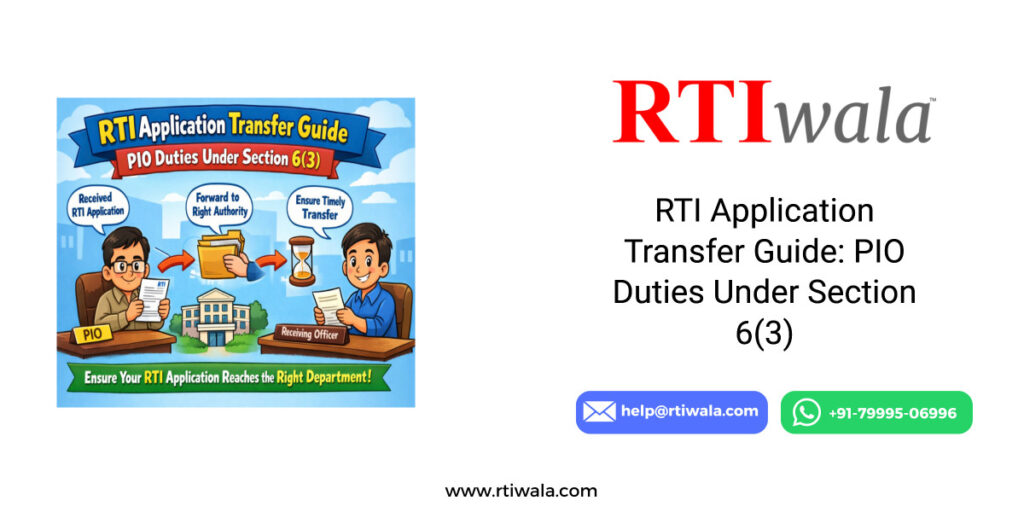
This prevents files from getting stuck on desks. If information belongs to another authority, transfer within 5 days under Section 6(3). Late transfers still count as delay and may lead to liability.
Standardization reduces stress. When every RTI follows the same workflow, departments handle higher volumes without panic and avoid last-minute rush.
Common RTI Reply Mistakes That Cause First Appeals, Complaints, and CIC Penalties
Even experienced officers receive appeals because small technical errors turn into legal violations. Applicants often appeal when replies are unclear or incomplete, not necessarily because information is denied.
Understanding common mistakes helps avoid repeated problems.
Most frequent errors include:
- Sending incomplete or partial information
- Not replying point-wise
- Ignoring some questions
- Giving reasons instead of documents
- Missing the 30-day deadline
- Refusing information without quoting exemption sections
- Not transferring application to correct authority
Another major mistake is saying “not available” without checking records properly. If the Information Commission finds that records existed but were not provided, it may treat it as malafide denial.
Always remember:
- Provide what exists
- Deny only with valid RTI sections
- Document every action
- Keep dispatch proof
Proper documentation protects the PIO personally. Without records, it becomes difficult to justify actions before the Commission.
Don’t know how to reply to RTI applicants? RTIwala guides you step-by-step—contact now.
📞 Call: +91-7999-50-6996
💬 WhatsApp: https://help.rti.link/
🌐 www.rtiwala.com
Standard RTI Reply Formats, Templates, and Documentation Checklist for PIOs/VPIOs
Most RTI delays and appeals happen because every officer drafts replies differently. Some send paragraph answers, some send handwritten notes, and some attach random papers without certification. This inconsistency creates confusion and increases legal risk.
Using a fixed reply format ensures clarity, uniformity, and faster processing. When every reply looks the same structurally, applicants understand it easily and appeals reduce automatically.
A standard RTI reply template should always follow this structure:
- Office name, address, and contact details
- RTI reference number and date
- Applicant details
- Subject line
- Point-wise reply table (Query 1 → Reply 1, Query 2 → Reply 2)
- List of attached certified copies
- If denied, mention exact exemption section
- Signature, seal, and designation of PIO
Avoid paragraph-style answers. Always respond point-by-point so nothing is missed.
Along with format, maintain proper documentation. Every RTI file should contain:
- Copy of original application
- Internal forwarding notes
- Records collected from sections
- Final reply copy
- Dispatch proof (speed post/receipt/email proof)
- Timeline record
This file becomes your protection during First Appeal or Commission hearings. If documentation is complete, penalties are rarely imposed.
Standardization saves time, protects officers, and creates a professional compliance system inside the department.
How VPIO Services Reduce Workload and Ensure 100% RTI Compliance
As RTI volumes increase, many departments struggle to manage applications along with regular administrative work. One or two officers handling everything manually leads to missed deadlines and burnout.
This is where a dedicated VPIO support system becomes useful. Instead of each section handling RTIs separately, a centralized team or service manages the entire lifecycle.
VPIO services streamline work by:
- Registering and tracking all incoming RTIs
- Setting automatic deadline reminders
- Coordinating with concerned departments
- Drafting legally compliant replies
- Preparing certified documents
- Maintaining complete records
- Handling follow-ups and appeals
This reduces pressure on senior officers and minimizes mistakes.
When processes are centralized, benefits become visible:
- Faster replies
- Fewer appeals
- Better record management
- Reduced personal liability of PIOs
- Improved public trust
Departments often assume RTI work is only legal work. In reality, most of it is process management. Once tracking, drafting, and documentation are handled professionally, compliance becomes routine.
A structured VPIO setup converts RTI handling from reactive firefighting into a predictable workflow.
How to Implement and Pitch VPIO Support in Your Department for Efficient RTI Handling
Many officers recognize the need for support but don’t know how to introduce it internally. Implementation should focus on solving administrative pain points rather than presenting it as an additional system.
Start by identifying current challenges:
- Frequent delays
- Rising appeals
- Staff overload
- Missing documents
- Manual tracking problems
Then propose VPIO support as a solution, not an expense.
A simple implementation plan includes:
- Create centralized RTI desk or nodal officer
- Introduce single RTI register/digital tracker
- Use standard reply templates
- Assign fixed deadlines internally
- Train staff on documentation
- Review monthly compliance reports
When presenting to department heads, highlight measurable benefits:
- Reduced penalties
- Less legal risk
- Faster citizen service
- Time saved for core duties
- Better audit readiness
Decision-makers respond to efficiency and accountability. Showing how VPIO support reduces risk and saves time makes approval easier.
Gradual rollout works best. Start with tracking and templates first, then expand to full support. Once results are visible, adoption becomes automatic.
FAQs
1. What is the correct way to reply to an RTI application legally?
Reply in writing with a reference number and date, and provide point-wise answers strictly based on records available with the department. Attach certified copies wherever requested. Avoid opinions or explanations. If information is denied, clearly mention the exact exemption section under the RTI Act.
2. What happens if a PIO fails to reply within 30 days?
Delay beyond 30 days is treated as deemed refusal. The applicant can file a First Appeal, and the Information Commission may impose a penalty of ₹250 per day, up to ₹25,000, on the PIO personally. Timely dispatch with proof is essential to avoid liability.
3. Can a PIO refuse information if records are not available?
Yes, but only if the information genuinely does not exist on record. The reply must clearly state “information not available as per records held.” Creating new data, explanations, or analysis is not required under the RTI Act.
4. How should multiple questions in one RTI be answered?
Each question must be answered separately in a point-wise format. Never combine replies or skip any query. A table format (Query → Reply → Documents Attached) ensures clarity and reduces chances of appeal.
5. When should an RTI application be transferred to another department?
If the information is held by another public authority, transfer the application within 5 days under Section 6(3). Late transfers may still count as delay, and the original PIO can remain responsible for penalties.
6. What documents should a PIO maintain for every RTI case?
Maintain a complete file including:
- Copy of RTI application
- Internal notes and correspondence
- Collected records
- Final reply copy
- Certified attachments
- Dispatch proof
This documentation protects the PIO during appeals or Commission hearings.
7. Why do most RTI replies lead to First Appeals?
Common reasons include incomplete information, missing documents, vague replies, late responses, or failure to quote exemption sections. Clear, complete, and timely replies automatically reduce appeal rates.
8. How can VPIO services help departments manage RTIs better?
VPIO services centralize registration, tracking, drafting, and documentation of RTIs. This reduces delays, ensures legal compliance, lowers appeal volume, and protects officers from penalties by maintaining proper records and timelines.