








































Table Of Content
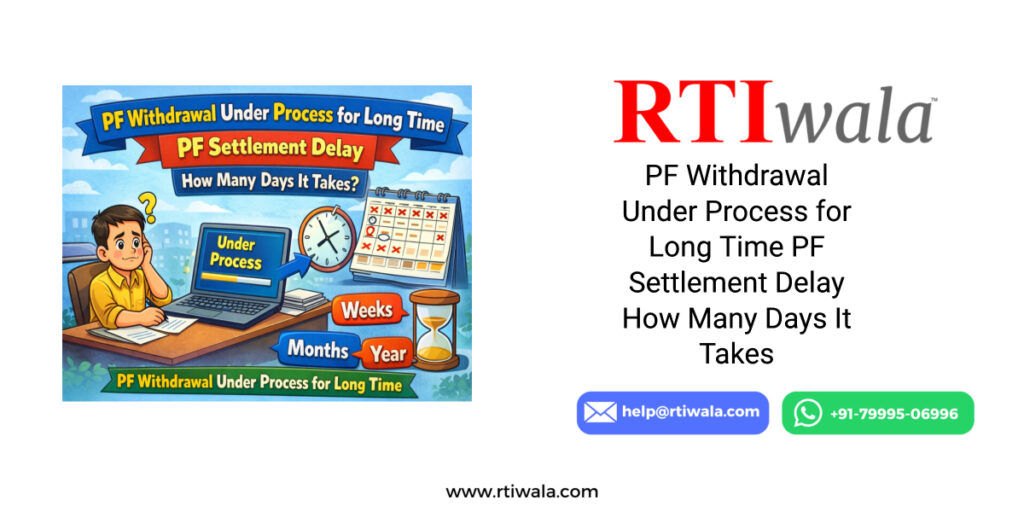
PF Withdrawal Status Showing “Under Process” – What It Really Means & How Long It Takes
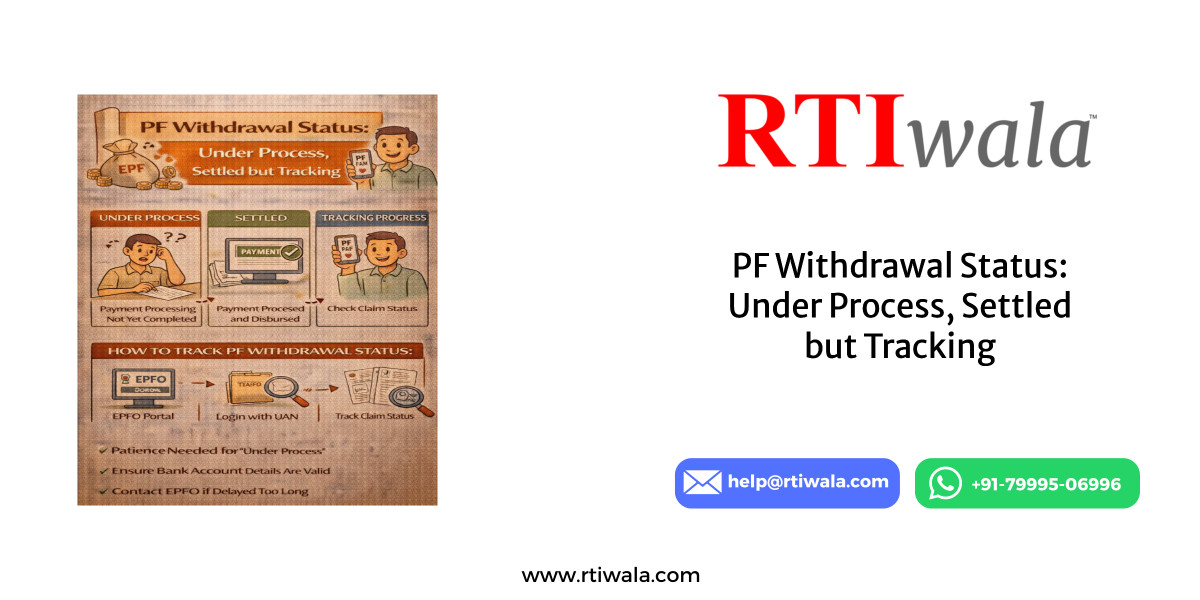
When your PF withdrawal status shows “Under Process”, it means your claim is currently being examined by the Employees’ Provident Fund Organisation (EPFO) and has not yet reached the payment approval stage. This is a procedural status, not a rejection or approval.
In most cases, the claim passes through internal checks such as KYC verification, employer confirmation (if applicable), and bank validation. Any mismatch or backlog can keep the status unchanged for several days.
PF withdrawal stuck or money not credited? RTIwala takes action and gets official answers fast—contact now for clarity and resolution.
📞 Call: +91-7999-50-6996
💬 WhatsApp: https://help.rti.link/
🌐 www.rtiwala.com
Normal processing timeline users should expect:
- Online PF claims usually take 7–20 working days
- Claims linked with Aadhaar and verified KYC are processed faster
- Delays increase during month-end or financial year closing
Common reasons why “Under Process” stays for long:
- Bank account name mismatch with UAN records
- PAN not verified for taxable withdrawals
- Employer e-verification pending (older UANs)
- Regional EPFO office workload backlog
What you should do immediately if it exceeds 20 days:
- Check KYC status under UAN portal (Aadhaar, PAN, Bank)
- Ensure bank account is active and not recently changed
- Track claim through both UAN portal and UMANG app
- Avoid re-filing a new claim, as it resets the timeline
If the status remains unchanged beyond a reasonable period, it indicates administrative delay—not user fault—and needs escalation.
PF Claim Settled but Amount Not Credited – Real Reasons Behind the Delay
A “Claim Settled” status means EPFO has approved the claim and generated payment instructions. However, settlement does not mean money has reached your bank account. There is always a gap between settlement and actual credit.
Most users panic at this stage because the portal stops giving clear updates after settlement. In reality, the issue usually lies in the banking or transaction layer.
Actual reasons why money is not credited after settlement:
- Bank server downtime or delayed NEFT processing
- Incorrect IFSC or dormant bank account
- Account name mismatch rejected by bank
- Amount credited but reversed silently by bank
Expected timeline after settlement:
- Amount is usually credited within 2–5 working days
- Public sector banks may take longer during holidays
- NEFT credits do not happen on bank holidays
What you must verify before raising a complaint:
- Check bank statement, not just SMS alerts
- Confirm IFSC code has not changed
- Ensure the account is not zero-balance restricted
- Verify the settlement date shown on EPFO portal
Important clarification users miss:
EPFO does not retry failed credits automatically. If the bank rejects the transaction, the amount goes back to EPFO’s pool and stays there unless followed up.
This is why many users wait for weeks thinking payment will arrive automatically—it won’t without action.
PF Claim Settled but Tracking Not Working – How to Confirm Payment Status
Once a claim is settled, EPFO’s tracking tools often stop showing meaningful updates. The UMANG app and UAN portal may show blank fields, errors, or no transaction reference, which confuses users.
This does not mean the payment is lost. It means tracking has moved outside the EPFO system into banking channels.
Correct ways to confirm PF payment status:
- Check bank statement for NEFT credit using date range
- Look for narration containing “EPF”, “EPFO”, or “NEFT”
- Contact bank branch to check inward NEFT pending status
- Verify if amount is credited under different description
What EPFO tracking does not show clearly:
- Bank-side rejection reasons
- Reversed transaction confirmations
- Re-credit timelines after failure
If tracking shows error or blank page:
- This is a known EPFO portal limitation
- It does not indicate claim failure
- Payment may already be processed or returned
What not to do at this stage:
- Do not file a duplicate PF claim
- Do not change bank details immediately
- Do not rely only on UMANG status screen
If money is not credited 7 days after settlement, and tracking gives no clarity, this situation qualifies for formal escalation because the user has already completed all compliance.
PF withdrawal stuck or money not credited? RTIwala takes action and gets official answers fast—contact now for clarity and resolution.
📞 Call: +91-7999-50-6996
💬 WhatsApp: https://help.rti.link/
🌐 www.rtiwala.com
Common Mistakes That Delay PF Withdrawal Even After Claim Settlement
Even after a PF claim shows “Settled”, delays often continue due to small but critical mistakes that most users unknowingly make. These issues are rarely explained clearly on official portals, which is why users keep waiting without taking corrective action.
The most common mistake is assuming that settlement guarantees automatic credit. In reality, once EPFO releases the payment, the responsibility partially shifts to the banking system. Any inconsistency there can silently block the amount.
Mistakes that cause post-settlement PF delays:
- Bank account entered is inactive, frozen, or recently converted to zero-balance
- Account holder name does not exactly match UAN records
- IFSC code changed after bank merger and not updated in EPFO
- Multiple bank accounts added, causing routing confusion
- PAN not linked for withdrawals above the taxable threshold
Many users also change bank details immediately after seeing a delay. This action actually creates a fresh verification cycle, pushing the case back instead of resolving it.
Another overlooked issue is employer-linked verification. In older UANs or exemption cases, the employer’s confirmation layer may still exist even if the claim is marked settled. This creates backend ambiguity that users cannot see.
What users should correct before escalating:
- Confirm only one active bank account is linked
- Ensure Aadhaar, PAN, and bank name spellings match exactly
- Avoid editing KYC after settlement unless advised
- Check for silent bank reversals with branch support
A critical mistake is waiting indefinitely. EPFO does not proactively notify users about bank rejections or returned payments. Without user follow-up, the amount can remain uncredited for months.
Understanding and correcting these errors early prevents unnecessary stress and repeated claim failures.
What to Do If PF Amount Is Not Received Even After Many Days (RTI & Escalation Options)
If your PF amount is not credited 7–10 working days after claim settlement, the issue is no longer “processing.” At this stage, the delay becomes an administrative lapse that requires formal escalation.
The first step is not filing another claim. Duplicate claims complicate records and extend timelines. Instead, escalation must follow a structured and legally valid route.
Step 1: Raise an EPFO Grievance (Mandatory First Action)
File a grievance through the official EPFO grievance portal, selecting the correct PF office and mentioning:
- Claim reference number
- Settlement date
- Bank account details
- Clear statement that payment not received post-settlement
This creates a documented acknowledgment and forces internal review.
Step 2: Contact Bank With Settlement Proof
Visit or email your bank branch with:
- Settlement screenshot
- UAN number
- Expected credit date
Ask specifically whether any NEFT was rejected or returned. Banks often confirm reversals that EPFO does not communicate.
Step 3: Escalate to Regional EPFO Office
If grievance responses are generic or unresolved after 15 days, escalation to the regional office becomes necessary. At this point, written accountability is required.
This is where most users get stuck because informal follow-ups do not work.
Step 4: Use RTI to Break the Deadlock
An RTI application forces EPFO to disclose facts they otherwise delay or ignore. It is the most effective escalation when money is stuck without explanation.
Through RTI, users can legally ask:
- Exact payment release date and transaction number
- Whether the amount was credited, returned, or held
- If returned, where the amount is currently parked
- Who is responsible for reprocessing the payment
RTI works because it imposes a statutory deadline and personal accountability on the concerned officer. This often results in faster resolution than months of waiting.
When RTI becomes essential:
- Claim settled but no credit for over 30 days
- Grievances closed without resolution
- Bank confirms no inward transaction
- EPFO gives contradictory responses
RTI is not confrontation—it is clarification through law.
What users must avoid at this stage:
- Filing repeated grievances without response analysis
- Changing bank or KYC again without instruction
- Trusting verbal assurances without written proof
Once escalation is done correctly, PF payments that were stuck for months often get resolved within weeks because responsibility becomes traceable.
Frequently Asked Questions (FAQs)
1. How long does PF withdrawal status remain “Under Process” normally?
PF withdrawal status usually remains “Under Process” for 7 to 20 working days. If it exceeds this period, it generally indicates a verification delay, bank mismatch, or EPFO workload backlog.
2. PF claim is settled but money is not credited—should I worry?
No, settlement means EPFO has approved the claim. Payment usually reaches the bank within 2–5 working days. If not received after 7 days, bank rejection or transaction failure should be checked.
3. What are the most common reasons PF amount is delayed after settlement?
The most common reasons include incorrect IFSC code, inactive bank account, name mismatch with UAN, bank-side rejection, or NEFT delays during holidays or technical downtime.
4. Why is PF tracking not showing any update after claim settlement?
After settlement, PF tracking often stops showing detailed updates because payment processing moves to banking systems. Users must verify bank statements or check with the bank for inward NEFT status.
5. What should I do if PF amount is not received even after 10 days of settlement?
You should first raise an EPFO grievance, then confirm with your bank about any rejected transaction. If unresolved, escalation through RTI becomes the most effective option.