





































Table of Content
When to File an RTI Second Appeal – Check Eligibility, Deadlines, and Common Situations
An RTI Second Appeal is filed only when both the Public Information Officer (PIO) and the First Appellate Authority (FAA) fail to provide proper information. It is not the first step, but the final statutory remedy under the Right to Information Act, 2005. Filing too early or without eligibility leads to rejection.
A Second Appeal becomes necessary when the department ignores the law or gives incomplete or misleading replies. Many applicants wait for months without clarity, thinking the office will respond later. Legally, once the timeline is crossed, you have the right to escalate.
You can file a Second Appeal in these common situations:
- No reply from PIO within 30 days
- No reply from First Appeal within 45 days
- Incomplete or misleading information
- Wrong rejection using invalid exemptions
- Information denied without proper reasons
The time limit is important. The appeal must be filed within 90 days from the date of the First Appeal decision or from the date when the decision was due. Delay may require a written explanation.
Before filing, keep these ready:
- Copy of original RTI application
- PIO reply (if received)
- Copy of First Appeal
- FAA reply (if received)
- Proof of dates and submissions
If these documents are clear, the Commission can easily understand your case and act faster. Missing papers often cause unnecessary delays.
Not getting answers to your RTI? RTIwala files your Second Appeal fast and correctly—contact now for immediate legal support.📞 Call: +91-7999-50-6996
💬 WhatsApp: https://help.rti.link/
🌐 www.rtiwala.com
How to File an RTI Second Appeal – Step-by-Step Process with Forms, Documents, and Timeline
Filing a Second Appeal is a structured legal process. Many applicants fail because they do not follow proper format or send incomplete documents. A systematic approach improves acceptance and speeds up hearings.
First, identify the correct authority. For Central Government departments, file before the Central Information Commission. For State departments, file before the respective State Information Commission.
Follow this simple step-by-step method:
- Download or draft Second Appeal format
- Attach all supporting documents in order
- Clearly mention dates and violations
- Sign every page
- Submit by post, online portal, or in person
The document sequence should be:
- Second Appeal letter
- Index of documents
- RTI application copy
- PIO reply
- First Appeal copy
- FAA reply or proof of no response
Keep the file organized. Commissioners review hundreds of cases daily. A neat and properly arranged appeal improves readability and seriousness.
After submission, you will receive:
- Diary number or registration number
- Case listing details
- Hearing notice (physical or virtual)
Most cases take a few months depending on backlog. However, correctly filed appeals often get listed faster than poorly drafted ones.
Always keep copies and tracking proof. This helps during hearings if the authority claims non-receipt.
How to Draft a Strong Second Appeal – Legal Grounds, Key Points, and Format for Faster Action
Drafting is the most critical part of a Second Appeal. The Commission does not act on emotions or complaints. It acts only on legal violations and documented facts. A strong draft clearly shows how the law was broken.
Avoid long stories or personal frustration. Instead, write precise, point-wise grounds. The goal is to prove that the PIO or FAA failed to comply with the RTI Act.
Your appeal must include:
- Brief case background
- Dates of RTI and appeals
- Specific deficiencies in reply
- Legal sections violated
- Clear relief sought
Use strong legal grounds such as:
- Violation of Section 7(1) – delay in reply
- Violation of Section 6(3) – no transfer
- Incomplete information under Section 2(f)
- No speaking order from FAA
- Malafide denial of records
While drafting, follow these practical tips:
- Keep sentences short and factual
- Number each ground separately
- Avoid arguments or emotional language
- Mention exact documents requested
- Clearly ask for penalty and information
End the appeal with a clear prayer like:
- Direct the PIO to provide complete information
- Impose penalty under Section 20
- Provide certified copies
- Grant compensation for delay
A focused and legally framed appeal increases the chance of strict orders against the department. Commissioners prefer clarity over length.
A well-drafted Second Appeal not only gets information faster but also discourages future non-compliance by authorities.
What Happens After Filing – Hearing Process, Notices, Penalties, and Final Orders Explained
After submitting the Second Appeal, the Information Commission first registers the case and assigns a diary or case number. This number becomes your reference for all future tracking. Without it, follow-ups become difficult, so always save the acknowledgment.
Once the case is accepted, the Commission issues notices to both parties. A hearing date is fixed where the appellant and the PIO/department must present their side. Hearings may be conducted physically, through video conferencing, or by phone.
During this stage, you may receive:
- Case registration number
- Hearing notice with date and time
- Instructions to submit written arguments
- Option for virtual or in-person appearance
Preparation is important because the decision depends on facts, not emotions. Keep your documents ready in proper order so you can quickly explain delays or denial.
Before the hearing:
- Prepare a short written submission
- Highlight unanswered questions
- Mark incomplete or wrong replies
- Carry copies of all papers
- Note the legal violations clearly
At the hearing, the Commissioner questions both sides. If the PIO cannot justify delay or denial, strict action may follow. The law empowers the Commission to penalize officers for negligence or malafide intent.
Possible outcomes include:
- Direction to provide information within fixed days
- Order for certified copies
- Penalty up to Rs. 25,000 on PIO
- Disciplinary action recommendation
- Compensation to the applicant
- Case dismissal (if appeal lacks merit)
Most genuine cases result in an order directing disclosure. Therefore, clarity and documentation significantly increase success chances.
What If Information Is Still Denied – Complaint Options, Enforcement Steps, and Legal Remedies
Sometimes even after a Second Appeal, the department may partially comply or ignore the Commission’s order. This situation can feel frustrating, but the law provides additional remedies. You are not required to start again from zero.
If the order is not followed, you can initiate enforcement steps. Non-compliance with the Commission’s directions is treated seriously and may invite stricter penalties.
Practical options available include:
- File a non-compliance petition before the Commission
- Submit written complaint under Section 18
- Seek penalty proceedings against PIO
- Request compensation for losses
- Ask for execution of the order
A complaint is useful when:
- Information is deliberately withheld
- False information is given
- Records are destroyed
- You were prevented from filing RTI
- Officers harass or threaten you
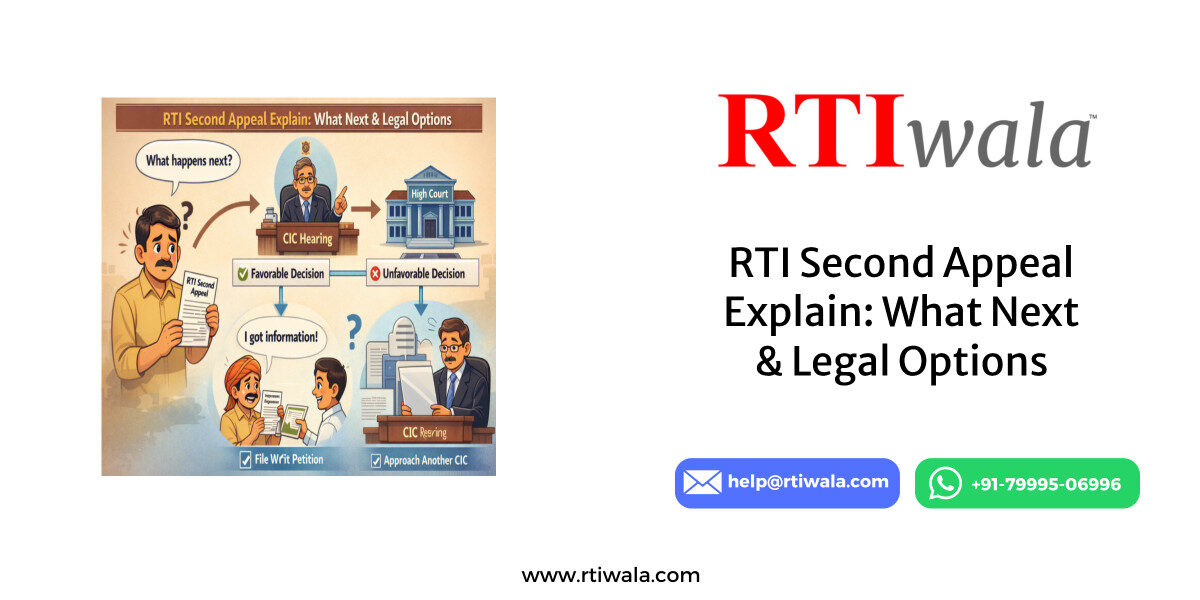
In rare and extreme cases, if the Commission’s order is unreasonable or rights are still violated, judicial remedies may be considered. Applicants can approach the High Court through a writ petition.
However, court action should be the last resort because it involves time and expense. Most issues are resolved at the Commission level itself if proper follow-up is done.
The key is persistence with documentation. Each written communication builds evidence and strengthens your position.
Not getting answers to your RTI? RTIwala files your Second Appeal fast and correctly—contact now for immediate legal support.
📞 Call: +91-7999-50-6996
💬 WhatsApp: https://help.rti.link/
🌐 www.rtiwala.com
How to Track Your Case and Avoid Delays – Follow-ups, Status Checks, and Practical Tips
Delays in RTI appeals often occur due to poor tracking or missing communication. Many applicants file once and then wait passively. Active follow-up ensures faster resolution and prevents files from being ignored.
Tracking your appeal regularly keeps you informed about hearing dates and compliance status. It also helps you act immediately if something goes wrong.
Use these simple tracking methods:
- Check case status on the Commission’s website
- Save diary or registration number
- Monitor email and SMS alerts
- Call the registry if no update for months
- Keep postal tracking receipts
Maintain a personal record file containing:
- Copies of all submissions
- Dates of each step
- Proof of dispatch
- Notes of conversations
- Hearing summaries
Organized records help during hearings because you can instantly show evidence. Commissioners appreciate applicants who present facts clearly without confusion.
To avoid delays:
- File complete documents at first attempt
- Use clear drafting
- Respond quickly to notices
- Attend hearings without fail
- Submit written arguments in advance
Proactive action often reduces months of waiting. A disciplined approach ensures your legal right to information is not weakened by procedural mistakes.
An RTI Second Appeal is not just a complaint tool but a powerful enforcement mechanism. When used correctly with proper tracking and follow-up, it compels transparency and accountability from public authorities.
FAQ
1. When should I file an RTI Second Appeal?
You can file a Second Appeal when the PIO or First Appellate Authority fails to provide proper information. This applies if there is no reply within the legal time limit, incomplete information, or wrongful rejection. The appeal should be filed within 90 days from the First Appeal decision or due date.
2. Where do I file the RTI Second Appeal?
File the appeal with the correct Information Commission based on the department. For Central Government offices, approach the Central Information Commission. For State Government offices, file before the respective State Information Commission. Filing in the wrong authority may cause rejection or delay.
3. Is there any fee for filing a Second Appeal?
In most cases, there is no fee for filing a Second Appeal. However, some states may have specific rules. It is advisable to check the concerned Commission’s website or guidelines before submission to avoid procedural issues.
4. What documents are required for a Second Appeal?
You must attach complete supporting records so the Commission can understand the case clearly. Missing documents often delay hearings or weaken your appeal.
Required documents include:
- Copy of original RTI application
- PIO reply
- First Appeal copy
- FAA reply (if received)
- Proof of submission and dates
5. Can I file a Second Appeal without filing the First Appeal?
No. Filing the First Appeal is mandatory before approaching the Commission. A Second Appeal directly without the First Appeal is generally rejected unless there are exceptional legal circumstances.
6. How long does the Second Appeal process take?
The timeline depends on the Commission’s backlog. It may take a few months to one year. Proper drafting, complete documents, and active follow-ups help in faster listing and decision. Poorly prepared appeals often take longer.
7. Do I need a lawyer to file an RTI Second Appeal?
No lawyer is required. The process is designed for citizens and can be done personally. Clear drafting, proper documentation, and legal grounds are usually sufficient. However, professional help may be useful in complex cases.
8. What happens during the hearing?
Both the applicant and the PIO are given a chance to present their side. The Commissioner checks delays, denials, and legal violations. Based on facts, the Commission may order disclosure of information or impose penalties on the officer.