







































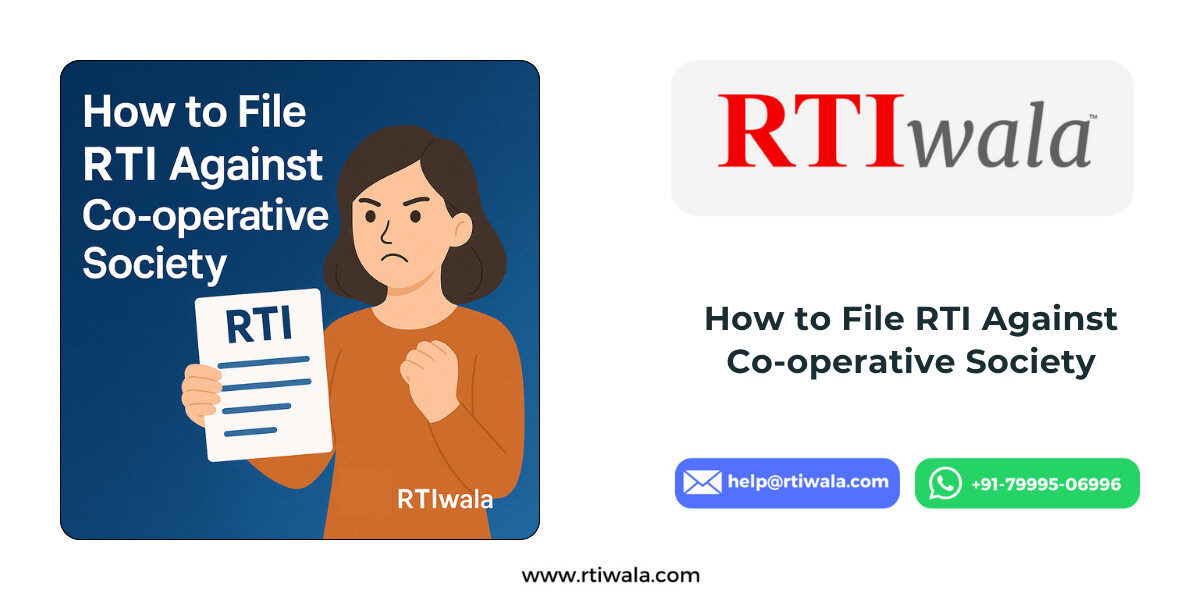
Co-operative societies play a vital role in managing housing, credit, and community funds — but when transparency fades, misuse of power or corruption can creep in. Whether it’s mismanagement of funds, allotment of flats, or election irregularities, filing an RTI (Right to Information) application is the most powerful way to uncover the truth.
If you’ve faced silence, favoritism, or missing records from your society, this guide will walk you through how to file RTI against a Co-operative Society — the legal and effective way in India (2025 updated).
Table of Contents
- What Is a Co-operative Society and Why You Might Need to File an RTI Against It (2025 Update)
- Step-by-Step Guide: How to File RTI Against Co-operative Society Online in India
- Documents Required, Fees & Timelines for Filing RTI Against Co-operative Societies
- Common Mistakes to Avoid While Filing RTI Against Co-operative Society
- RTIwala Expert Tips: How to Get Faster and More Accurate Information from Co-operative Departments
- Latest RTIwala Insights (2025): Real Cases, Delays & How to Track Your RTI Effectively
What Is a Co-operative Society and Why You Might Need to File an RTI Against It (2025 Update)
A Co-operative Society is a legally registered body under the Co-operative Societies Act, formed by members for mutual benefit — like housing societies, credit societies, or agricultural cooperatives.
However, in many states, mismanagement, fund diversion, or manipulation in elections have led residents and members to seek accountability.
That’s where the Right to Information (RTI) Act, 2005 comes in. You can file an RTI application to the Registrar of Co-operative Societies, or to the Public Information Officer (PIO) of the concerned department to obtain:
- Audit reports
- Financial statements
- Membership details
- Allotment or election records
When your society’s management avoids transparency, an RTI through RTIwala can help you uncover the hidden truth and hold them accountable.
Step-by-Step Guide: How to File RTI Against Co-operative Society Online in India
Filing an RTI against a Co-operative Society is straightforward — but only if you know whom to address and how to draft it properly. Here’s a complete breakdown:
Step 1: Identify the Right Authority
Check if your Co-operative Society falls under:
- State Co-operative Department (for most housing/credit societies), or
- Central Registrar of Co-operative Societies (CRCS) for multi-state societies.
Step 2: Draft a Clear & Specific RTI Application
Your application must include:
- Society name, registration number, and address
- Specific information you seek (e.g., audit, minutes of meetings, election data)
- Your name and contact details
Avoid vague questions — instead, ask precise document-based queries.
You can use Online RTI India service by RTIwala to get it drafted professionally, ensuring it’s legally sound and effectively worded.
Step 3: Submit the Application Online or Offline
You can file RTI:
- Online via File Online RTI (recommended)
- Offline by submitting to the PIO in the Registrar’s office
Step 4: Pay the Prescribed Fee
- ₹10 standard application fee (online or via postal order/DD)
- Additional ₹2 per page for photocopies (if applicable)
Step 5: Wait for the Response
Under the RTI Act, authorities must reply within 30 days.
If they fail or provide incomplete info, RTIwala also helps you file a First Appeal to ensure justice is served.
Documents Required, Fees & Timelines for Filing RTI Against Co-operative Societies
Before filing, make sure you have these ready:
- Copy of society registration certificate or ID proof (optional but useful)
- Society name, address, and office bearer details
- Proof of residence/membership (for housing societies)
Fee: ₹10 (basic RTI fee)
Timeframe: 30 days (response limit under Section 7(1) of the RTI Act)
If the Registrar fails to respond or provides misleading info, RTIwala helps escalate your case to the First Appellate Authority quickly and effectively.
Common Mistakes to Avoid While Filing RTI Against Co-operative Society
Even genuine RTI applicants often face rejection or delay because of minor mistakes. Avoid these pitfalls:
- Addressing the wrong public authority
- Asking opinions instead of documents
- Using emotional or accusatory language
- Missing application fee
- Forgetting to mention your contact details
Avoid rejection! Let RTIwala draft your RTI Application correctly — 93% of RTIwala’s professionally filed cases receive valid responses within 30 days.
RTIwala Expert Tips: How to Get Faster and More Accurate Information from Co-operative Departments
- Use official references: Mention sections of the RTI Act like Section 2(f) (definition of information).
- Ask for certified copies to make your evidence legally valid.
- Track your RTI status regularly to ensure timely action.
- Use professional drafting services from RTIwala for error-free filing.
With RTIwala’s Expert Consultation, you can ensure your RTI request is powerful, compliant, and impossible to ignore.
Latest RTIwala Insights (2025): Real Cases, Delays & How to Track Your RTI Effectively
In 2025, several state registrars have reported an increase in RTI complaints related to:
- Illegal fund transfers
- Fake membership additions
- Delayed elections or manipulation of meeting minutes
RTIwala’s real-world data shows:
Over 62% of RTIs filed against Co-operative Societies reveal serious audit or management lapses.
To track your RTI:
- Visit the respective State RTI portal, or
- Use RTIwala’s Follow-up Add-ons to monitor your case until resolution.
Final Thoughts
Filing an RTI against a Co-operative Society isn’t about confrontation — it’s about transparency and justice. Whether it’s your housing society or credit group, you have every right to know how funds and decisions are being managed.
If you’re unsure where to start or fear rejection, simply File Online RTI through RTIwala — India’s trusted RTI platform helping citizens uncover truth and ensure accountability.
Need Expert Help?
Call: +91-7999-50-6996 one steps away!
Visit: www.rtiwala.com now!
RTIwala – Making transparency effortless for every Indian citizen.