




























Table Of Content
How to Get CCTV Footage Through RTI When Authorities Refuse to Share It
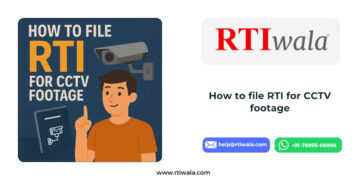
Many people try to obtain CCTV footage after accidents, theft, disputes, or public incidents. Often, authorities such as police stations, municipal bodies, transport departments, or government offices refuse to share the footage citing internal rules or privacy concerns. In such situations, the Right to Information Act, 2005 becomes an effective legal tool to access the information.
CCTV footage recorded by cameras installed in government premises or public authorities is considered a record under Section 2(f) of the RTI Act. This means citizens have the legal right to request information related to the existence, availability, and preservation of such footage. However, authorities may not always provide the footage directly.
If an authority refuses to provide the footage, you can use RTI to formally ask them to disclose whether the footage exists, who controls it, and whether it has been preserved. This creates a documented trail that makes it difficult for authorities to ignore the request.
In practical terms, RTI helps establish accountability regarding the CCTV footage.
You can request information such as:
- Whether CCTV cameras were installed at the specific location.
- Whether footage was recorded on the particular date and time.
- The retention period for CCTV footage.
- The department responsible for maintaining the footage.
- Whether the footage has been preserved or deleted.

Authorities often respond more seriously when information is requested through RTI because they are legally bound to reply within 30 days. Even if they refuse disclosure, they must provide a written reason under the RTI Act.
In many cases, this written response becomes useful evidence when pursuing further legal remedies such as filing a police complaint or approaching the court.
Another practical approach is to use RTI to request certified records related to CCTV maintenance and operation. Even if the footage itself is not given, records confirming that footage existed can strengthen your case in disputes, accidents, or investigations.
Therefore, RTI becomes a structured legal method to uncover whether CCTV evidence exists and why it has not been provided.
CCTV footage denied or not shared? RTIwala helps you file the correct RTI and get answers fast. 📞 Call: +91-7999-50-6996 💬 WhatsApp: https://help.rti.link/ 🌐 www.rtiwala.com
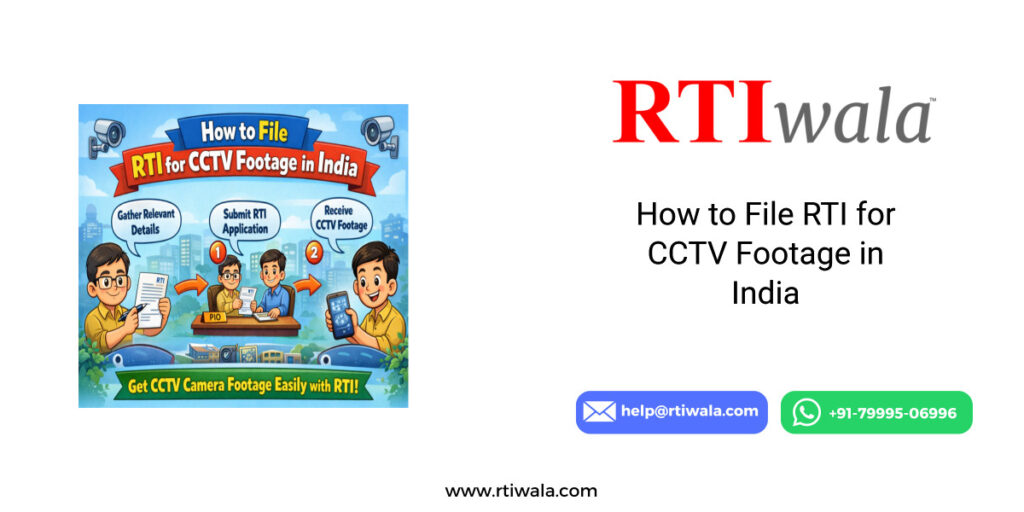
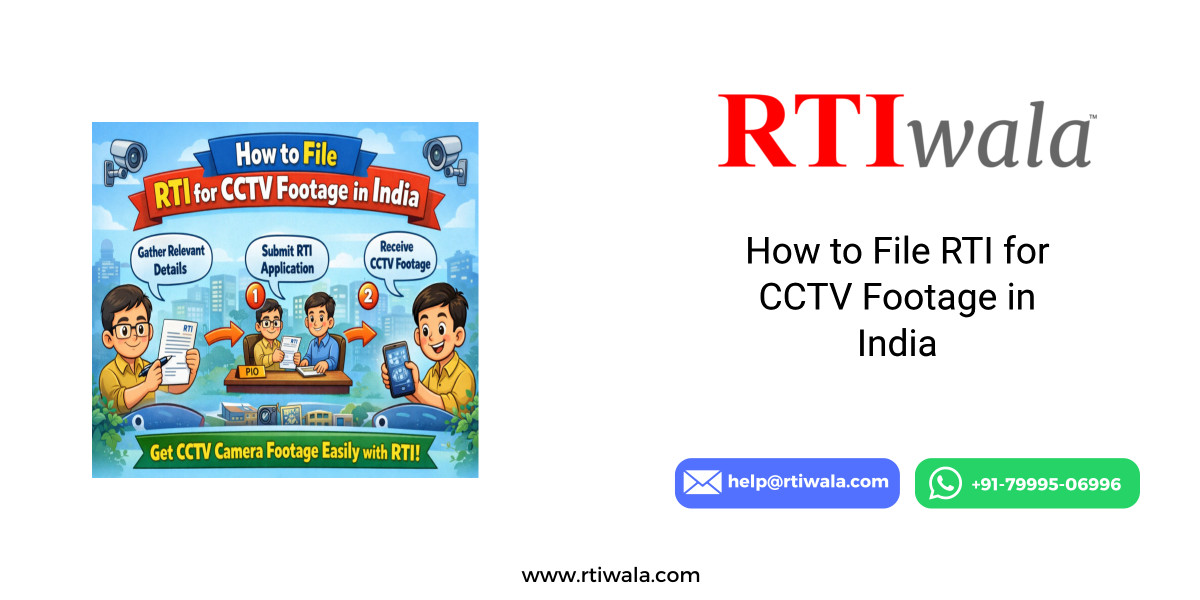
Step-by-Step Process to File an RTI Application for CCTV Footage in India
Filing an RTI for CCTV footage is straightforward if the application is drafted correctly and submitted to the correct authority. The key is to request existing records rather than asking authorities to create explanations or opinions.
The first step is identifying the public authority that controls the CCTV system. This could be a police department, municipal corporation, traffic authority, government office, railway authority, or public transport agency depending on the location of the incident.
Once the correct department is identified, you must address the RTI application to the Public Information Officer (PIO) of that department.
The RTI application should clearly mention the location, date, and time of the CCTV footage being requested. This helps the department identify the specific recording.
A typical RTI request for CCTV footage should include the following details:
- Exact location where the incident occurred.
- Date and approximate time of the incident.
- Name of the government department responsible for the cameras.
- Request for confirmation of whether cameras were functional at that time.
- Request for information about the availability or preservation of the footage.
When drafting the RTI application, focus only on seeking information available in official records. Avoid asking questions such as “why was the footage not provided” or “who is responsible,” because RTI only covers existing documents and records.
The RTI application can be filed through multiple methods.
Common ways to file RTI include:
- Online RTI portal of the government department
- Central Government RTI portal for central authorities
- Physical RTI application submitted by post
- Direct submission to the office of the Public Information Officer
Along with the application, a nominal RTI fee of Rs. 10 is usually required. The fee can be paid online, through postal order, or other accepted payment methods depending on the authority.
After submission, the Public Information Officer is legally required to respond within 30 days under the RTI Act. If the information concerns life or liberty of a person, the response must be provided within 48 hours.
Once the reply is received, it may contain one of the following responses.
Possible outcomes include:
- Confirmation that CCTV footage exists
- Information that footage has been preserved
- Information that footage has been deleted as per retention policy
- Denial of disclosure citing legal exemptions
Even if the footage itself is not provided, the RTI reply usually reveals important facts such as camera availability, storage duration, and whether the footage was recorded.
This information can be crucial when pursuing further action such as filing complaints, insurance claims, or legal proceedings.
Properly drafted RTI applications significantly increase the chances of obtaining useful information about CCTV footage held by public authorities.
What to Do If CCTV Footage Is Denied, Missing, or Not Provided Under RTI
In many cases, authorities may refuse to provide CCTV footage or claim that the footage is unavailable. This usually happens when the footage has already been deleted due to retention policies or when the authority cites exemptions under the RTI Act. However, a denial does not mean the matter ends there.
If the Public Information Officer refuses the request or provides incomplete information, the first step is to carefully read the RTI reply. Authorities must provide a written explanation under the RTI Act if they deny access to information. This explanation often reveals whether the denial is legally valid or not.
Many CCTV footage requests are rejected under privacy-related exemptions or internal administrative rules. However, authorities are still required to confirm whether the footage existed and whether it was preserved. Even if the video itself is not provided, related records must be disclosed if they exist.
If the response is incomplete or misleading, the applicant has the right to file a First Appeal within 30 days of receiving the RTI reply. The First Appeal is submitted to the First Appellate Authority of the same department.
The appeal should clearly mention:
- RTI application details and reference number
- Date of the RTI reply received
- Specific points where information was denied or incomplete
- Reasons why the denial violates RTI provisions
The appellate authority reviews whether the Public Information Officer followed the RTI Act properly. In many cases, authorities are directed to provide additional clarification or records related to the CCTV footage.
Another important action is requesting records about the CCTV system itself. Even if the footage is unavailable, authorities must maintain records regarding camera installation, maintenance, and recording systems.
These records may include:
- CCTV camera installation details
- Maintenance logs of the camera system
- CCTV footage storage duration policy
- Details of the agency responsible for maintaining the cameras
- Records showing when the footage was deleted
Such documents can prove whether CCTV evidence existed and whether it was properly preserved. This information can become crucial in legal disputes, insurance cases, or complaints related to accidents and crimes.
If authorities fail to respond even after the First Appeal, the applicant can escalate the matter to the Information Commission through a Second Appeal or complaint. The Commission has the power to order disclosure and impose penalties on officials for unjustified denial.
Therefore, even when CCTV footage is denied, RTI remains a powerful tool to uncover the truth about whether the footage existed and why it was not provided.
CCTV footage denied or not shared? RTIwala helps you file the correct RTI and get answers fast. 📞 Call: +91-7999-50-6996 💬 WhatsApp: https://help.rti.link/ 🌐 www.rtiwala.com
Important Rules, Time Limits, and Legal Provisions for Seeking CCTV Footage via RTI
Understanding the legal framework of the RTI Act helps applicants file stronger and more effective requests for CCTV footage. The law clearly defines what type of information can be requested and how authorities must respond.
Under Section 2(f) of the RTI Act, information includes records, documents, reports, data, and electronic records held by public authorities. CCTV recordings maintained by government departments fall within this definition when they are stored in official systems.
Section 6(1) of the RTI Act allows any citizen to request information from a public authority by submitting a written application. The applicant does not need to provide reasons for seeking the information.
Once an RTI application is filed, the Public Information Officer must respond within the legally defined time limit.
Important time limits under the RTI Act include:
- 30 days for normal RTI responses
- 48 hours if the information concerns life or liberty
- 35 days if the application is transferred to another department
If the authority does not respond within the prescribed time, it is considered a deemed refusal under the RTI Act. This allows the applicant to directly file a First Appeal.
Another important factor is the retention period of CCTV footage. Most government CCTV systems store footage only for a limited duration depending on storage capacity and departmental policies. In many departments, footage is preserved for a period ranging from 7 days to 30 days.
Because of this limited storage duration, it is important to file RTI applications quickly after an incident occurs. Delays may result in the footage being automatically overwritten or deleted as per system policies.
In addition to seeking the footage itself, applicants should request official records confirming the retention period and storage policies. This helps establish whether the footage should have still been available at the time of the request.
Authorities may sometimes deny CCTV footage citing privacy or security exemptions under the RTI Act. However, such exemptions must be justified and cannot be applied arbitrarily. If exemptions are wrongly used, the applicant can challenge the decision through the appeal process.
Understanding these rules ensures that RTI applications are drafted properly and submitted within the correct timelines. Proper use of these legal provisions significantly increases the chances of obtaining information related to CCTV recordings.
Common Mistakes While Filing RTI for CCTV Footage and How to Avoid Rejection
Many RTI applications for CCTV footage are rejected because they are drafted incorrectly. Small mistakes in wording or lack of proper details can lead to incomplete responses or denial of information.
One common mistake is asking questions that require explanations instead of requesting existing records. The RTI Act only allows access to information already available in official records. Authorities are not required to create new information or provide opinions.
For example, questions such as “Why did the authority not provide CCTV footage?” or “Who is responsible for the incident?” fall outside the scope of RTI. Instead, the request should focus on documented records related to the CCTV system.
Another frequent mistake is failing to mention the exact location, date, and time of the footage being requested. CCTV systems record continuously, and authorities need specific details to identify the relevant recording.
Important details that should always be included in the RTI application include:
- Exact location of the CCTV camera
- Date of the incident
- Approximate time of the event
- Name of the department controlling the cameras
Applicants also often make the mistake of directly demanding the CCTV footage itself. Many departments do not provide copies of video recordings through RTI due to privacy or technical limitations. Instead, the request should first seek confirmation about the existence and preservation of the footage.
A better approach is to request supporting records related to the CCTV system.
Useful records to request include:
- Confirmation that CCTV cameras were installed at the location
- Information about whether the cameras were functional
- Details of the footage retention period
- Records showing whether footage was preserved or deleted
Another mistake is filing the RTI with the wrong department. CCTV cameras in public places may be operated by different authorities such as police, municipal corporations, traffic departments, or transport agencies. Identifying the correct authority increases the chances of receiving an accurate response.
Finally, applicants sometimes wait too long before filing the RTI. Since CCTV footage is often stored only for a short duration, delays may result in permanent deletion of the recording.
Avoiding these common mistakes ensures that RTI applications for CCTV footage are more precise, legally valid, and likely to produce meaningful responses from public authorities.
SEO-Optimized FAQs: RTI for CCTV Footage
1. Can CCTV footage be obtained through RTI in India?
Yes. CCTV recordings maintained by government departments or public authorities are considered official records under the RTI Act, 2005. Citizens can file an RTI application to seek information about the availability, preservation, or existence of CCTV footage from public authorities.
2. How soon should an RTI be filed for CCTV footage after an incident?
RTI should be filed as soon as possible because most government CCTV systems store footage only for a limited period, usually between 7 and 30 days. Filing early increases the chances that the footage is still available in the system.
3. Can police refuse to provide CCTV footage under RTI?
Police or other authorities may deny direct access to CCTV footage citing privacy, security, or investigation-related exemptions. However, they are still required to confirm whether the footage exists and provide records related to its availability or deletion.
4. What information should be included in an RTI application for CCTV footage?
The RTI application should clearly mention the location, date, and approximate time of the incident. It should also request confirmation about the installation of cameras, availability of recordings, and the retention policy of the CCTV system.
5. What should be done if CCTV footage is denied or not provided under RTI?
If the information is denied or incomplete, the applicant can file a First Appeal within 30 days to the First Appellate Authority of the department. If the issue remains unresolved, a Second Appeal can be filed with the Information Commission.
6. Can RTI help in accident, theft, or dispute cases involving CCTV evidence?
Yes. RTI can help confirm whether CCTV cameras were installed, whether footage was recorded, and whether it was preserved. This information can support police complaints, insurance claims, or legal disputes.
7. Which authority should receive an RTI for CCTV footage?
The RTI should be filed with the Public Information Officer of the department responsible for the CCTV cameras. Depending on the location, this may be the police department, municipal corporation, traffic authority, transport department, or another government agency.
CCTV footage denied or not shared? RTIwala helps you file the correct RTI and get answers fast. 📞 Call: +91-7999-50-6996 💬 WhatsApp: https://help.rti.link/ 🌐 www.rtiwala.com