


























How to Check MLA Fund
If you want to verify how MLA/MLC Local Area Development Fund (Mal Fund) has been used, you have two legal options under the RTI Act, 2005. Both options allow you to access official government records and check whether public funds were actually used on the ground or only shown on paper.
Option 1: File an RTI to Check MLA/MLC Fund Utilisation
An RTI application can be filed with the concerned department such as the District Administration, Rural Development Department, Urban Development Department, or Local Body.
Through RTI, you can ask for:
- Total MLA/MLC fund allocated for a specific year
- Details of sanctioned development works
- Amount released and amount spent
- Contractor or executing agency details
- Copies of work orders and utilization certificates
- Completion status and inspection reports
- Reasons for delay, incomplete work, or non-execution
These official records help identify whether public funds were properly used or misused only on paper.
RTIwala Team can help you get MLA fund usage details through RTI with 93% success rate at just Rs 389+GST. So, call RTIwala now at +91-7999506996 or visit https://cc.rti.link/MLA-Fund-Usage
Where RTIwala Helps You
Filing an RTI against MLA/MLC funds requires accurate drafting and correct department selection. RTIwala supports you throughout the process by:
- Drafting legally strong and precise RTI questions
- Identifying the correct public authority to avoid rejection
- Filing RTI online without paperwork or confusion
- Tracking response timelines and delays
- Assisting with First Appeal if information is denied or incomplete
RTIwala ensures your RTI is effective, compliant, and result-oriented.
📞 Call: +91-7999-50-6996
💬 WhatsApp: https://cc.rti.link/wadp
🔗 Visit: www.rtiwala.com
Option 2: Option to File Anonymous RTI (Safer Choice)
In cases involving political influence or local pressure, many citizens prefer not to disclose their identity. RTIwala offers Anonymous RTI, a safer and confidential option.
With Anonymous RTI:
- Your identity remains confidential
- Personal details are not disclosed publicly
- RTI is filed strictly as per RTI Act provisions
- You receive official replies without personal risk
This option is especially useful when questioning fund misuse by powerful individuals.
Why Use RTIwala for MLA Fund / Vidhayak Nidhi RTI?
- Trusted by 60,000+ users across India
- 93% success rate in obtaining complete information
- Experienced legal & paralegal drafting team
- Safe, transparent, and citizen-friendly process
📞 Call: +91-7999-50-6996
💬 WhatsApp: https://cc.rti.link/wadp
🔗 Visit: www.rtiwala.com
How the MLA Fund / Vidhayak Nidhi Works
The MLA Fund is designed to enable MLAs to address development needs within their constituencies. It can fund projects such as road construction, public utilities, schools, healthcare centers, and other infrastructure-related work. Unfortunately, due to a lack of oversight, some funds are either underused or misused, leading to incomplete or poorly managed projects.
Filing an RTI application to access detailed information on these funds is key to ensuring transparency. You can request details about:
- Annual fund allocations
- Specific projects and their current status
- Detailed expenditure reports
- Contractor information
State-wise: Actual Department & PIO for MLA Fund | Vidhayak Nidhi
| State | Actual Handling Department (Official Office Name) | Correct PIO Designation |
|---|---|---|
| Uttar Pradesh | Office of the District Magistrate (Collectorate) | PIO, Office of District Magistrate |
| Madhya Pradesh | Collectorate, District Administration | PIO, Office of District Collector |
| Rajasthan | District Collectorate (Zila Prashasan) | PIO, District Collector Office |
| Bihar | Office of the District Magistrate | PIO, District Magistrate Office |
| Jharkhand | Office of the Deputy Commissioner | PIO, Deputy Commissioner Office |
| Chhattisgarh | Office of the District Collector | PIO, District Collector Office |
| Maharashtra | Office of the District Collector (Planning Section) | PIO, District Collector Office |
| Gujarat | District Collectorate | PIO, Office of District Collector |
| Haryana | Office of the Deputy Commissioner | PIO, Deputy Commissioner Office |
| Punjab | Office of the District Deputy Commissioner | PIO, DC Office |
| Delhi (NCT) | Urban Development Department / PWD (District Level) | PIO, Urban Development Dept |
| Karnataka | Office of the Deputy Commissioner | PIO, Deputy Commissioner Office |
| Tamil Nadu | Office of the District Collector | PIO, District Collector Office |
| Telangana | Office of the District Collector | PIO, District Collector Office |
| Andhra Pradesh | Office of the District Collector | PIO, District Collector Office |
| West Bengal | Office of the District Magistrate | PIO, District Magistrate Office |
| Odisha | Office of the District Collector | PIO, District Collector Office |
| Assam | Office of the Deputy Commissioner | PIO, Deputy Commissioner Office |
| Kerala | Office of the District Collector | PIO, District Collector Office |
Importance of Transparency in MLA Fund
Transparency in the management of the MLA Fund is critical for maintaining trust between elected representatives and their constituents. The fund directly influences local development, and as a citizen, you have the right to know if it’s being effectively utilized. Unfortunately, many people either don’t know how to request such information or hesitate due to the perceived complexity of the bureaucracy.
How to File RTI for MLA Fund Details
Filing an RTI application regarding the MLA Fund is simple, especially with online services. Here’s how you can proceed:
- Prepare Your Query: Clearly define the information you seek, such as the status of a particular project, fund allocation, or current expenditure.
- Submit Your Application: Use RTIwala online RTI filing service to submit your query.
- Track Your Application: Once submitted, you will receive a reference number to track the progress of your application.
- Receive Information: Within 30 days, the Public Information Officer (PIO) is required to respond to your query. If not, you can file an appeal.
By filing an RTI, you ensure transparency, and RTIwala makes the process seamless and efficient.
With RTIwala, you can file an anonymous RTI to check how MLA funds are being used, without revealing your identity. This makes it easy and safe to get the information you need, ensuring transparency while protecting your privacy.
Who controls MLA fund expenditure?
MLA fund expenditure is controlled by the District Administration, not the MLA.
The District Collector / District Magistrate approves, releases, and monitors the funds through executing departments.
Can an MLA be punished for fund misuse?
An MLA can be punished only if direct involvement or illegal benefit is proven.
In most cases, officers and executing departments are held responsible for misuse or irregularities.
Who is responsible if MLA fund work is incomplete?
The executing department and responsible officers are answerable for incomplete work.
Administrative responsibility lies with the District Collector, who monitors progress and compliance.
Is MLA fund audited?
Yes, MLA fund expenditure is audited by the State Audit / Accountant General (AG).
Audit objections are raised against departments and officers, not the MLA.
Can citizens check MLA fund work status?
Yes, citizens can check work status by filing an RTI to the District Collector’s office.
Details like sanction, progress, inspection, and completion reports can be legally accessed.
Who is the PIO for MLA fund information?
The Public Information Officer (PIO) is usually located in the District Collector / DM / DC office.
This office holds all official records related to MLA fund approvals and execution.
Can RTI be filed against MLA fund work?
Yes, RTI can be filed regarding MLA fund works, but not to the MLA directly.
RTI should be addressed to the District Administration or executing department.
What happens if MLA fund RTI is filed to the wrong department?
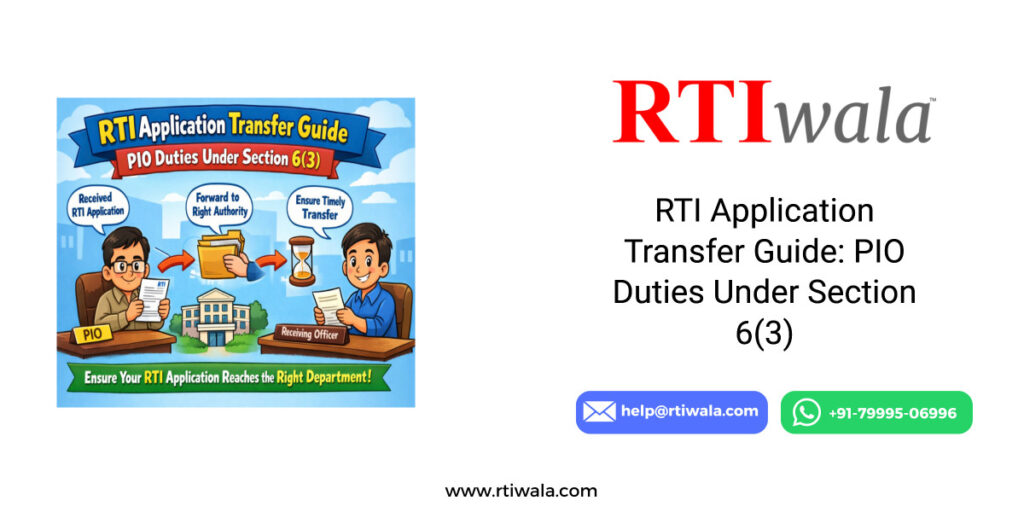
If RTI is filed to the wrong department, the PIO must transfer it under Section 6(3) of the RTI Act.
However, this may cause delays of 15–20 days.
Can RTI expose fake or non-existent MLA fund works?
Yes, RTI is one of the most effective tools to expose fake, incomplete, or paper-only works.
Records like inspection reports and utilization certificates reveal discrepancies.
Which department executes MLA fund projects?
Execution is done by departments like PWD, Panchayat, Municipal Bodies, or Rural Development.
They are responsible for quality, timelines, and submission of completion reports.
Is MLA fund information public information?
Yes, MLA fund records are public information under the RTI Act, 2005.
Citizens have the legal right to access these records.
Can complaints be filed along with RTI in MLA fund cases?
Yes, RTI replies can be used as evidence to file complaints before vigilance, Lokayukta, or audit authorities.
RTI strengthens accountability with official proof.
Does MLA have control over contractors?
No, MLAs cannot appoint contractors or issue payments.
Contracting is handled strictly by the executing department through tender procedures.
How long does it take to get MLA fund information under RTI?
By law, information must be provided within 30 days of filing RTI.
Delays must be justified in writing by the PIO.
Common more FAQs about MLA Fund and RTI
- What is the MLA Fund used for?
The MLA Fund is used for various development projects within a constituency, such as infrastructure, schools, public utilities, and healthcare facilities. - How can I check how MLA funds are being used in my area?
You can file an RTI application to request information on fund utilization. RTIwala helps streamline this process for you. - Can I file an RTI online to inquire about the MLA Fund?
Yes, you can file an RTI online via RTIwala or the government’s RTI portal. - What if my RTI application is ignored?
If you do not receive a response within 30 days, you have the right to file a first appeal, and later a second appeal if needed. - How does RTIwala assist in filing an RTI?
RTIwala offers expert guidance to simplify the RTI filing process, from drafting queries to submitting applications and tracking progress.
Conclusion
The MLA Fund is a vital tool for local development, but without transparency, it can be susceptible to misuse. The Right to Information (RTI) Act empowers you to ensure that public funds are being used effectively for the betterment of your constituency. RTIwala makes filing an RTI a simple and streamlined process, helping you hold your representatives accountable and ensuring that your tax money is spent wisely. Don’t let bureaucracy keep you from accessing information that is rightfully yours. File your RTI today with RTIwala and take a step towards transparency and accountability.